How Much Does a Ragdoll Kitten Cost? What You’re Really Paying For
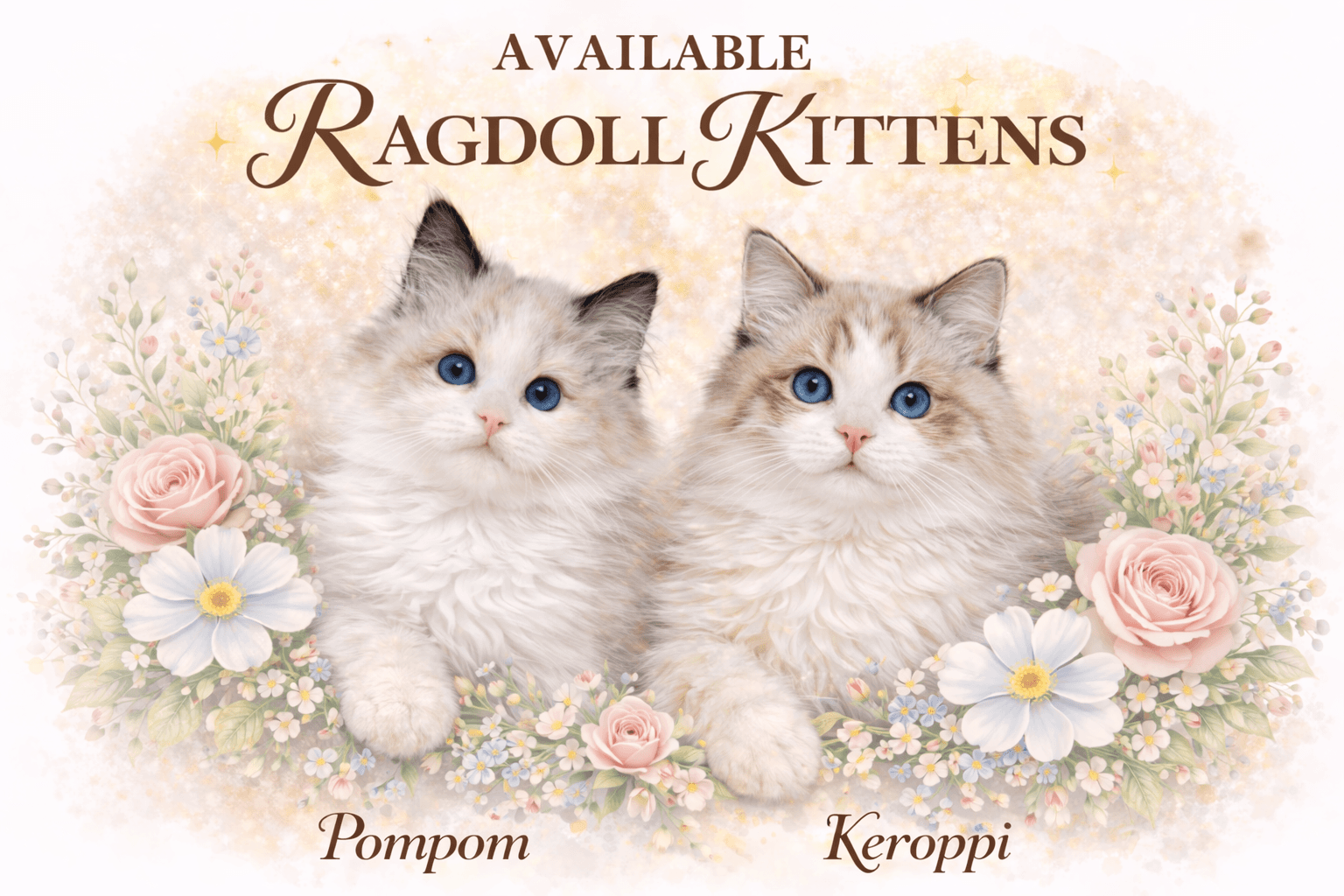
If you’ve been researching Ragdoll kittens, you’ve probably noticed the price range is wide. A quick search turns up everything from $500 to $5,000 or more — and it’s not always obvious why. Is the expensive kitten really worth it? What makes one breeder charge double what another charges?
This post breaks it all down honestly, so you know exactly what you’re paying for when you adopt a Ragdoll kitten from a reputable breeder.
What Does a Ragdoll Kitten Cost?
From a TICA-registered breeder with health-tested parents, you can expect to pay between $2,500 and $5,000 for a pet-quality Ragdoll kitten. In California specifically, $4,000–$5,000 is the current market rate for a well-bred pet kitten from a reputable program. Show-quality kittens start at $5,000 and go higher. Breeding-quality kittens with full rights typically run $5,000–$8,000 or more.
At Kitten Around Ragdolls, our kittens are priced in line with the California market. Every kitten comes from health-tested parents, is raised in our home, and includes a one-year genetic health guarantee.
If you find a Ragdoll kitten listed for $500–$1,500, that’s a red flag. We’ll explain why below.
What You’re Actually Paying For
When you pay for a kitten from a reputable breeder, here’s where that money goes:
Health Testing This is the biggest cost most people don’t think about. Responsible Ragdoll breeders test all breeding cats for HCM (hypertrophic cardiomyopathy) and PKD (polycystic kidney disease) — the two genetic conditions most likely to affect the breed. HCM cardiac ultrasounds alone cost $300–$500 per cat and need to be repeated annually. A breeder with four breeding cats is spending $1,200–$2,000 per year just on HCM testing.
Breeders who skip health testing pass that cost savings on to you — but you absorb the risk instead. A kitten from untested parents could develop HCM and face a shortened, expensive life. That $800 kitten can easily become a $10,000 vet bill.
Veterinary Care for Kittens Before your kitten comes home, a reputable breeder has already invested in their first vet exam, age-appropriate vaccinations, deworming, and flea prevention. Many also microchip kittens before placement. These costs add up quickly per litter.
TICA Registration Registration isn’t just a piece of paper — it’s documentation that your kitten is a purebred Ragdoll from a registered cattery with recorded lineage. It protects you and ensures the breeder is accountable to a governing body with a code of ethics.
Quality Breeding Stock The cats behind your kitten matter enormously. Breeders who invest in well-typed, health-tested, champion-pedigreed breeding cats produce kittens that look and behave like actual Ragdolls. Acquiring quality breeding cats — like our stud RW SGC Twilight Sparkle, a Regional Winner Supreme Grand Champion — represents a significant investment that directly impacts kitten quality.
Socialization Ragdoll kittens raised in a home environment with people, children, dogs, and daily activity are dramatically better adjusted than those raised in cages or isolated cattery rooms. Home-raised kittens are confident, friendly, and ready to bond from day one. This takes time, space, and genuine commitment — it’s not something you can rush or shortcut.
Breeder Support A reputable breeder doesn’t disappear after you take your kitten home. We’re available for questions about health, behavior, nutrition, and anything else that comes up throughout your cat’s life. That relationship has real value — especially in those first weeks when everything is new.
Why Cheap Ragdolls Are Expensive in the Long Run
A kitten priced at $500–$1,500 from an unregistered breeder or backyard operation almost certainly comes with compromises:
-
- No health testing on parents
- No TICA registration or documentation
- Minimal veterinary care before placement
- Poor socialization
- No breeder support after purchase
The kitten itself may look like a Ragdoll. But without health testing, you have no way to know what genetic risks you’re taking on. Without socialization, behavioral problems are common. Without registration, you have no recourse if something goes wrong.
We’ve heard from families who spent $800 on a “Ragdoll” kitten and then $8,000 treating an HCM diagnosis at age two. The math is not in favor of the cheap kitten.
Pet Quality vs. Show Quality — What’s the Difference?
Most families adopting a Ragdoll as a companion want a pet-quality kitten — and pet quality from a reputable breeder is still an exceptional cat. Pet quality simply means the kitten has some characteristic that makes it less competitive in the show ring: slightly incorrect ear set, a pattern that isn’t textbook perfect, or color that isn’t quite show-standard intensity. These are subtle differences invisible to most people and irrelevant to life as a beloved family companion.
Show-quality kittens are priced higher because breeders are essentially choosing not to keep them for their own breeding programs. They represent the top of the litter in terms of conformation, coat, pattern, and type.
Breeding-quality kittens — those sold with full breeding rights — are priced highest of all, typically $5,000–$8,000 or more, because the buyer is acquiring not just a pet but the potential to produce future litters.
What’s Included When You Adopt from Kitten Around Ragdolls

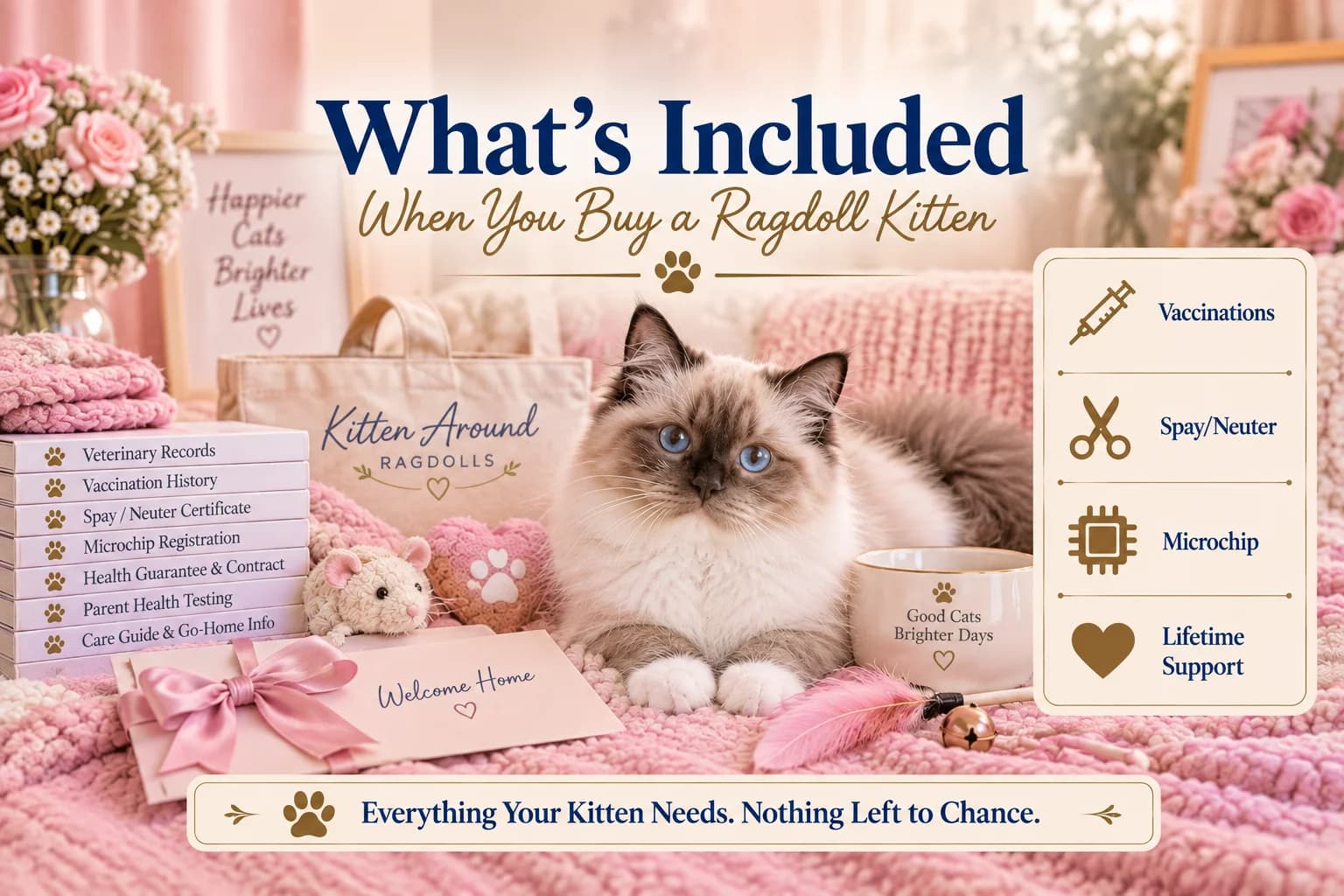
Every kitten from our program includes:
-
-
-
-
- TICA registration
- Health-tested parents (HCM and PKD)
- Age-appropriate vaccinations
- Veterinary health exam
- Microchip
- One-year genetic health guarantee
- Kitten care package
- Lifetime breeder support
-
-
-
We require a $1,000 deposit to reserve your kitten, applied toward the total adoption fee. Our adoption process starts with an application — we review every family carefully to make sure our kittens go to the right homes.
View available kittens → Start your application →
The Bottom Line
A Ragdoll kitten from a reputable TICA-registered breeder costs $2,500–$5,000 for a pet, and more for show or breeding quality. In California, expect to pay toward the higher end of that range. That price reflects health testing, veterinary care, quality breeding stock, proper socialization, and ongoing support. It’s not markup — it’s what responsible breeding actually costs.
The families who are happiest with their Ragdolls are the ones who did their research, chose carefully, and paid for quality upfront. We’d love to help you find your perfect kitten.
Recent Blogs
09/12/2026
What’s Included When You Buy a Ragdoll Kitten From Us

09/09/2026
What Our Past Buyers Just Told Us About Their Cats — And What We Changed Because of It
09/05/2026
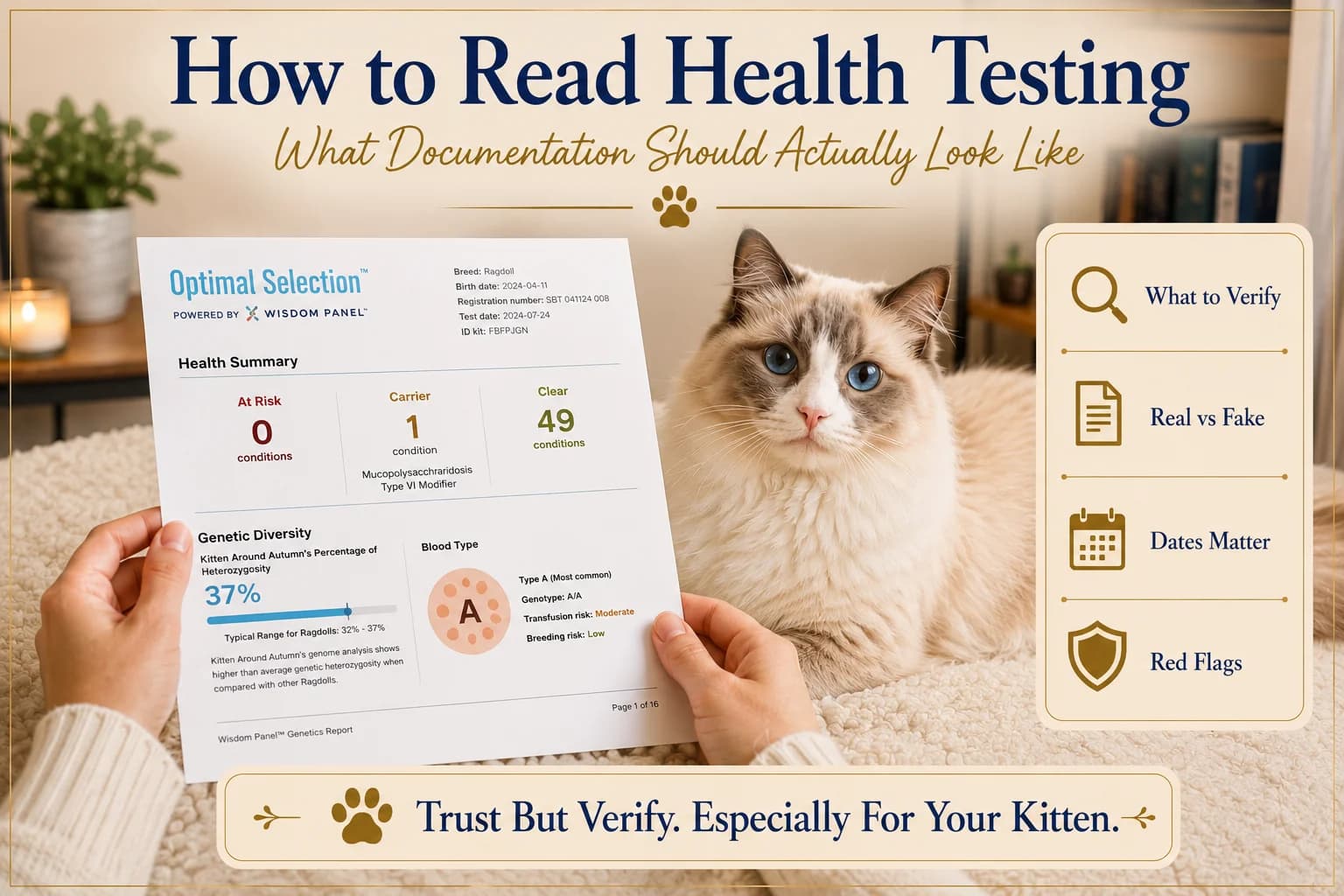
How to Read a Ragdoll Breeder’s Health Testing (What Documentation Should Actually Look Like)
09/02/2026
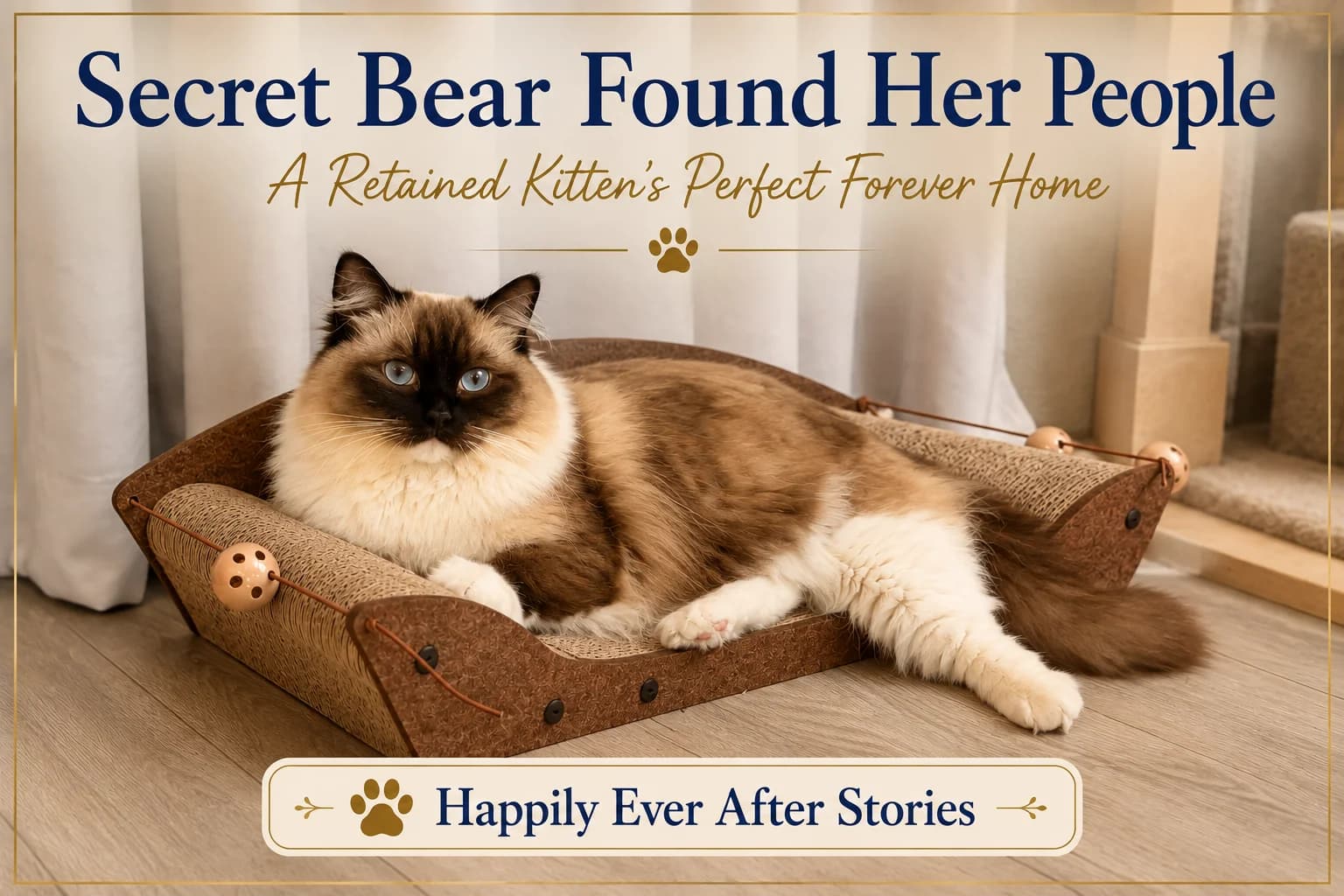
Secret Bear Found Her People: When a Retained Kitten Becomes Someone’s Forever Cat
08/29/2026
HCM Testing in Ragdolls: The DNA Test, the Echo, and What Everyone Gets Wrong
08/26/2026
Ragdoll Flight Nanny: How Out-of-State Adoption Actually Works
Subscribe to our newsletter
Litter announcements, new posts, and the occasional discount — no spam.