What Should I Feed My Ragdoll? A Complete Feeding Guide from Kitten to Adult
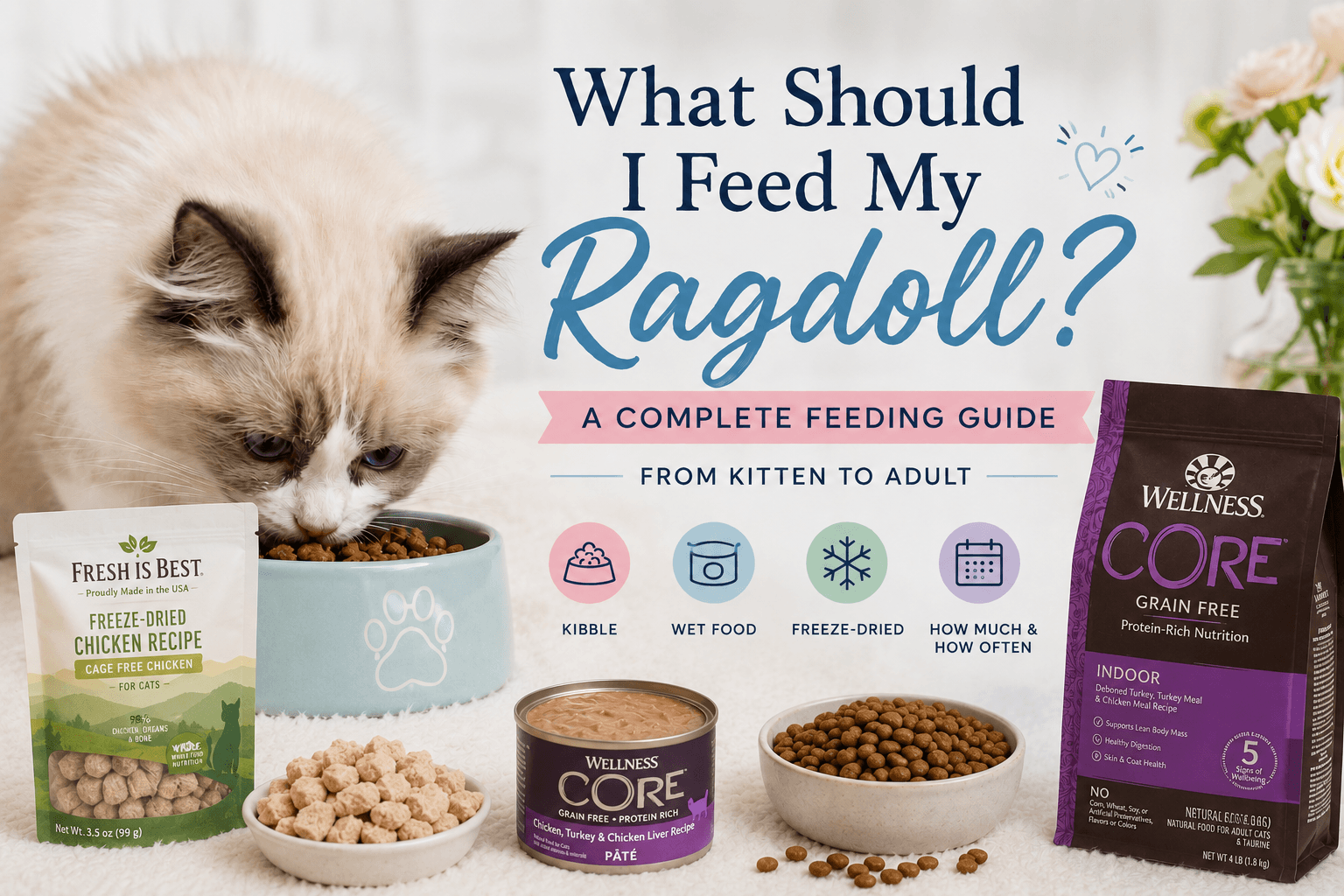
What Should I Feed My Ragdoll? A Complete Feeding Guide from Kitten to Adult
Disclosure: This post contains affiliate links to our Amazon storefront. As an Amazon Associate, we earn from qualifying purchases at no extra cost to you. We only recommend products we personally use and trust with our own cats and kittens.
One of the most common questions we get from new and prospective Ragdoll owners is also one of the most important: “What should I feed my Ragdoll?”
It’s a great question — because what you feed your Ragdoll affects everything from coat quality and energy levels to long-term health, weight, and even how often you’ll be cleaning out the litter box. Ragdolls are a slow-maturing breed (they don’t fully mature until around 4 years old), so good nutrition during those growth years matters even more than it does for most cats.
In this guide, we’ll walk you through exactly what we feed our Ragdolls at Kitten Around Ragdolls, why we chose those foods, how much to feed at every life stage, and the most common feeding mistakes we see new owners make.
What Ragdolls Need Nutritionally
Cats are obligate carnivores. That means their bodies are designed to thrive on animal protein — not grains, fillers, or plant-based proteins like pea protein or potato. When you’re shopping for cat food, the first ingredient should always be a named meat (chicken, turkey, salmon, etc.), not a meat by-product or grain.
For Ragdolls specifically, look for food that meets these standards:
- High protein — at least 35% crude protein for adults, 40%+ for kittens
- AAFCO certified — meets nutritional standards for the appropriate life stage
- Named meat as the first ingredient — not “chicken meal” or “by-product meal” alone
- Added DHA for kittens (brain and eye development)
- Taurine — essential for heart and eye health (this is non-negotiable for cats)
- Moisture — cats evolved to get most of their hydration from food, not water bowls
What We Feed Our Ragdolls
After years of trial, research, and watching how different foods affect coat, weight, energy, and litter box habits across our cattery, here’s exactly what we feed:
Dry Food: Wellness CORE Grain-Free Kitten
For dry kibble, we feed Wellness CORE Grain-Free Kitten (Deboned Turkey, Turkey Meal & Deboned Chicken) — you can grab it directly from our Amazon storefront. It’s a high-protein, grain-free formula that’s AAFCO approved for kitten growth.
The guaranteed analysis is impressive:
- 45% crude protein minimum
- 18% crude fat minimum
- Added DHA for brain and eye development
- Omega blend for skin and coat health
- Probiotics and antioxidants for gut and immune support
It’s a great foundation food, and we’ve found Ragdolls thrive on it. The grain-free formula tends to produce firmer stools and less digestive upset than grain-heavy alternatives — which translates to fewer litter box issues, especially during the kitten phase when their digestive systems are still developing.
We continue feeding the kitten formula until our Ragdolls are about 12–18 months old, then transition gradually to the adult Wellness CORE formula.
Wet Food: Fresh Is Best Freeze-Dried Chicken
For wet food, we absolutely love Fresh Is Best Freeze-Dried Chicken Cat Food. It’s a raw freeze-dried food that you simply rehydrate with water before feeding, so it functions just like wet food but with a much longer shelf life and zero canned-food mess. You can find it on our Amazon storefront alongside the other foods and supplies we recommend.
Why we love it:
- Made with cage-free, human-quality chicken, chicken organs, and added vegetables, kelp, and vitamins
- Exceeds AAFCO standards for all life stages — meaning it’s safe for kittens, adults, and seniors
- It’s a fantastic way to get more moisture into your cat’s diet, which is so important for cats long-term (especially for kidney and urinary health)
- Honestly, we’ve never met a cat who didn’t love it. Even our pickiest eaters and youngest kittens take to it immediately
It works beautifully as a first food for weaning kittens — the rehydrated texture is soft and easy for tiny mouths, and the flavor is irresistible. If you’re bringing home a new Ragdoll kitten from us, this is the food they’re already eating and loving.
Backup Wet Food: Wellness CORE Wet
We also feed Wellness CORE wet food as a complement and rotation option. It pairs well with the kibble (same brand family, same nutritional philosophy) and gives our cats variety. But our kittens consistently prefer Fresh Is Best, so that’s our go-to first food and the one we recommend new owners start with.
How Much to Feed a Ragdoll
Ragdolls are a big breed — males typically reach 15–20 pounds at maturity, females 10–15 pounds. They’re also slow-maturing and continue growing until around 4 years old. Because of that, our approach to feeding is different than what you’d do for a smaller, faster-maturing breed.
We free-feed kibble for our Ragdolls’ entire lifetime. They self-regulate well on a high-quality, high-protein food like Wellness CORE, and the steady access supports their long growth phase and large adult size. We pair that with scheduled wet/freeze-dried meals for moisture and variety.
Here’s our general feeding approach by life stage:
| Age | Dry Food | Wet/Freeze-Dried (per day) | Feeding Frequency |
|---|---|---|---|
| 8–12 weeks | Free-feed (always available) | 2–3 small servings | Free-feed kibble + 3–4 wet meals |
| 3–6 months | Free-feed | 2 servings | Free-feed kibble + 3 wet meals |
| 6–12 months | Free-feed | 1–2 servings | Free-feed kibble + 2 wet meals |
| 1–4 years (still growing!) | Free-feed | 1–2 servings | Free-feed kibble + 2 wet meals |
| Adult / Senior (4+ years) | Free-feed | 1 serving | Free-feed kibble + 1–2 wet meals |
Note: Body condition matters more than exact portions. You should be able to feel (but not easily see) your Ragdoll’s ribs. Because Ragdolls are a large breed, don’t compare their weight or food intake to smaller breeds — a “normal” 18-pound Ragdoll male is at a healthy weight, while an 18-pound Domestic Shorthair would be obese.
Why We Free-Feed for Life (and When to Reconsider)
Free-feeding kibble works for Ragdolls because:
- They’re slow-maturing. Up to 4 years of growth means sustained calorie needs that scheduled meals can short-change.
- They’re a big breed. Males reaching 15–20 lbs need consistent fuel — they’re not built like a 9-pound Domestic Shorthair.
- High-protein, high-quality food self-regulates better. Cheap, carb-heavy kibble triggers overeating; protein-rich foods like Wellness CORE create natural satiety.
- Multi-cat households benefit. Free-feeding reduces resource guarding and food anxiety in homes with more than one cat.
That said, free-feeding isn’t right for every cat. Reconsider scheduled meals if your Ragdoll:
- Is gaining weight beyond breed-appropriate range (males consistently above 22 lbs, females above 16 lbs)
- Has a medical condition like diabetes that requires controlled feeding
- Lives with another cat who’s overeating from the shared bowl
If you need to control portions, talk with your vet about how much kibble to measure out per day — not whether to feed less, since Ragdolls truly do need more food than the average cat.
Common Feeding Mistakes to Avoid
- Feeding only dry food. Cats are notoriously bad at drinking enough water. A diet of dry-only food can contribute to urinary issues, kidney problems, and chronic dehydration. Always include a wet or rehydrated food component.
- Free-feeding low-quality kibble. Free-feeding works only with high-protein, high-quality food like Wellness CORE. Cheap kibble loaded with grains and fillers will cause weight gain and overeating because it doesn’t satisfy. If you can’t free-feed quality food, switch to measured portions.
- Switching foods too quickly. Always transition over 7–10 days by gradually mixing old and new food. Sudden switches cause vomiting and diarrhea.
- Feeding human food regularly. Occasional plain cooked chicken or salmon is fine, but human food shouldn’t be a regular part of their diet. Many human foods (onions, garlic, dairy in large amounts, anything with xylitol) are toxic to cats.
- Choosing food by price alone. Cheap cat food is loaded with grains, by-products, and fillers. You’ll spend more on vet bills down the road than you’ll save at the pet store.
- Comparing your Ragdoll’s weight to other breeds. A healthy adult male Ragdoll can be 18–20 lbs and look “big” to people used to smaller cats. Don’t restrict food because someone tells you your cat looks heavy — check with your vet using breed-appropriate body condition scoring.
Foods to Avoid Entirely
Never feed your Ragdoll:
- Onions, garlic, chives (any allium)
- Grapes or raisins
- Chocolate
- Raw bread dough
- Alcohol or caffeine
- Xylitol (artificial sweetener)
- Cow’s milk (most cats are lactose intolerant)
- Raw fish (contains an enzyme that destroys thiamine)
- Cooked bones (splinter and cause choking or internal injury)
Treats and Supplements
Treats should make up no more than 10% of your cat’s daily calories. We like simple, single-ingredient treats — freeze-dried chicken, salmon, or shrimp. Avoid anything with grain fillers or artificial colors.
Most healthy cats on a quality diet don’t need supplements, but if your vet recommends one (such as a joint supplement for senior cats or a probiotic during digestive upset), follow their guidance. Don’t add supplements just because.
What About Raw Diets?
Raw feeding is a bigger topic than this post can cover, and we’d rather you do it right than do it casually. Done correctly with proper supplementation and food safety, raw can be excellent for cats. Done incorrectly, it can cause nutritional deficiencies or expose your cat (and your family) to bacteria like Salmonella. If you’re interested in raw, talk to a feline nutritionist before making the switch.
Freeze-dried raw (like Fresh Is Best) is a great middle-ground option — you get the benefits of raw nutrition without the food-safety risks of true raw feeding.
Final Thoughts
The right food can make a meaningful difference in your Ragdoll’s coat, energy, weight, and long-term health. Our recommendations — Wellness CORE kibble plus Fresh Is Best freeze-dried — have served our cattery and our kittens’ new families well for years.
If you’re bringing home a kitten from us, you’ll get a sample of what they’ve been eating and our full feeding schedule, so the transition is smooth. If you’re switching to one of these foods from something else, remember to transition slowly over 7–10 days.
Have a feeding question we didn’t cover? Reach out — we love talking food and nutrition with fellow Ragdoll owners.
🛒 Shop Our Recommendations
Every product we mention in this post — plus our favorite litter, toys, grooming tools, and supplies — is on our curated Amazon storefront.
Looking to bring home a Ragdoll kitten? Check our available kittens or join our waitlist for upcoming litters. We’re a TICA-registered cattery in Sacramento, CA, breeding for health, temperament, and the traditional Ragdoll standard.
Recent Blogs
09/21/2026
Why Cheap Ragdoll Kittens Are Actually Expensive: A Breeder’s Warning
09/12/2026
What’s Included When You Buy a Ragdoll Kitten From Us

09/09/2026
What Our Past Buyers Just Told Us About Their Cats — And What We Changed Because of It
09/05/2026
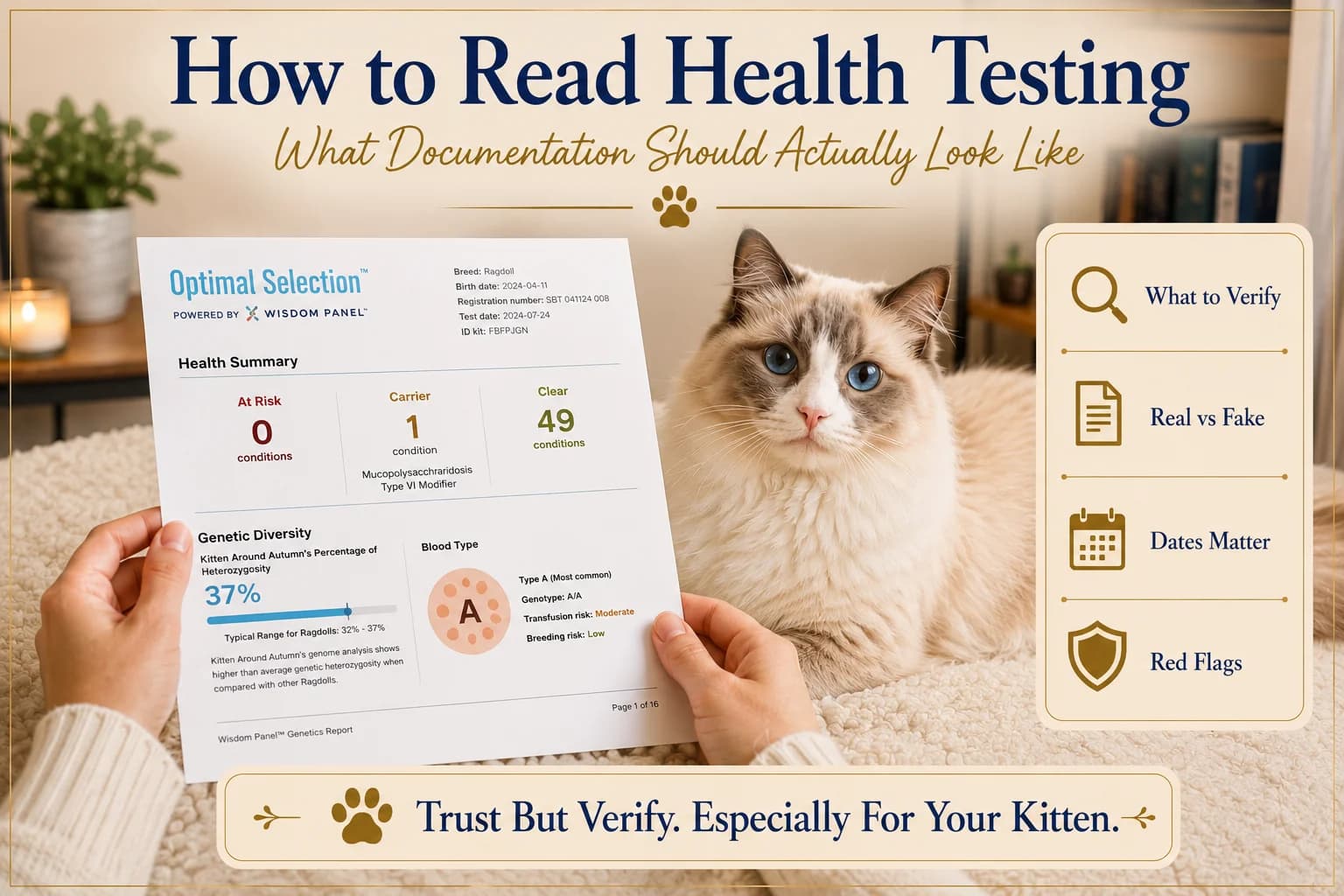
How to Read a Ragdoll Breeder’s Health Testing (What Documentation Should Actually Look Like)
09/02/2026
Secret Bear Found Her People: When a Retained Kitten Becomes Someone’s Forever Cat

08/29/2026
HCM Testing in Ragdolls: The DNA Test, the Echo, and What Everyone Gets Wrong
Subscribe to our newsletter
Litter announcements, new posts, and the occasional discount — no spam.