How to Read a Ragdoll Pedigree: Traditional vs. Non-Traditional Cats Explained
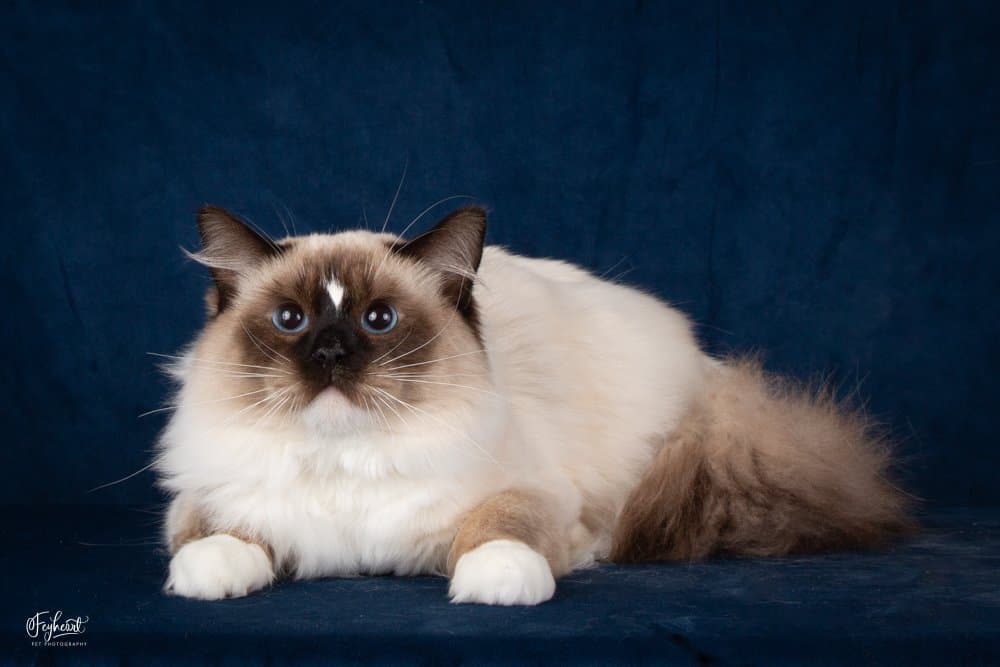
When it comes to breeding or buying a Ragdoll, the pedigree tells the real story. Understanding how to read a pedigree — and knowing the difference between a traditional line and a non-traditional Ragdoll — is essential knowledge for breeders, exhibitors, and informed buyers alike.
This guide walks you through how to trace Ragdoll ancestry, use the PawPeds database, decode color and pattern codes, and understand why preserving original foundation lines matters.
Why Pedigree Knowledge Matters
Knowing how to read a Ragdoll pedigree allows you to:
- Verify breed integrity and lineage claims
- Meet the expectations of buyers who want traditional-line cats
- Make informed decisions about pairings and purchases
In today’s Ragdoll world, most cats are non-traditional — and true traditional lines have become extremely rare. Understanding the difference helps protect what remains of these original bloodlines.
Step 1: How to Research a Ragdoll Pedigree on PawPeds
The PawPeds International Pedigree Database is the best free resource for researching a Ragdoll’s lineage.
- Visit pawpeds.com and navigate to the Ragdoll database.
- Enter the cat’s full registered name in the search bar.
- View the pedigree — start with 10 generations for an initial overview.
- For traditional line research, go far beyond 10 generations. Full traceability to the foundation cats is required.
Step 2: TICA’s Two Breeds in the Ragdoll Breed Group
According to the TICA Ragdoll & Cherubim Breed Standard, there are actually two distinct breeds in the Ragdoll Breed Group:
- Ragdoll (RD) – Blue-eyed pointed cats only. This is the traditional breed standard.
- Cherubim (CB) – Mink, Sepia, or Solid-colored cats, which may have aqua, blue-green, gold, or hazel eyes depending on color category.
Mink and sepia cats are not accepted in the Ragdoll’s pointed standard and cannot compete as Ragdolls in TICA shows. They are shown in the Cherubim category instead. This distinction is frequently misunderstood by both buyers and newer breeders.
Step 3: What Is a Traditional Line Ragdoll?
A traditional line Ragdoll is defined by both color/pattern restrictions and complete pedigree traceability — not simply the absence of outcrossing in the last 10 generations.
Traditional Line Criteria:
- Allowed colors: Seal, Blue, Chocolate, Lilac only
- Allowed patterns: Colorpoint, Mitted, Bicolor
- No lynx, red, cream, tortie, or torbie at any point in the pedigree
- No variants (mink, sepia, or solid) anywhere in the lineage
- Over 90% of ancestry fully traceable to the breed’s three foundation cats
- No outcrossing at all — even a single outcrossing in the 20th generation disqualifies a line
- Pedigree must be “fully traceable” or a white pedigree
Why this matters: Traditional lines once made up the majority of the breed but are now an extremely small minority. Any outcrossing — even once — removes a cat from the traditional category permanently, making preservation breeding critically important. Many traditional breeders will only place cats with other breeders who can continue traditional pairings.
Step 4: What Is a Non-Traditional Ragdoll?
A non-traditional Ragdoll can still meet the TICA Ragdoll breed standard if it has a pointed pattern and accepted colors — but it will not qualify as a preservation-quality traditional line cat. Non-traditional Ragdolls may have:
- Colors or patterns outside the traditional set (lynx, red, cream, tortie, torbie)
- Outcrossing anywhere in the lineage
The vast majority of Ragdolls sold today — including many from highly reputable breeders — are non-traditional. This does not mean they are lesser cats; it simply means they do not meet the additional criteria for traditional line preservation breeding.
Step 5: PawPeds Color Codes to Know
Traditional color codes (these should be the only ones in a traditional pedigree):
n= Seal (black)a= Blueb= Chocolatec= Lilac61= Blue-eyed (pointed Ragdoll)
Non-traditional indicators to watch for:
32= Mink (Cherubim category)31= Sepia (Cherubim category)- Any red, cream, lynx, or tortie codes
Traditional vs. Non-Traditional: Side-by-Side Comparison
| Feature | Traditional Line Ragdoll | Non-Traditional Ragdoll |
|---|---|---|
| Foundation Colors | Seal, Blue, Chocolate, Lilac only | May include red, cream, and additional colors |
| Patterns Allowed | Colorpoint, Mitted, Bicolor | May include lynx, tortie, torbie |
| Variants (Mink/Sepia) | None — not at any point in pedigree | None — not at any point in pedigree |
| Outcrossing | Zero — even once in the 20th generation disqualifies | May have outcrossing anywhere in lineage |
| Pedigree Traceability | 90%+ traceable to three foundation cats | May not be fully traceable |
| Eye Color | Blue only (due to pointed gene) | Blue only (due to pointed gene) |
| Rarity | Extremely rare — a small minority of breeders | The majority of current Ragdolls |
What This Means for Buyers
If you’re purchasing a pet Ragdoll kitten, traditional vs. non-traditional is unlikely to affect your day-to-day experience with your cat — both can be wonderful, loving companions that meet the TICA breed standard. However, if you’re a breeder or someone specifically seeking a traditional line for preservation purposes, always ask for a PawPeds printout verified beyond 10 generations, and confirm there are no disqualifying colors, patterns, or variants anywhere in the ancestry.
Pro Tip: A genuine traditional line Ragdoll will have only Seal, Blue, Chocolate, or Lilac in its ancestry, no variants, and 100% traceable lineage to the three foundation cats — with zero outcrossing at any point.
Have questions about our cats’ pedigrees or breeding program? We’d love to hear from you. At Kitten Around Ragdolls, transparency is part of everything we do.
Recent Blogs
10/21/2026
Ragdoll vs. Birman: Similar Blue Eyes, Two Different Breeds
10/17/2026
Male vs. Female Ragdoll Cats: Choose the Individual, Not the Stereotype
10/14/2026
Can Ragdoll Cats Be Left Alone? Planning for Workdays and Real Life
10/12/2026
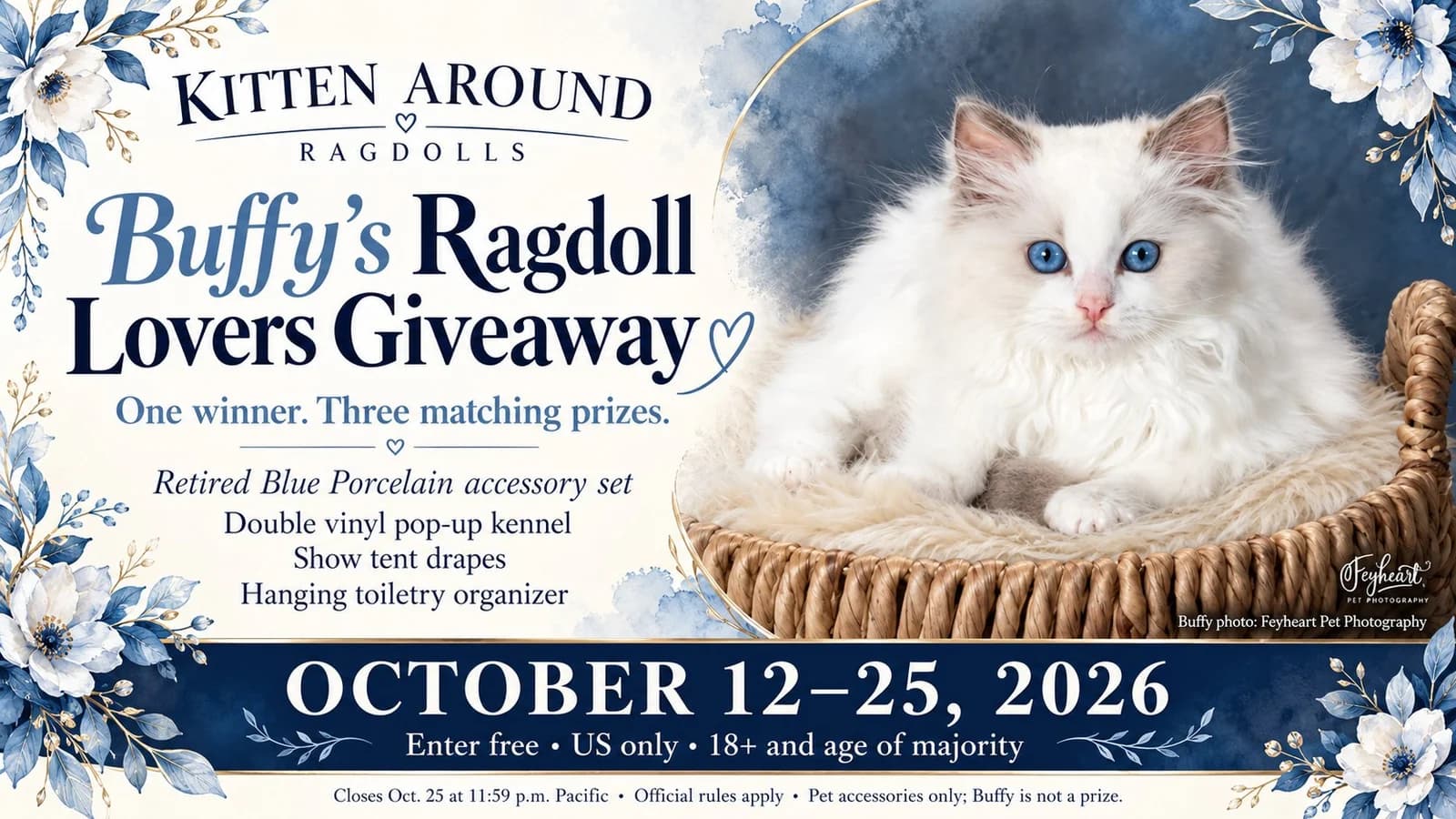
Buffy’s Ragdoll Lovers Giveaway: Win the Matching Blue Porcelain Set
10/10/2026
Do Ragdoll Cats Shed? A Grooming Routine That Fits Real Life
10/07/2026
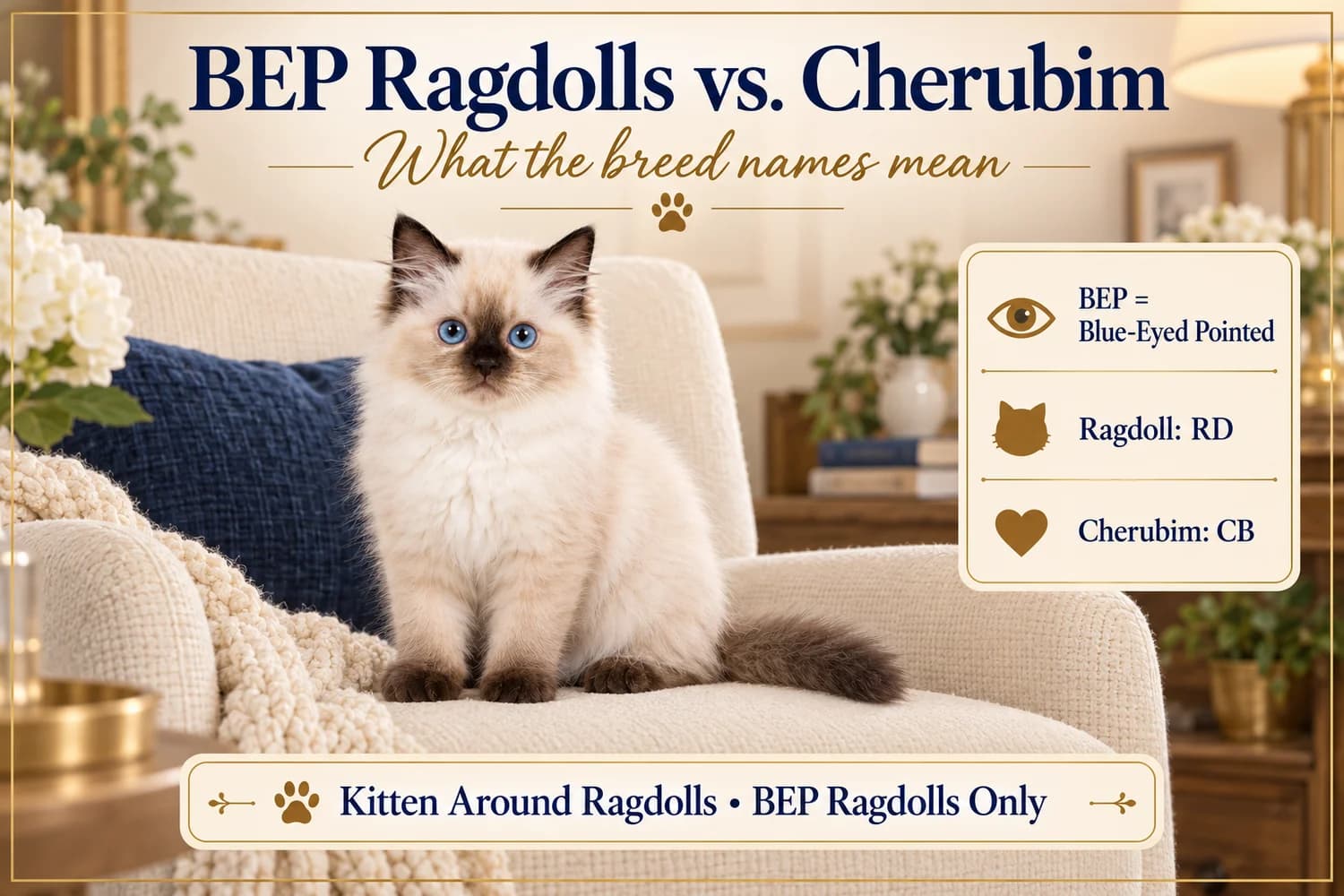
BEP Ragdolls vs. Cherubim: What the Names Mean Before You Buy
Subscribe to our newsletter
Kitten availability, cattery updates, and new blog posts — sent when we have news to share.