Ragdoll Kitten Prices in California: Costs and What to Ask
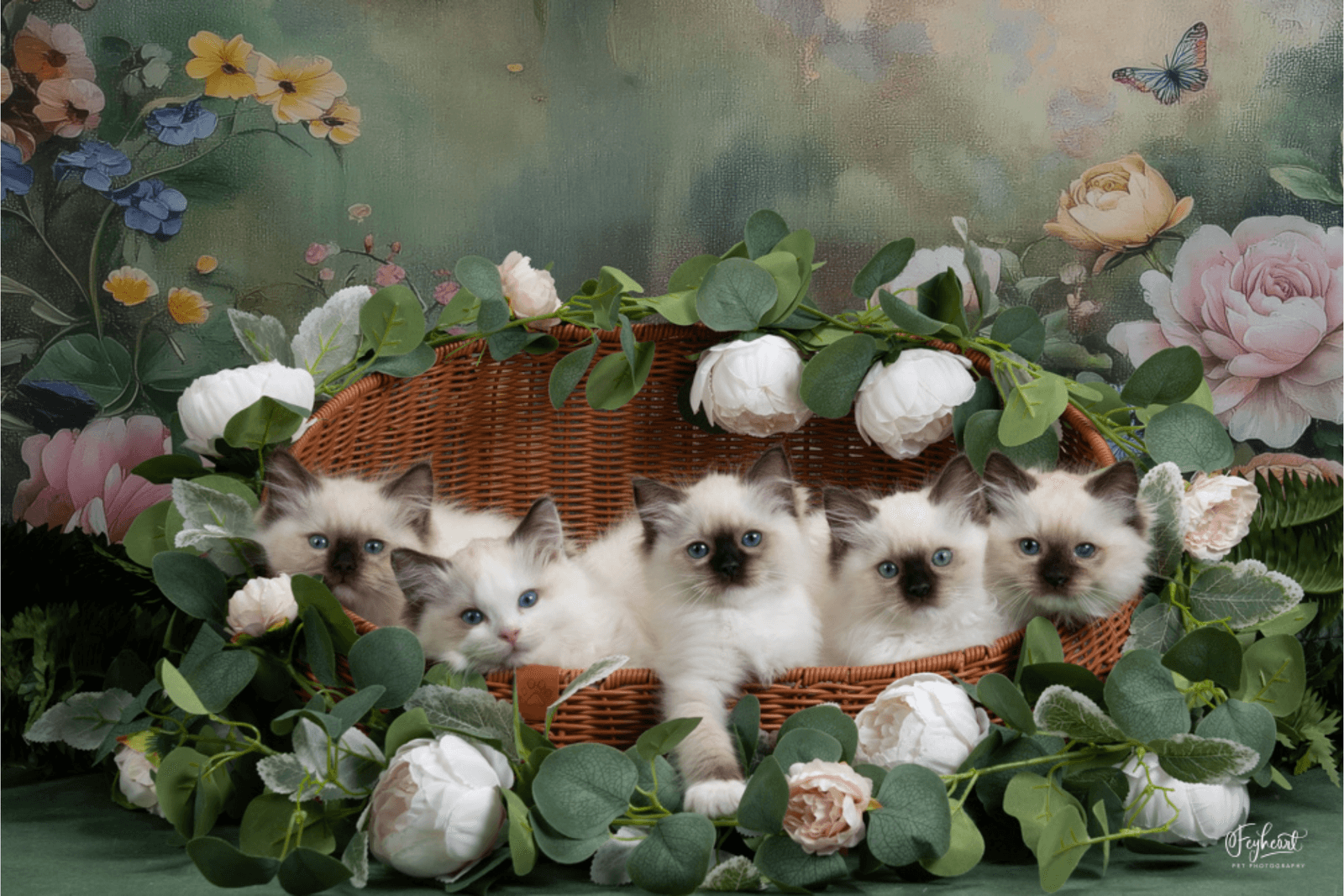
If you’re researching Ragdoll kitten prices in California, you deserve a clear answer and a useful way to compare your options. At Kitten Around Ragdolls, our companion kittens are $4,500 each. That is our price, not a statewide average.
I’m Kiki Godfrey, and I raise blue-eyed pointed Ragdolls in Orangevale, in the Greater Sacramento Area. I love this work. I also want families to understand the commitment before they fall in love with a photograph or send a deposit.
$4,500 Is Our Standard Companion-Kitten Price
Sometimes, when someone hears $4,500, their first question is, “Is that a show kitten?” No. That is our standard price for a companion kitten. You do not have to be looking for a show cat to receive the care we put into raising every kitten.
We don’t charge more or less for girls than boys. We don’t charge more for one color or less for another. There is one price for our companion kittens, and it reflects the care, preparation, time, and expenses behind every placement.
We don’t offer free or discounted kittens. Our price helps us sustain the work and pay for the care we provide before homecoming. We are not willing to cut corners to offer a lower price. We want each kitten to have what they need, whether that kitten happens to be the color someone has been searching for or a different color that turns out to be their perfect companion.
Ready for Homecoming, With the Preparation Already Done
Our goal is for you to pick up your kitten and begin your life together, with alteration, microchipping, a veterinary examination, age-appropriate vaccinations, and deworming already completed. You should receive the records and know what has been done, rather than discover a list of routine preparation you were expecting the breeder to handle.
Plan for a homecoming checkup with your own veterinarian. They can review the records, confirm the next vaccination dates, including rabies, and recommend any remaining kitten care. The timing depends on your kitten’s age, history, and individual needs. Being ready to go home does not mean we can promise there will be no further appointments, boosters, or health concerns for a year.
What we want is a well-prepared kitten and a well-informed family. We do the work we have committed to before placement, and we help you understand how to continue that care at home.
Our Ragdoll Kitten Price and Deposit
| Item | Our current terms |
|---|---|
| Companion kitten | $4,500 total, with no surcharge for sex, color, pattern, or show potential |
| Reservation deposit | $1,000, applied toward the total |
| Remaining balance | $3,500, due before your kitten goes home |
| Placement | Companion homes only, with no breeding rights |
| Travel | Discuss separately before making arrangements |
The deposit is non-refundable. Our current payment terms explain cancellation, possible application toward a future kitten at our discretion, and accepted payment methods. We currently accept Zelle, cash in person at pickup, or a cashier’s check under the stated conditions. We do not accept credit cards. Please read the written agreement and ask questions before paying.
An application starts a conversation. It does not reserve a kitten or guarantee approval. The match matters to us as much as the timing.
Is There a Standard California Ragdoll Price?
You will see different asking prices. A listing may describe a companion kitten, an adult, a show prospect, or a cat offered with breeding rights. Those are different offers, and the amount on the page may include different care, paperwork, or services.
I don’t have a representative statewide pricing survey to turn those listings into a reliable California average. A precise-looking range without that context would be less helpful than it sounds. Ask each breeder for a current written quote and an itemized explanation of what comes with that particular cat.
For the work and expenses behind our own price, see what you’re paying for when you buy a Ragdoll kitten. This page focuses on comparing offers and planning your California purchase.
Compare What Is Included, Not Just the Asking Price
Put the information side by side. That makes differences easier to understand without assuming that a higher price proves better care or a lower price proves neglect.
- Veterinary care: Ask which examinations, vaccinations, and treatments have been completed and which your veterinarian will need to continue.
- Spay or neuter: Confirm whether it is completed before placement or handled under another written arrangement. Our companion kittens are altered before going home.
- Records and registration: Ask what records you receive, when you receive registration paperwork, and how the cat is identified on the documents.
- Written agreement: Read the health-guarantee terms, exclusions, responsibilities, and return arrangements.
- Preparation and support: Ask about familiar food, care instructions, the kitten’s routine, and support after homecoming.
- Insurance offers: If a trial is offered, check eligibility, activation requirements, exclusions, and the actual policy. An offer is not automatic coverage.
Our go-home package guide explains our program in more detail. Confirm the current details for your kitten in your agreement.
You Get What You Pay For: Look Beyond the Purchase Price
When someone tells me what they paid for a kitten, I usually have a few more questions. How old was the kitten when they went home? Were they already altered and microchipped? What veterinary care and records came with them? What care was still the family’s responsibility?
You get what you pay for. For me, that means looking at the care behind the price and asking for documentation. A higher price on its own proves nothing. The details are what make a comparison meaningful.
Here is an illustrative budget using estimates I would ask a family to check with their own veterinarian. These are not invoices from another breeder or universal veterinary prices:
| Possible expense | Illustrative amount |
|---|---|
| Kitten purchase | $3,000 |
| Alteration, if not included | $500 |
| Food during four additional weeks at home | $100 household allowance, not a measured amount one kitten will eat |
| Vaccinations and deworming still due | $200 |
| Fecal testing, if recommended and not already included | $250–$300 |
| Microchip, if not included | $50–$100 |
| Total if all these separate expenses apply | $4,100–$4,200 |
Some fees may be bundled, and not every kitten needs the same tests or treatments. Ask what a quote includes so you don’t count a charge twice. PCR testing and a fecal flotation answer different questions; your veterinarian can explain which testing is appropriate. Food also remains an ongoing expense regardless of when a kitten comes home.
Those Weeks With Mom and Siblings Matter
We keep our kittens with their mother and siblings until at least 12 weeks, with homecoming based on the individual kitten’s readiness. That time includes food, litter, daily care, play, handling, and learning to live with other cats and people. It is part of raising a kitten, not simply waiting for pickup day. TICA’s buyer guidance notes that most knowledgeable breeders place kittens at 12 weeks or older.
Our companion kittens go home altered, microchipped, examined and cleared by our veterinarian, with age-appropriate vaccinations and deworming. Age-appropriate does not mean that no further veterinary care or vaccine boosters will be needed. We share the records so your veterinarian can continue their care.
A photograph can introduce you to a kitten. It cannot tell you everything about the match. Ask how a breeder gets to know your family, discusses each kitten’s personality, and handles a reservation if the match turns out differently than expected. Our goal is a family relationship, not simply a transaction.
Our Heart-Screening Program Is Expanding
Every cat currently breeding in our program has completed genetic testing. We use Wisdom Panel Optimal Selection Feline and publish genetic-report and pedigree links on our Kings & Queens page so families can see the information for themselves. Young kings and queens we are raising for possible future breeding may still have testing ahead of them; their genetic testing is completed and reviewed before they are bred.
As of October 20, 2026, Bowie, Princess, and Bandit have had echocardiograms. Their registered names are Flashyragdolls David Bowie, CH Kittenaround Strawberry Shortcake (Princess), and Familytimerags Purrito Bandito (Bandit). Some breeding pairs already have completed parent echocardiogram screening. We are working through the remaining breeding cats and expect to complete their examinations within the next six months, by April 20, 2027. This is our plan, not a claim that the remaining examinations have already happened.
If having two parents with completed echocardiograms is important to you, ask us about the specific pairing and its actual records before reserving a kitten. A parent’s completed scan does not mean the kitten has had an echocardiogram, and a planned litter is not a promise of availability.
We do not promise HCM-free cats. Genetic results identify the variants tested, while an echocardiogram assesses the heart at the time of the examination. Neither guarantees that a cat will never develop heart disease. We want families to have the reports, understand their limits, and know which examinations are completed and which are still planned.
What Health Testing Can—and Cannot—Tell You
Ask to see named tests and their results, not just the phrase “health tested.” UC Davis Veterinary Genetics Laboratory explains that its Ragdoll HCM DNA test detects the specific R820W variant. A result answers a question about that variant; it is not a promise that a cat can never develop heart disease. Read UC Davis’s test explanation.
A breeder can explain their screening program, while your veterinarian can help you understand what the records establish and what ongoing care your cat needs. Neither a high purchase price nor a written guarantee replaces that care.
Do Color, Pedigree, or Show Potential Change the Price?
Some breeders use different prices for different placements. Ask them to explain their policy rather than assuming that “rare” or “show quality” has one standard meaning.
Our approach is simple: the companion kittens we place are the same $4,500 price. We do not add a color or show-potential premium. You can enjoy a beautiful color and pattern without treating it as a prediction about affection or compatibility.
A pedigree documents ancestry. Show potential concerns evaluation against a breed standard. Health records and observations of the individual kitten answer different questions. Consider all of them.
Plan for the Costs After Homecoming
The purchase is one part of the budget. Before reserving a kitten, get current prices for the things your household will need:
- A secure carrier, suitable litter boxes, scratching surfaces, bedding, and a sturdy cat tree.
- Food, litter, and replacement supplies.
- Routine veterinary appointments and any additional care recommended for your kitten.
- Insurance, if you choose it, plus deductibles, exclusions, and costs it does not cover.
- A practical plan for urgent veterinary care and care while you travel.
- Transport, if you will not pick up locally.
Quotes from your own veterinarian, insurer, and transport provider are more useful than a universal first-year total. Those costs depend on your location, choices, and the cat’s needs. For travel questions, start with our transport comparison, then confirm current arrangements directly.
Questions to Ask Before Sending a Deposit
- Is this the full kitten price, and what costs are separate?
- What does the deposit reserve, and what happens if plans change?
- Which records and written terms can I review before committing?
- What have you observed about this kitten’s personality and needs?
- How will we decide whether this is a good match for my household?
You don’t need to apologize for asking. Buying a kitten is a meaningful decision, and clear answers help everyone.
Find the Right Match for Your Family
It is fine to have a budget and preferences. We want to talk about your everyday life too: the people, other animals, routines, and care that will shape your kitten’s home.
See our current kitten listings, start an application, or ask us a question. If the timing isn’t right, you can join our waitlist. We’re happy to help you make an informed decision.
Recent Blogs
10/21/2026
Ragdoll vs. Birman: Similar Blue Eyes, Two Different Breeds

10/17/2026
Male vs. Female Ragdoll Cats: Choose the Individual, Not the Stereotype

10/14/2026
Can Ragdoll Cats Be Left Alone? Planning for Workdays and Real Life

10/12/2026
Buffy’s Ragdoll Lovers Giveaway: Win the Matching Blue Porcelain Set
10/10/2026
Do Ragdoll Cats Shed? A Grooming Routine That Fits Real Life
10/07/2026
BEP Ragdolls vs. Cherubim: What the Names Mean Before You Buy
Related buying guides
Subscribe to our newsletter
Kitten availability, cattery updates, and new blog posts — sent when we have news to share.