Who Actually Owns Your Vet? A Breeder’s Take on Private Equity in Veterinary Care
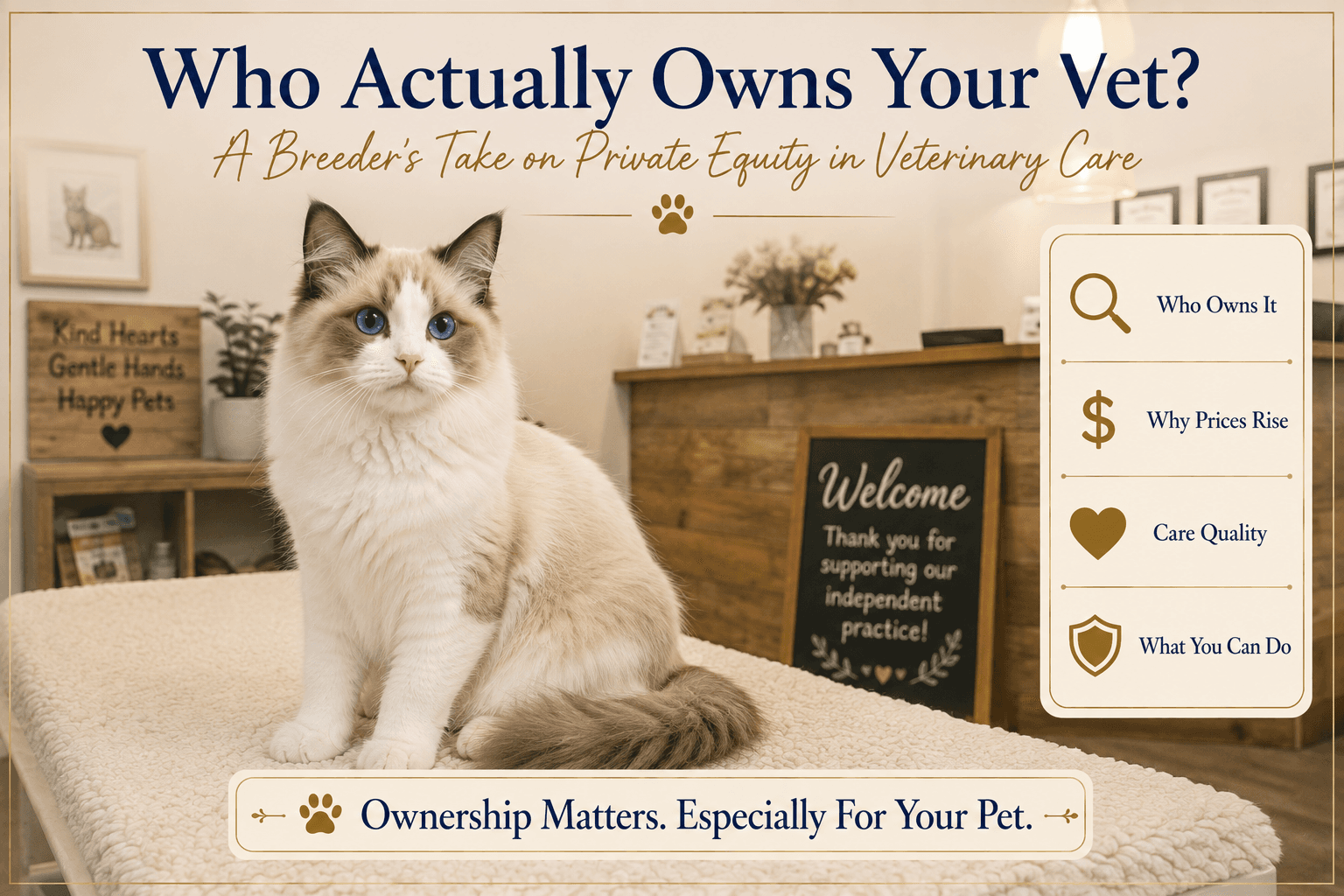
Who Actually Owns Your Vet? A Breeder’s Take on Private Equity in Veterinary Care
I want to write about something that has been on my mind for a long time, and that a recent conversation with a trusted colleague pushed to the front of my thinking. It is uncomfortable, it is not something breeders usually talk about, and I think it matters enormously for every family who owns a cat — or is thinking about bringing one home.
Do you actually know who owns your veterinarian?
Not who works there. Not who signs your invoice. Not the friendly person in the exam room. I mean the actual corporate entity that owns the practice, sets the pricing, decides the appointment length, chooses which drugs and diagnostics get pushed, and determines whether your vet has real clinical autonomy or is being pressured to hit revenue targets.
For a growing share of pet owners, that answer is now: a private equity firm you have never heard of, on the other side of the country, whose primary obligation is to their investors — not to your cat.
The Scale of What Has Happened
This is not a fringe concern. It is not a conspiracy theory. It is a documented, measurable shift in the veterinary industry that has happened astonishingly quickly.
According to Private Equity Vet, an independent organization tracking the corporate consolidation of US veterinary care, over 30% of general veterinary practices are now under corporate ownership — up from around 8% just over ten years ago. For specialty and emergency practices, including 24/7 emergency care, that number is estimated at over 75%.
The Economic Liberties Project puts the general-practice number even higher — somewhere between 30 and 50 percent of all US veterinary clinics — with routine service price hikes of up to 100% documented in some acquired practices.
Ten years ago, the veterinary industry was still overwhelmingly independent. Small practices owned by the veterinarians who actually worked there, accountable to their communities, building long-term relationships with clients over decades. Today, that world is disappearing in front of us, quietly, one acquired clinic at a time.
How the “Roll-Up” Actually Works
The private equity model in veterinary care follows a specific playbook. It is worth understanding, because it changes how you interpret what is happening at your vet’s office.
A private equity firm identifies an industry that is fragmented (many small independent players), has stable recurring demand (pets get sick regardless of the economy), and is emotionally driven (families will spend money to save their animals). Veterinary care checks every box.
The firm raises capital from its investors — pension funds, wealthy individuals, sovereign wealth funds — with a promise of high returns within a defined time window, usually 5-7 years.
They then start buying practices. They target retiring veterinarians who need an exit and want a big check. They target practices that are struggling with rising costs and staff turnover. They target areas where they can quickly build regional dominance.
Once acquired, the practice usually keeps its name and branding — this is intentional. Most clients never know ownership has changed. The vet you have trusted for years is still there. The waiting room looks the same. But behind the scenes:
- Pricing gets restructured to hit new revenue targets
- Appointment times get shortened to see more patients per day
- Staff levels get cut to reduce labor costs
- Corporate protocols replace individualized treatment plans
- Veterinarians face pressure to recommend more billable procedures
- Continuity of care erodes as burnout and turnover increase
The goal is straightforward: increase the financial performance of each clinic, bundle them together into a larger group, and eventually sell the whole thing — either to another private equity firm, another corporate consolidator, or through a public offering — at a substantial profit.
That is the model. It is not evil. It is just the model. But it is a model designed to maximize investor returns, not to optimize your cat’s health outcomes. Those two things are not always the same thing.
Who Actually Owns the Biggest Chains
Some of the largest corporate veterinary chains in the US and the actual entities behind them, from the Private Equity Vet database:
- Banfield, VCA, BluePearl — owned by Mars (yes, the candy company; over 2,000 clinics combined)
- NVA (National Veterinary Associates) — owned by JAB Partners (roughly 1,000 clinics)
- VetCor — owned by Harvest Partners (roughly 900 clinics)
- Mission Pet Health / Southern Veterinary Partners — owned by Shore Capital Partners (roughly 780 clinics)
- PetVet Care Centers — owned by KKR (roughly 450 clinics)
- Thrive Pet Care — owned by TSG Partners (roughly 380 clinics)
- Ethos Veterinary Health — owned by JAB Partners (roughly 130 clinics)
Notice that some of these parent companies — particularly Mars and JAB — own multiple chains. That means when the “different” veterinary hospitals in your area compete for your business, they may all actually roll up to the same corporate parent. This is what the Federal Trade Commission calls “stealth consolidation,” and it is one of the reasons the FTC has intervened in some of these deals.
The full list of corporate consolidators is much longer than what I’ve listed here. If you want to look up a specific clinic, the searchable Vet Map & List at Private Equity Vet lets you check ownership directly.
What This Actually Feels Like as a Pet Owner
Here is what the shift looks like in practice — the specific things I hear from pet owner families all the time, and things a colleague recently described to me in detail from someone actively selling their independent clinic to a corporate chain because of a business dispute with their partner.
Vet visits that used to take 45 minutes now take 15. Longer appointments cost the practice more, so the corporate schedule squeezes them shorter.
Blood work and diagnostics get recommended more aggressively, sometimes for routine visits that never would have warranted them before. Not because your cat needs it. Because the corporate metric says the clinic is under-utilizing its lab equipment.
Prices for the same routine procedures go up steadily, without explanation. The Economic Liberties Project has documented some routine service price hikes of up to 100% in acquired practices.
The veterinarian you have trusted for years quietly leaves. New associates rotate through. The relationship you spent a decade building has to start over every few months.
Corporate protocols replace the individualized care your vet used to provide. Standardized upsells appear at every visit — dental cleanings, supplements, prescription foods — regardless of whether your specific cat needs them.
And most of the safety measures that used to be routine may quietly get scaled back. A trusted colleague recently described to me the reality of anesthesia at some corporate clinics — where the pre-op blood work, dedicated anesthesia staff, and monitoring protocols that used to be standard get cut in service of throughput. Their comment stuck with me: the chances of your cat dying under anesthesia go up when the safety measures get gutted for margin.
I cannot verify every clinic operates this way. I can tell you the incentive structure of the private equity model creates real pressure to move in this direction, and enough veterinarians and pet owners are describing similar experiences that a pattern is visible.
Why This Matters for Ragdoll Owners Specifically
Ragdolls, like all purebred cats, need specific and thoughtful veterinary care. HCM screening. Annual cardiologist echocardiograms. Genetic testing. Sensitive-stomach nutrition considerations. Careful anesthesia protocols. A vet who knows your specific cat and remembers their history.
None of these are impossible under corporate ownership. But every one of them is easier — and better — under a vet who has genuine clinical autonomy, adequate appointment time, and a long-term relationship with your family.
Cardiologist referrals in particular matter enormously to Ragdoll owners. When your primary vet recommends a specialist, you want them recommending the best available specialist — not the one that is part of the same corporate network because the parent company has an internal referral incentive.
When your kitten needs a spay or neuter, you want the surgical team using current-standard anesthesia monitoring and pre-op labwork — not corporate-cost-optimized shortcuts.
When you call at 10 PM because your cat is vomiting, you want your regular vet’s practice to be reachable — not routed through a corporate call center to a rotating cast of associates who have never met your animal.
The FTC Has Noticed. Regulators Are Concerned.
This is not just breeders and pet owners complaining. The Federal Trade Commission has intervened in multiple deals involving JAB Consumer Partners, requiring divestitures of clinics in several markets and imposing conditions on future acquisitions.
Former FTC Chair Lina Khan warned publicly about the broader effects of consolidation, financialization, and non-compete agreements in the veterinary industry — arguing they could undermine the ability of veterinarians to provide quality service and operate independently.
In 2024, Senators Elizabeth Warren and Richard Blumenthal sent a letter raising concerns about market consolidation in veterinary care specifically.
PBS NewsHour ran a segment on this in 2026 covering how private equity ownership of clinics is driving veterinary costs up nationwide.
The American Animal Hospital Association’s own Trends magazine has published pieces acknowledging the shift, including data showing that veterinarians in independent practice report significantly higher job satisfaction, more mentorship, and more autonomy than those working in corporate-consolidator settings (source).
This is happening. It is documented. It is being scrutinized. And it is affecting your cat’s care whether you have realized it yet or not.
What About the Vets Themselves?
I want to be very careful here, because this is important.
The veterinarians working in corporate-owned clinics are not the problem. Most of them are compassionate professionals doing extraordinary work in difficult conditions. Many have no other option in their geography. Many took on hundreds of thousands of dollars in veterinary school debt and cannot easily walk away from a stable paycheck to open an independent practice.
What Private Equity Vet says on this point resonates with me: many corporate-employed veterinarians deliver good care despite the incentives around them — and the word “despite” is doing a lot of work in that sentence. The vets are not failing your pet. The corporate structure they are working inside is often making their job harder, not easier.
Rates of burnout, mental health crisis, and even suicide are alarmingly high in the veterinary profession, and the tension between the Veterinary Oath and profit-based corporate priorities is a documented contributor. When you support an independent practice, you are also supporting the professional and emotional wellbeing of the veterinarian.
What You Can Actually Do
Reading about a systemic problem without any actionable path forward is exhausting. Here is what you, as an individual pet owner, can actually do.
Find Out Who Owns Your Current Vet
Start with the searchable Vet Map & List. Type in your clinic’s name. You will see who actually owns it. This information is often not obvious from the clinic’s own website or signage.
If your vet is independent — celebrate that, and stay loyal. Independent practices are becoming rare, and yours is more valuable than you realize.
If your vet is corporate — that does not necessarily mean you need to leave. It means you should ask more questions, notice patterns, and know what your alternatives are if things change.
Ask Direct Questions at Appointments
- How long is a standard appointment slot?
- How long have you been at this practice?
- Has ownership of the practice changed in the last few years?
- Do you have autonomy to recommend the treatment plan you think is best, or are there corporate protocols you have to follow?
- If my cat needs a specialist, do you have flexibility in who you refer to?
The answers will tell you a lot. If the questions make the vet uncomfortable, that is also information.
Seek Out Independent Practices
Where independent options exist, prefer them. Even for routine care. Every appointment you have at an independent practice keeps that practice viable and keeps another data point in your community that pet owners want this option.
Ask other breeders in your area which vets they use. Breeders have often already done the research to find veterinarians who understand purebred cats and provide the level of care needed for a breeding program. That same vet is usually excellent for your pet.
Support Cardiologists and Specialists Carefully
When you need specialty care, look at ownership too. Some board-certified specialists work independently. Some are part of specialty networks that are themselves privately held or corporate-owned. Ask.
Be an Informed Consumer
When you receive a treatment recommendation that feels aggressive, ask why. Ask what the alternatives are. Ask about the evidence base for the specific test or procedure being recommended. You are allowed to have this conversation. A good vet welcomes it. A vet under corporate pressure to hit revenue targets may resist it, and that resistance is itself informative.
Support the Advocacy Work
Organizations like Private Equity Vet and the Private Equity Stakeholder Project are doing the research and advocacy work that keeps this issue visible. Share their material. Follow them on social media. When policymakers ask constituents about veterinary consolidation, they need to hear from actual pet owners.
What Our Cattery Does
Our cats and kittens go to a small, independently-owned veterinary practice. That is not a coincidence. It is a deliberate choice.
The relationship our program has with our vet is built over years. Our vet knows our cats individually. Our vet knows our program. Our vet has the time and clinical autonomy to run the specific diagnostics our breeding cats need, at the standard we hold our program to. That level of care would be difficult or impossible to replicate at a high-throughput corporate clinic.
For cardiology, we work with a small, specialty practice. For emergencies, we know which independent 24/7 practices in our area are the best options and we keep those numbers in our phone. This is part of what “ongoing commitment to health” actually looks like — being deliberate about every layer of care our cats receive.
When our families take a kitten home from us, we share our vet recommendations. Not because our specific vet is available to families across the country — most families need a vet local to them. But because we can help you think about what to look for in a vet, what questions to ask, and how to identify a practice that will actually be a good long-term partner for your cat.
A Word to My Fellow Breeders
If you are breeding cats, you have a specific responsibility here. The vet you use for your own program shapes the health outcomes of every kitten you produce. If you are using a corporate chain because it is convenient, please reconsider. The best breeding programs I know all work with independent veterinarians they have relationships with. There is a reason.
Cardiologist selection matters especially. HCM screening is only as good as the specialist reading the echo. Cultivate a relationship with a board-certified cardiologist you trust, and be willing to travel for them if needed.
The Bigger Picture
Private equity consolidation is not unique to veterinary care. The same playbook is currently being run on human dentistry, dermatology, ophthalmology, physical therapy, dialysis clinics, outpatient surgical centers, and dozens of other fragmented service industries. Some of the harms are the same. Some are worse.
What is unique about veterinary care is that our patients cannot advocate for themselves. Cats cannot ask why the appointment was rushed. Cats cannot compare quotes across three clinics. Cats cannot report a bad experience or push back on an unnecessary procedure. That responsibility falls entirely on us — the humans who love them.
Which is why I think this deserves to be talked about. Publicly. By breeders, by owners, by anyone who cares about the animals we bring into our lives.
Thank You
Thank you to the trusted colleague who prompted this post with a wide-ranging conversation on this topic. Thank you to Private Equity Vet, the Private Equity Stakeholder Project, PBS NewsHour, the AAHA, and the Economic Liberties Project for doing the research and reporting that makes it possible for pet owners like us to actually understand what is happening in this industry.
And thank you to every independent veterinarian still practicing — you are doing the hardest work in the profession, and the pets in your care are luckier for it.
Sources
- Private Equity Vet — Independent research organization tracking corporate consolidation in US and UK veterinary care.
- Private Equity Vet Searchable Vet Map & List — Look up ownership of any US or UK veterinary clinic.
- PBS NewsHour: “As veterinary costs climb, private equity ownership of clinics draws scrutiny” — Reporting from July 2026.
- Economic Liberties Project: “Private Equity’s Stealthy Vet Takeover Leaves Pet Owners Paying the Price” — Documents up-to-100% routine service price increases in acquired practices.
- Private Equity Stakeholder Project: “Private Equity Is Coming for Your Pets” — Includes reference to the 2024 Warren/Blumenthal letter on veterinary market consolidation.
- Private Equity Stakeholder Project: “Antitrust Enforcement and Consolidation in Veterinary Medicine” — Detailed analysis of PE roll-ups in the sector.
- AAHA Trends Magazine: “Corporate consolidation and the rise of private equity” — Peer-industry publication on veterinarian job satisfaction under corporate ownership.
Related Reading
- How to Read a Ragdoll Breeder’s Health Testing
- HCM Testing in Ragdolls: What Everyone Gets Wrong
- Our First Annual Ragdoll Owner Health Survey Results
🐾 Have Questions About Your Cat’s Care?
If you’re a current or prospective Kitten Around Ragdolls family and want to talk through veterinary care questions — including what to look for in a vet in your area — reach out. We’re here for the life of your cat.
Looking for a Ragdoll kitten from a breeder who thinks carefully about every layer of veterinary and health care? Check our available kittens or join our waitlist for upcoming litters. We’re a TICA-registered cattery in Sacramento, CA, breeding for health, temperament, and the traditional Ragdoll standard.
Recent Blogs
10/07/2026
BEP Ragdolls vs. Cherubim: What the Names Mean Before You Buy
09/26/2026
Who You Buy From Matters More Than You Think
09/23/2026
What Ragdoll Health Testing Actually Includes: A Complete Guide
09/21/2026
Why Cheap Ragdoll Kittens Are Actually Expensive: A Breeder’s Warning
09/12/2026
What’s Included When You Buy a Ragdoll Kitten From Us

09/09/2026
What Our Past Buyers Just Told Us About Their Cats — And What We Changed Because of It
Subscribe to our newsletter
Litter announcements, new posts, and the occasional discount — no spam.