Why Cheap Ragdoll Kittens Are Actually Expensive: A Breeder’s Warning
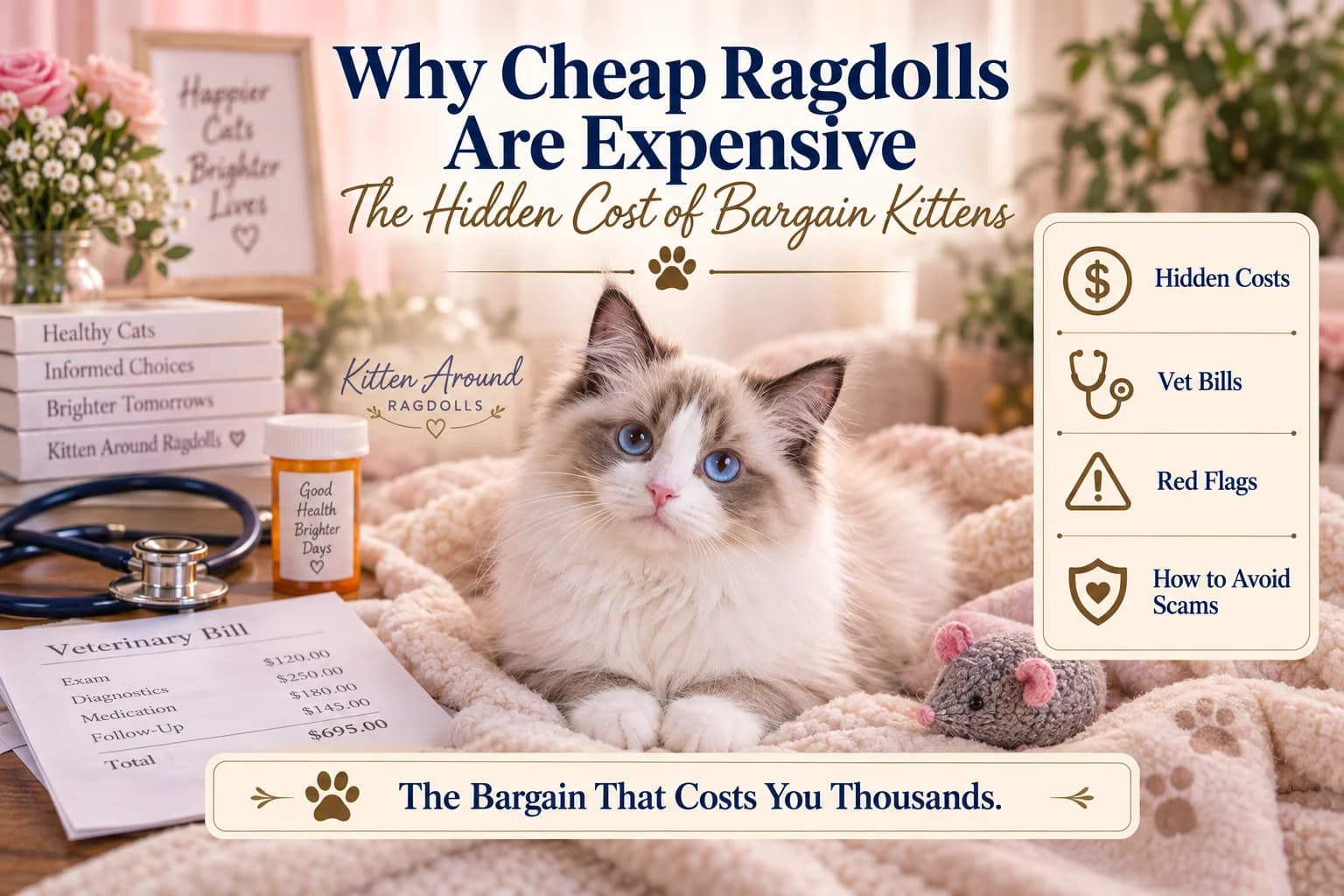
Why Cheap Ragdoll Kittens Are Actually Expensive: A Breeder’s Warning
You’re searching for a Ragdoll kitten. You see a beautiful blue-eyed baby on a website priced at $800. On another site, a nearly identical kitten is $4,500. The pictures look the same. The kittens look the same.
The temptation is obvious: why would anyone pay 5x more for what looks like the same thing?
This post exists to answer that question. Because the answer is important, and it’s one you want to understand before you buy — not after.
I’m going to walk you through what actually happens when families buy cheap Ragdoll kittens. Not to scare you. Not to justify our pricing. Just to give you real information so you can make an informed decision.
The Basic Math That Doesn’t Add Up
Let’s start with the hard financial reality.
Responsible Ragdoll breeding is expensive. Just the basics:
- Breeding cats (queens and studs): $3,000-$8,000+ per cat, purchased from other reputable breeders
- Genetic testing per cat: $150-$400 through comprehensive panels like Wisdom Panel Optimal Selection
- Annual HCM screening (echocardiograms): $300-$500 per breeding cat per year
- Cattery setup: Dedicated space, enclosures, air filtration, proper flooring — thousands of dollars in initial investment
- Quality food for a colony: $500-$1,500+ per month
- Veterinary care throughout pregnancy and kitten stages: $500-$1,500 per litter minimum
- Spay/neuter surgery for every kitten before go-home: $200-$400 per kitten
- Vaccinations: $50-$150 per kitten
- Microchipping: $30-$75 per kitten
- Comprehensive fecal panels per litter: $150-$400+
- Insurance eligibility setup and paperwork: Ongoing time investment
- TICA registration and cattery fees: Annual costs
- Emergency veterinary care: Because things happen — one c-section can cost $3,000+
An ethical breeder producing 3-5 litters per year is looking at operational costs well above $30,000 annually, before any labor or profit. Divided across maybe 15-25 kittens, the math for a well-priced kitten ($4,000-$5,000) actually barely covers costs.
So how does a breeder charge $800 per kitten and stay in business?
The answer is: they skip things. And that’s where the trouble starts for you.
What Cheap Ragdoll Breeders Are Skipping
When a Ragdoll kitten is priced significantly below the market rate for ethical breeders, one or more of these things is being cut:
1. Genetic Testing on Parents
HCM (hypertrophic cardiomyopathy) is the most common cardiac disease in Ragdolls. It can be genetic. Screening parent cats through echocardiograms and genetic testing catches carriers before they pass the condition to kittens.
Skip the testing, and you may be buying a kitten whose parents both carry HCM. When your cat is diagnosed at 15 months with early-onset heart disease, you’ll be looking at ongoing cardiology visits ($200-$400 each), medications, and a shortened lifespan.
2. Health Screening of the Kittens Themselves
A comprehensive fecal panel (like IDEXX Test Code 3882) screens for 16 different pathogens including Giardia, Tritrichomonas, Cryptosporidium, and multiple bacterial and viral pathogens. Costs about $150-$400 per litter.
Skip that, and your “healthy-looking” kitten may arrive carrying pathogens that emerge as chronic diarrhea, weight loss, or vet visits over months to come.
3. Spay/Neuter Before Go-Home
Some cheap breeders send home unaltered kittens. You’ll pay $200-$500 to spay/neuter later, plus lose the health benefits of early-age alteration. Or worse, you’ll accidentally end up with unwanted litters if you get more cats later.
4. Full Vaccination Series
Cheap kittens sometimes come with incomplete vaccinations, or unclear records. You’ll pay $150-$300 catching up at the vet.
5. Age-Appropriate Go-Home Timing
Reputable breeders don’t send kittens home before 12 weeks. Cheap breeders often push them out at 6-8 weeks, causing lifelong socialization problems, health issues, and behavior problems that would have been avoided with proper time with their mother and littermates.
6. Real Ragdoll Genetics
Some “Ragdoll” kittens sold at bargain prices are actually mixed-breed cats that look like Ragdolls. You get the appearance without the temperament, health screening, or genetic reliability. In extreme cases, “TICA registered” claims are outright fraudulent.
7. Ethical Breeding Standards
Cheap Ragdolls sometimes come from kitten mills — commercial breeding operations where cats live in poor conditions, breed continuously without recovery, and produce kittens as fast as possible. The kittens may look adorable in photos but arrive with lifelong health issues from stress and poor early care.
The Real Costs You’ll Face With a Cheap Ragdoll
Let’s do the math on what a “$800 bargain” actually costs over the cat’s lifetime.
Immediate Post-Purchase Costs
- Spay/neuter (if not done): $200-$500
- Complete vaccination series (if incomplete): $150-$300
- Microchip (if missing): $50-$100
- Initial vet exam to establish care: $75-$200
- Deworming treatments (if parasites present): $50-$200
Cost added: $525-$1,300 in the first month.
Common Health Issues That Emerge in Year 1
- Chronic diarrhea from undiagnosed Giardia or Tritrichomonas: Multiple vet visits, $500-$2,000 to treat
- Upper respiratory infections from poor early socialization/stress: $200-$800
- Behavior issues from too-early separation: Sometimes irreversible, sometimes require professional help ($200+/hour behavior consultation)
- Undetected congenital issues from lack of genetic screening: Highly variable, but potentially thousands
Cost added: $700-$5,000+ in year 1.
Long-Term Health Consequences
HCM diagnosis (if parents weren’t screened) — the most common Ragdoll-specific issue:
- Cardiology consultations: $200-$400 each, typically 2-4 per year
- Annual echocardiograms: $300-$500
- Medications for the rest of the cat’s life
- Shortened lifespan (typical diagnosis at 15 months for the affected variant)
PKD (if parents weren’t screened) — kidney disease that eventually requires management:
- Ongoing lab work: $100-$300 quarterly
- Prescription foods: $60-$100/month for life
- Fluid therapy in later stages
- Progressive decline
Cost added: Can easily reach $10,000+ over the cat’s lifetime for a single major genetic condition.
The Emotional Cost
Beyond the financial numbers, there’s the toll of watching your cat struggle with preventable health issues. Watching a cat you love be diagnosed with a genetic condition at a young age — one that would have been caught by testing before their parents were bred — is heartbreaking. And it never had to happen.
The Real Comparison
Let’s compare over a 10-year period:
Cheap Ragdoll ($800 purchase):
- Purchase price: $800
- Immediate post-purchase costs: ~$800
- Year 1 health issues: ~$2,000
- Genetic disease costs over 10 years (average case): ~$5,000
- Extra vet visits from various issues: ~$3,000
- Total: $11,600 with significantly worse quality of life
Ethical Ragdoll ($4,500 purchase from a reputable breeder):
- Purchase price: $4,500 (all-inclusive with spay/neuter, vaccines, microchip, insurance eligibility)
- Additional first-year vet costs: ~$400 (routine wellness only)
- Normal annual wellness care: ~$400/year over 10 years = $4,000
- Total: $8,900 with significantly better quality of life
The “cheap” kitten is actually about $2,700 more expensive over their lifetime, and that’s assuming they don’t have a serious health condition that adds tens of thousands more.
And of course, this assumes the cheap kitten is even a real Ragdoll and not a mixed breed. If it’s a scam, you may lose the $800 entirely and receive nothing — or worse, receive a sick cat that dies within weeks of arrival.
The Outright Scams
Beyond just “cheap breeders who cut corners,” there’s an entire ecosystem of outright scams targeting Ragdoll buyers. Signs to watch for:
Prices Wildly Below Market
If a “purebred TICA-registered Ragdoll” is being offered for $500, it’s either a scam or the kitten doesn’t actually exist. Real breeders don’t undercut the market by 80%.
Payment via Untraceable Methods Only
Legitimate breeders may prefer Zelle or cash, but they also verify identities and provide contracts. Scammers demand payment via Zelle to strangers, cryptocurrency, gift cards, or wire transfer — all of which are impossible to recover once sent.
Kittens Available “Right Now” With No Waitlist
Reputable breeders have waitlists. Kittens sitting available at random times with immediate delivery is almost always a red flag.
Stock Photos
Do a reverse image search on the kitten photos. If they appear on multiple websites, it’s a scam. Real breeders show you specific kittens with distinctive markings.
Refusing Video Calls
Legitimate breeders happily do video calls to show you their kittens and cattery. Scammers refuse or give excuses.
No Physical Address
If a breeder won’t share where their cattery is located (or you can’t verify it exists), be suspicious.
Grammar and English Issues
Many Ragdoll scam operations are run by international fraud rings. If communications sound off, translated, or oddly formal, that’s worth investigating.
Pressure to Buy Immediately
“Someone else is interested — decide today or lose the kitten” is a classic pressure tactic. Real breeders let you take your time.
What to Look for Instead
The green flags of an ethical Ragdoll breeder:
- TICA or CFA registration you can verify through the registry
- Health testing documentation (Wisdom Panel results, HCM/PKD screening)
- Kittens don’t leave before 12 weeks
- Spay/neuter before go-home
- Written contract with health guarantee
- The breeder asks YOU questions
- Waitlist for kittens
- Willingness to do video calls or in-person visits
- Real photos and videos of your specific kitten
- References from previous buyers
- Reasonable, transparent pricing
- Lifetime support
- Familiarity with the breed standard and pedigree
The Honest Truth About Breeder Pricing
A $4,000-$5,000 Ragdoll kitten is not overpriced. It’s the actual cost of doing this responsibly. Ethical breeders aren’t getting rich — most break even or make a modest income after years of investment.
What that $4,500 buys you isn’t just the kitten. It’s:
- Genetic health screening on the parents
- Comprehensive fecal panel testing on the litter
- Complete vaccination series
- Spay/neuter surgery
- Microchip registered to you
- Insurance eligibility with a 30-day free trial
- A kitten who has been properly socialized until 12+ weeks
- Written contract with real protection
- Lifetime breeder support
- Peace of mind that comes with knowing you did it right
Compared to the total lifetime cost of a bargain kitten, an ethical purchase is a bargain.
What to Do If You’ve Already Bought a Cheap Ragdoll
If you’ve already brought home a cat from a questionable source, here’s what to do:
- Get a full veterinary exam ASAP to establish baseline health
- Run a comprehensive fecal panel to check for pathogens
- Request an echocardiogram at age 1 to screen for HCM
- Get comprehensive genetic testing to identify any hidden risks
- Establish a relationship with a good vet who can help you manage anything that arises
Your cat still deserves the best care possible, regardless of where they came from. And knowing what you’re dealing with lets you plan for whatever comes next.
The Bottom Line
Cheap Ragdoll kittens are expensive Ragdoll kittens. They just charge you the cost over time instead of upfront.
If you’re going to bring a Ragdoll into your home for the next 12-17 years, it’s worth doing it right. Save longer if you need to. Wait for the right breeder. Ask the hard questions. Verify credentials. Trust your instincts.
Your future self will thank you. And so will your cat.
Questions?
If you’re evaluating breeders and want a second opinion on what you’re seeing, please reach out. We’re happy to help you spot red flags — even if you end up buying from another ethical breeder.
🐾 Ready to Do This Right?
Every one of our kittens comes with the full ethical breeding standard — health testing, socialization, and lifetime support.
Considering a Ragdoll kitten from a truly ethical, TICA-registered cattery? Check our current available kittens or join our waitlist for upcoming litters. We’re a TICA-registered cattery in Sacramento, CA, breeding for health, temperament, and the traditional Ragdoll standard.
Recent Blogs

10/17/2026
Male vs. Female Ragdoll Cats: Choose the Individual, Not the Stereotype

10/14/2026
Can Ragdoll Cats Be Left Alone? Planning for Workdays and Real Life
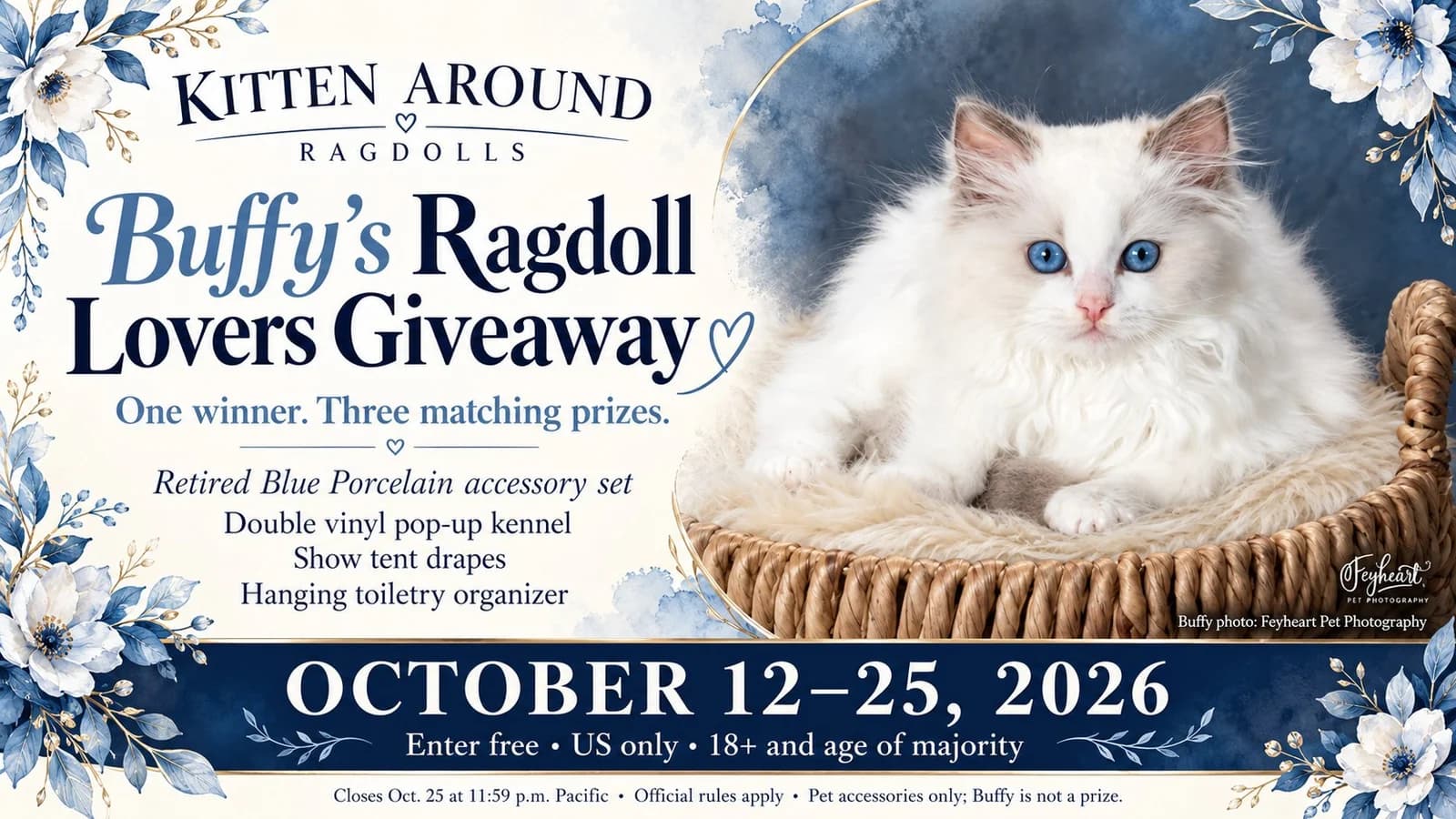
10/12/2026
Buffy’s Ragdoll Lovers Giveaway: Win the Matching Blue Porcelain Set
10/10/2026
Do Ragdoll Cats Shed? A Grooming Routine That Fits Real Life
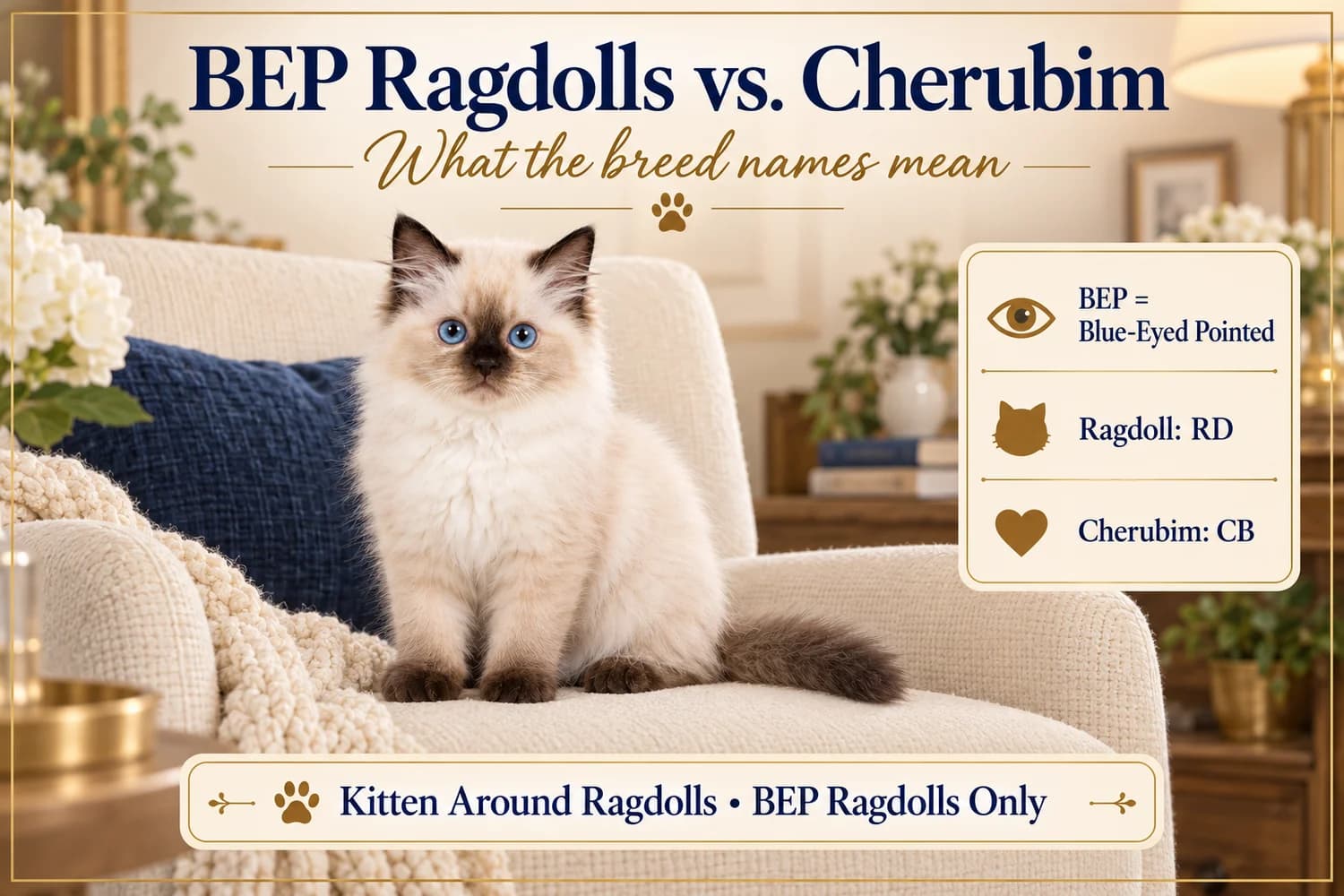
10/07/2026
BEP Ragdolls vs. Cherubim: What the Names Mean Before You Buy
09/26/2026
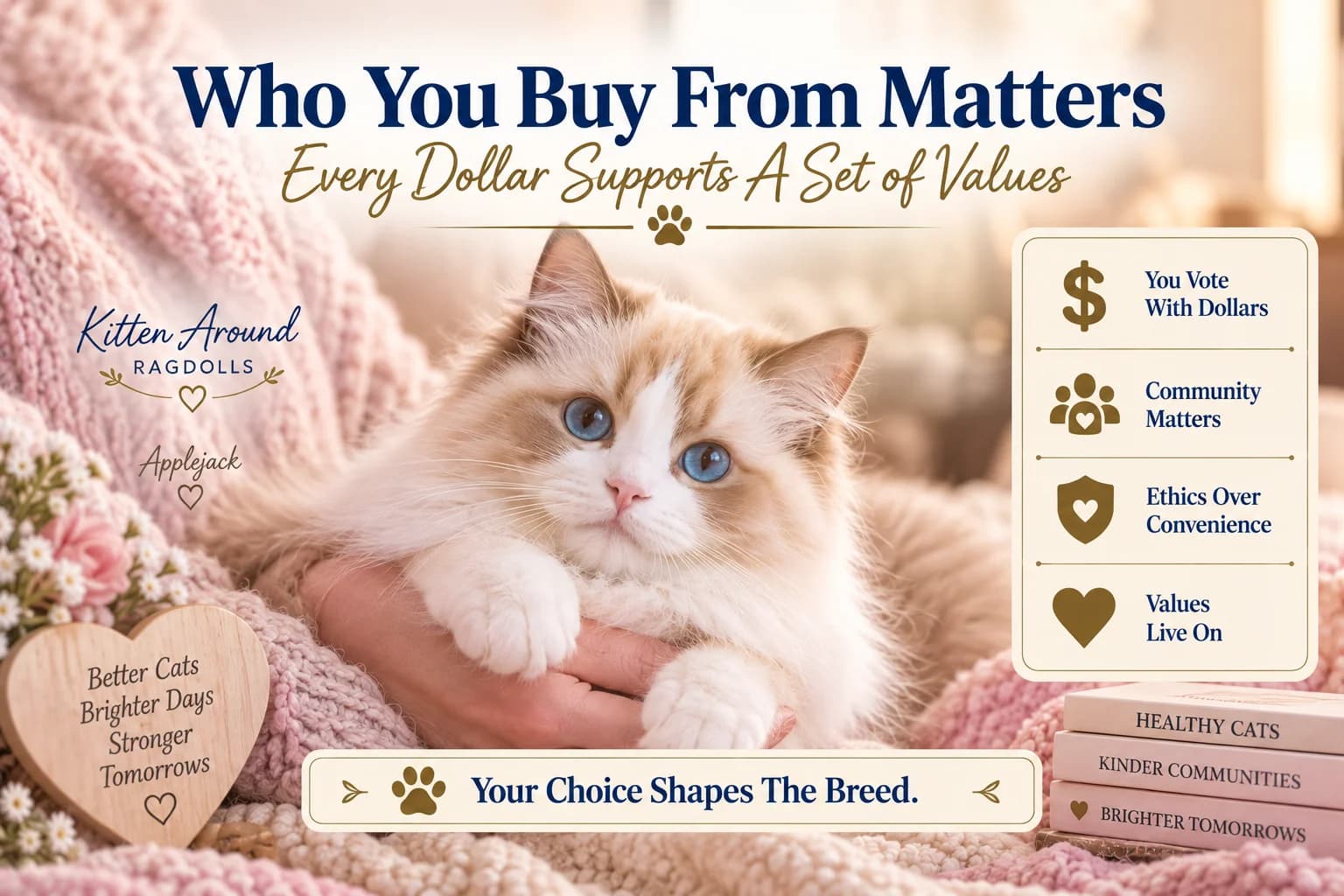
Who You Buy From Matters More Than You Think
Subscribe to our newsletter
Litter announcements, new posts, and the occasional discount — no spam.