Do Ragdoll Cats Scratch Furniture? Give the Behavior a Better Place to Go
Do Ragdoll Cats Scratch Furniture? Give the Behavior a Better Place to Go
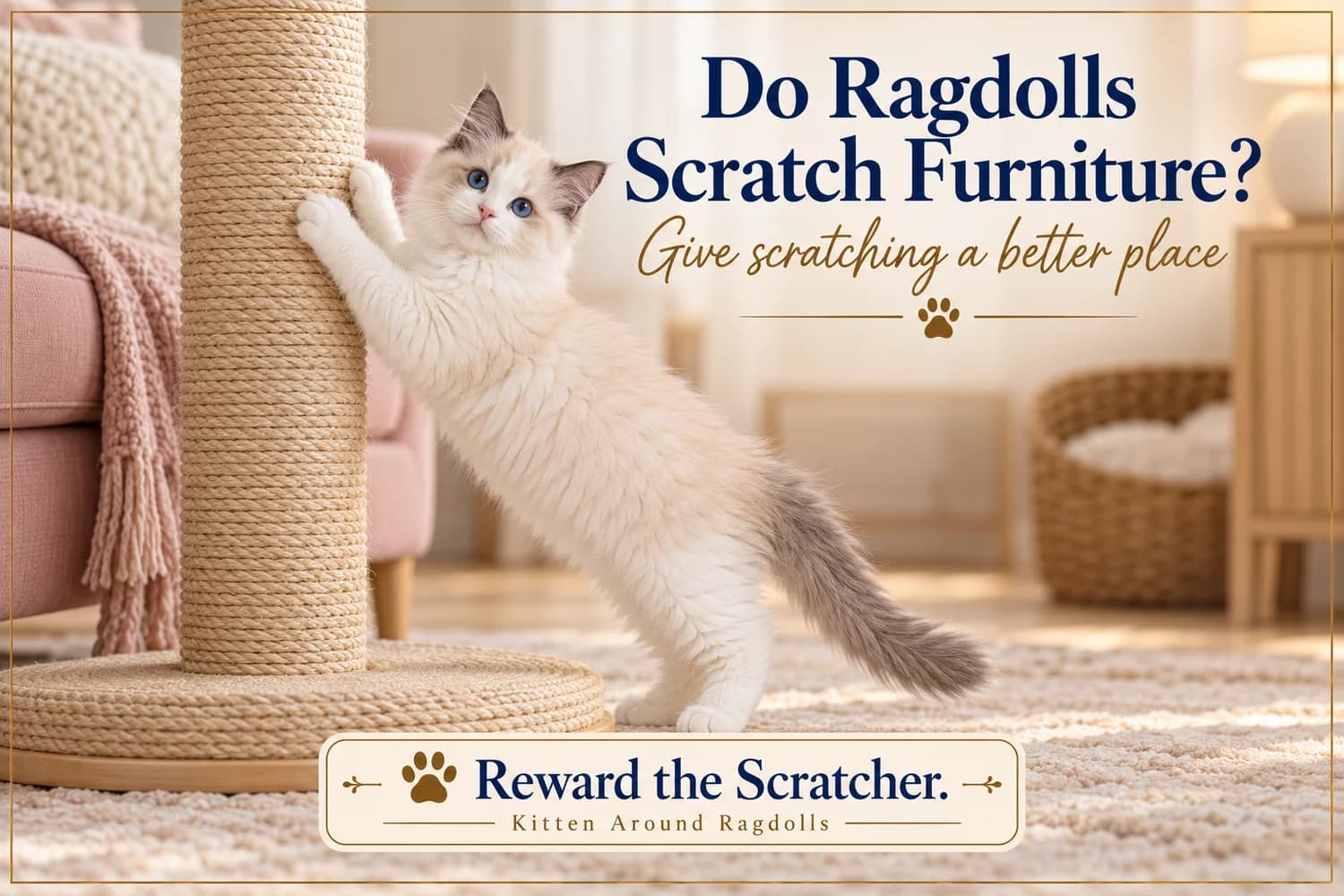
Yes, Ragdoll cats can scratch furniture. A relaxed personality does not remove a cat’s need to stretch, maintain its claws, and mark familiar places. If someone promises a breed that will never use its claws on your sofa, that is not a promise to build your home around.
The practical goal is to give scratching an appealing place to happen. That means understanding the surface, position, and location your cat chooses, then making an appropriate alternative easy to use.
Observe Before You Shop
Does your cat reach up the sofa arm, pull at a rug, or scratch the edge of a chair? Notice the direction of the movement and the material involved. A cat choosing a horizontal surface may not immediately prefer a tall vertical post, however attractive it looks in the store.
Write down where scratching occurs for a few days. Note whether it happens after waking, beside a frequently used doorway, or near a particular resting place. You are gathering clues about what a replacement needs to offer.
Cornell’s Feline Health Center explains that scratching is a normal behavior with a marking function. Treating the behavior as revenge makes it harder to see the practical information in front of you.
Choose Stability, Size, and Texture
A vertical post should allow a comfortable stretch and remain stable under use. This becomes especially relevant as a Ragdoll grows. A post that seemed sturdy for a small kitten may wobble under an adult.
Offer a surface that resembles what your cat already likes, such as sisal or corrugated cardboard, and consider both vertical and horizontal options. The Feline Veterinary Medical Association’s Cat Friendly Homes guidance recommends experimenting with textures and shapes rather than assuming one product suits every cat.
Before buying, look at the usable scratching area rather than the total product height. A decorative platform or toy at the top does not add room for the cat’s full stretch.
Put the Scratcher Where the Behavior Happens
A scratcher hidden in a spare room cannot do much for a sofa the cat passes twenty times a day. Place an appropriate alternative near the area the cat already uses. A second option near a favored sleeping spot can be helpful too.
Once your cat uses it reliably, you can consider small placement adjustments. Moving it abruptly to an inconvenient location may remove the reason it worked.
Try evaluating the room from the cat’s perspective. Is the scratcher on a stable floor? Can another pet block access? Is it so close to a noisy appliance that approaching it becomes unpleasant?
Reward Use Without Forcing It
Notice and reward appropriate scratching promptly, using something your cat enjoys. That may be a suitable treat, play, or attention. Do not grab the cat’s paws and drag them over the post.
Keep the interaction relaxed. You want the scratcher to become a place associated with a satisfying normal activity, not a station where a person restrains the cat.
If your cat ignores it, change one feature at a time. Try a different orientation, a more stable base, or a location closer to the chosen furniture. Changing everything at once makes it difficult to learn what mattered.
Protect Furniture While the Habit Develops
Use suitable washable covers or restrict access when you cannot supervise, while keeping the cat’s essentials and comfortable space available. Check that any furniture protector is safe for the surface and does not create loose material your cat may chew or swallow.
Keep nail care appropriate to your cat’s needs and ask your veterinary team to demonstrate the technique if you are unsure. Nail care can reduce damage, but it does not eliminate the need for scratching surfaces.
Do not use shouting, spraying water, or frightening traps as a training plan. Protecting a sofa should not require making your cat afraid of you or of moving through the home.
When Scratching Changes Suddenly
If scratching increases after a household change, examine the wider situation: a new animal, altered access to rooms, a different routine, or tension around resources. Cat Friendly Homes advises veterinary discussion when stress, anxiety, or insecurity may be involved.
Also mention signs of pain, damaged claws, changed movement, or unusual grooming. A behavior question can have a health component. Do not assume every new problem is simply a training issue.
A Practical Troubleshooting Example
Suppose your cat scratches one sofa corner after waking from a nap. Instead of placing a small scratcher across the room, put a stable full-stretch post beside that corner. Protect the sofa surface appropriately, notice voluntary use of the post, and reward it.
If the cat continues choosing the sofa, compare the two experiences. Does the post wobble? Is the texture different? Is the cat stretching farther than the post permits? That comparison gives you something concrete to improve.
You do not need a perfect living room or a cat who never makes a mistake. You need a home where the normal behavior has an acceptable, convenient place to happen.
Sources
- Cat Friendly Homes: Scratching posts
- Cat Friendly Homes: Cat scratching
- Cornell Feline Health Center: Scratching behavior
Related Reading
- Ragdoll Cat Personality Traits – Is This the Right Breed for You?
- Ragdoll Cat Adoption: Temperament, Ragdoll Cat Care & What to Know
Find the Right Ragdoll Companion
Kitten Around Ragdolls raises blue-eyed pointed Ragdolls in Sacramento, California, for companion homes only. Tell us about your household and what you are looking for.
An application does not reserve a kitten or guarantee approval. Please read our current terms.
We are a TICA-registered Ragdoll cattery in the Greater Sacramento Area, serving families in Northern California and beyond. View our available kittens or join our waitlist for updates.
Recent Blogs

11/02/2026
Bringing a Ragdoll Kitten Home to Oregon: A Pickup and Paperwork Checklist

10/31/2026
Are Ragdolls Good Apartment Cats? Build a Home That Works for a Cat
10/30/2026
Ragdoll Kittens for Washington Families: What to Check Before You Book a Trip

10/28/2026
Are Ragdoll Cats Good With Dogs? A Careful Introduction Matters

10/24/2026
Introducing a Ragdoll Kitten to Another Cat: Let Comfort Set the Pace
Subscribe to our newsletter
Kitten availability, cattery updates, and new blog posts — sent when we have news to share.