Foods That Are Toxic to Ragdolls (and All Cats): A Complete Safety Guide
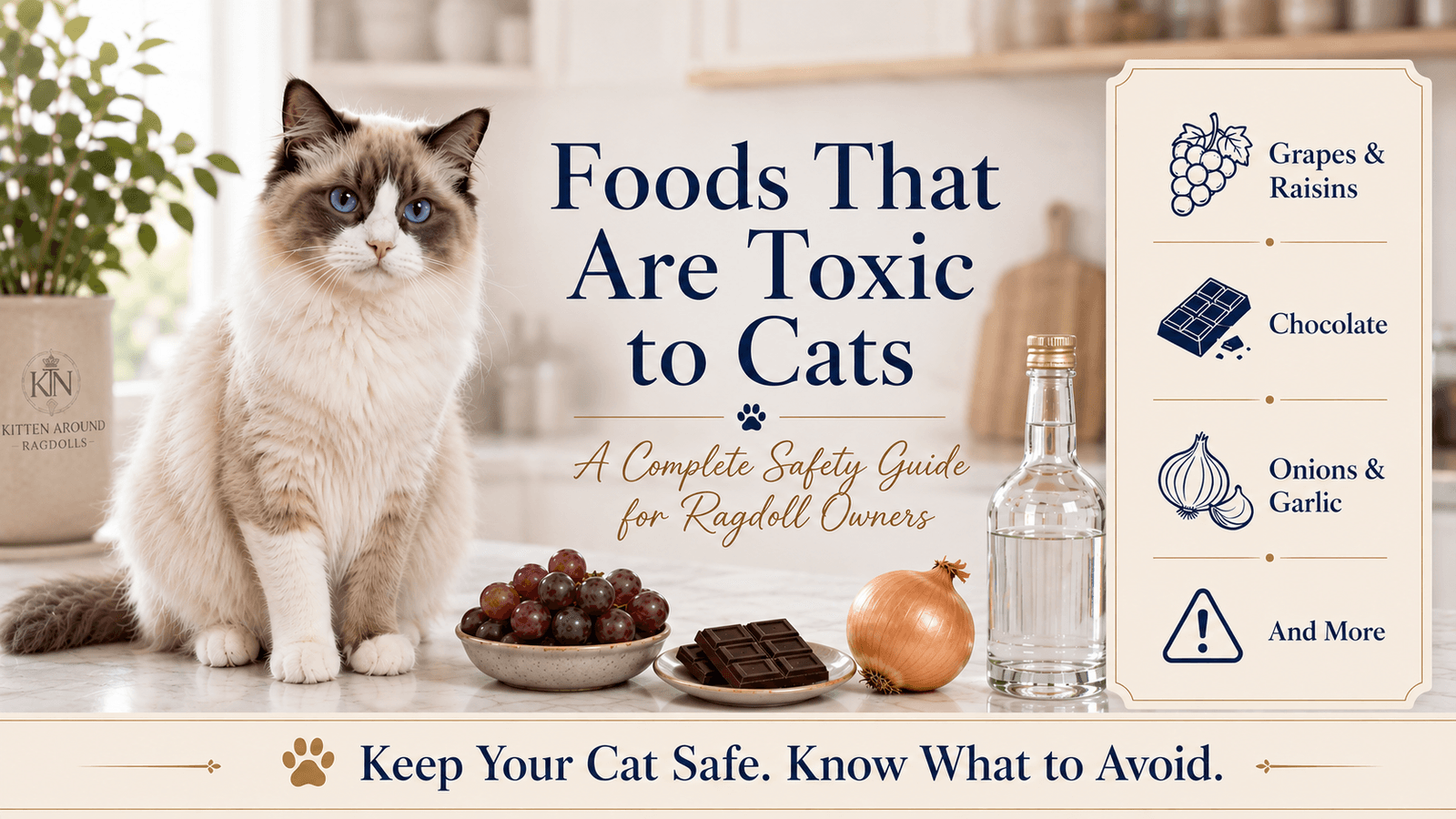
Foods That Are Toxic to Ragdolls (and All Cats): A Complete Safety Guide
Cats are curious. They jump on counters, sniff your plate, beg for table scraps, and occasionally eat things they absolutely should not. Some foods that are perfectly safe for humans — and even for dogs — are highly toxic to cats and can cause anything from mild stomach upset to death.
This guide covers everything you need to know to keep your Ragdoll safe: what to avoid, why it’s dangerous, what symptoms to watch for, and what to do if your cat eats something they shouldn’t.
Bookmark this page or save it to your phone — the moment you need it, you’ll need it fast.
Emergency Contacts (Save These Now)
⚠️ If you suspect your cat has eaten something toxic, call immediately:
- ASPCA Animal Poison Control: (888) 426-4435 — $95 consultation fee, 24/7
- Pet Poison Helpline: (855) 764-7661 — $95 consultation fee, 24/7
- Your regular vet: ___________________ (fill in)
- Nearest 24/7 emergency vet: ___________________ (fill in)
The fee feels steep in the moment, but these poison control specialists have access to a database of every known toxic substance and exposure case. They can tell you immediately whether the amount your cat ate is dangerous, what symptoms to watch for, and whether you need to rush to the vet. They’ll also fax a treatment protocol directly to your vet if needed.
The Most Dangerous Foods (Never Feed These)
Onions, Garlic, Chives, Leeks (All Alliums)
The entire allium family is toxic to cats. They cause oxidative damage to red blood cells, leading to a condition called Heinz body anemia. Cooked, raw, powdered, dehydrated — all forms are dangerous.
Hidden sources: baby food (often contains onion powder), garlic bread, pizza sauce, broth, soup, dips, processed meats.
Symptoms: lethargy, weakness, pale gums, rapid breathing, dark urine. May not appear for several days after ingestion.
Why this matters: Even small amounts over time can cause cumulative damage. One slice of onion isn’t going to kill your cat, but letting them lick the gravy off your plate regularly absolutely can.
Chocolate
Chocolate contains theobromine and caffeine, both of which are toxic to cats. Dark chocolate and baker’s chocolate are the most dangerous; milk chocolate is less toxic but still harmful.
Symptoms: vomiting, diarrhea, increased thirst, restlessness, rapid heartbeat, tremors, seizures.
What to do: If your cat eats any amount of chocolate, call poison control. Even a small amount of dark chocolate or baker’s chocolate can be fatal to a cat.
Grapes and Raisins
These cause acute kidney failure in some cats and dogs. Researchers still don’t know exactly why or which compound is responsible, but the link is clear and well-documented.
Hidden sources: trail mix, oatmeal raisin cookies, hot cross buns, fruit cake, granola bars.
Symptoms: vomiting (often within hours), lethargy, decreased appetite, decreased urination, abdominal pain.
Why this matters: Even one or two grapes can be enough to trigger kidney failure in some cats. There’s no “safe amount.”
Xylitol (Artificial Sweetener)
Found in sugar-free gum, sugar-free candy, sugar-free peanut butter, some baked goods, and many other “diet” or “keto” products. Xylitol causes rapid insulin release leading to dangerous hypoglycemia, plus liver failure.
Hidden sources: sugar-free gum, sugar-free mints, “natural” peanut butters, sugar-free baked goods, some toothpaste, some medications.
Symptoms: vomiting, weakness, lack of coordination, collapse, seizures — often within 15–30 minutes.
Why this matters: This is an emergency. Xylitol poisoning progresses rapidly. Go straight to the vet.
Alcohol
Any alcoholic beverage, plus raw bread dough (which produces alcohol as it rises), plus some flavorings (vanilla extract, rum-soaked desserts). Cats have very low tolerance for alcohol.
Symptoms: disorientation, vomiting, breathing problems, coma, death.
Caffeine
Coffee, tea, energy drinks, soda, chocolate, and some medications. Cats are far more sensitive to caffeine than humans.
Symptoms: restlessness, rapid breathing, heart palpitations, muscle tremors.
Raw Yeast Dough
The dough rises in your cat’s stomach, expanding and potentially causing a life-threatening obstruction or stomach rupture. The fermentation also produces alcohol.
What to do: Emergency vet immediately. Do not induce vomiting.
Toxic Plants and Other Substances
While not “foods” in the traditional sense, these are common household items your cat might encounter and ingest:
Lilies (All Varieties — Especially True Lilies)
Asian, Tiger, Day, Easter, and Stargazer lilies are extremely toxic to cats. Even a tiny amount — pollen on their fur that they lick off, water from the vase, a single bite of a petal — can cause acute kidney failure within 24–72 hours.
This is a true emergency. If your cat has any exposure to a lily, get to an emergency vet immediately. Don’t wait for symptoms. Treatment within 18 hours of exposure dramatically improves the outcome.
Other toxic plants: tulips, daffodils, hyacinths, azaleas, sago palm, oleander, dieffenbachia, philodendron, pothos, peace lily.
Essential Oils
Tea tree, peppermint, eucalyptus, citrus, cinnamon, pine, ylang-ylang, wintergreen, pennyroyal — all toxic to cats. Diffusing essential oils in a home with cats is risky; applying them directly to a cat is dangerous.
Cats lack the liver enzymes needed to metabolize many essential oil compounds, so they accumulate to toxic levels even from “natural” exposure.
Acetaminophen (Tylenol)
Even one regular-strength tablet can be fatal to a cat. Cats cannot metabolize acetaminophen and it causes red blood cell damage and liver failure. Never give human pain medications to a cat.
Foods That Are Risky (Limit or Avoid)
Dairy
Despite the stereotype, most adult cats are lactose intolerant. Milk, cream, cheese, and other dairy can cause vomiting and diarrhea. Small amounts of plain yogurt are usually tolerated, but in general, cats don’t need dairy.
Raw Fish
Raw fish contains an enzyme called thiaminase that destroys thiamine (vitamin B1). Long-term consumption causes neurological problems. Tuna in particular is also high in mercury when fed regularly.
The “tuna addiction” problem: Many cats become hooked on tuna and refuse other foods, leading to nutritional deficiencies. Use canned tuna sparingly as an occasional treat, not a meal.
Raw Eggs
Risk of Salmonella and E. coli, plus raw egg whites contain avidin which interferes with biotin absorption. Cooked eggs (plain, no seasoning) are fine.
Cooked Bones
Splinter easily and can cause choking, throat damage, or intestinal perforation. Raw bones are sometimes part of raw diets, but should be carefully sized and supervised.
Fat Trimmings
High-fat foods can cause pancreatitis in cats. Skip the bacon scraps and the gravy.
Macadamia Nuts and Other Nuts
Most nuts are high in fat and can cause stomach upset. Macadamia nuts specifically may be toxic (well-documented in dogs, less so in cats, but better to avoid).
Foods That Are Safe in Moderation
Good to know what’s safe too — some human foods make great occasional treats:
- Plain cooked chicken (no seasoning, no skin, no bones)
- Plain cooked turkey (same rules)
- Plain cooked salmon (boneless, no seasoning)
- Plain scrambled or hard-boiled eggs (no butter, no salt)
- Plain canned pumpkin (great for digestive issues)
- Small pieces of plain cooked carrots, green beans, peas
- Plain yogurt (small amounts only, watch for lactose intolerance)
- Cooked rice or pasta (plain, in small amounts for digestive upset)
Remember: treats should make up no more than 10% of your cat’s daily calories. Stick to high-quality cat food as the base of their diet.
What to Do If Your Cat Eats Something Toxic
- Stay calm and act fast. Time matters with most poisons.
- Remove your cat from the source. Move them to a safe area and clean up any remaining toxic material.
- Identify what was eaten and how much. Save packaging, take photos, note the brand and ingredients.
- Call poison control immediately. Use one of the numbers at the top of this post. Do NOT induce vomiting unless they specifically tell you to.
- Follow their instructions. They’ll tell you whether you need to rush to the vet, monitor at home, or take other steps.
- If you go to the vet, bring evidence. Packaging, photos of the substance, an estimate of how much was eaten, and the time of ingestion. The more information, the better the treatment.
Prevention Tips
- Keep counters clear. Cats jump on counters. Assume they will and don’t leave dangerous foods out.
- Trash cans need lids. Many toxic exposures happen via the garbage — onion skins, chocolate wrappers, cooked bones, grape stems.
- No human food sharing as a habit. Once you start, they expect it. Better to never start.
- Pet-proof plants. If you have a cat, don’t have lilies in the house. Period. For other plants, keep them out of reach or pick non-toxic alternatives.
- Medicine cabinets locked. Cats can knock medications off counters. Acetaminophen, ibuprofen, and many prescription drugs are deadly.
- Skip the essential oil diffusers. Or only use cat-safe oils (lavender, frankincense in extreme moderation), and never apply directly to your cat.
- Educate household members. Kids and visiting guests often share food without realizing the risk. Make sure everyone in the house knows the rules.
Final Thoughts
The good news: most toxic exposures are preventable. Awareness is most of the battle. Save the poison control numbers in your phone right now, before you need them. Keep dangerous foods out of reach. And trust your gut — if you think something’s wrong, call.
If you’ve adopted a Ragdoll from us and you have any questions about specific foods or potential exposures, reach out. Lifetime breeder support means we’re here when you need us.
For more on what your Ragdoll should be eating, see our complete feeding guide.
🛒 Shop Our Recommendations
Quality cat food, treats, and supplies we trust — all curated on one storefront.
Disclosure: This post contains affiliate links to our Amazon storefront. As an Amazon Associate, we earn from qualifying purchases at no extra cost to you. We only recommend products we personally use and trust with our own cats and kittens.
Medical Disclaimer: This article is for informational purposes only and is not a substitute for veterinary care. If you suspect your cat has been poisoned, contact a veterinarian or animal poison control immediately.
Looking to bring home a Ragdoll kitten? Check our available kittens or join our waitlist for upcoming litters. We’re a TICA-registered cattery in Sacramento, CA, breeding for health, temperament, and the traditional Ragdoll standard.
Recent Blogs

10/17/2026
Male vs. Female Ragdoll Cats: Choose the Individual, Not the Stereotype

10/14/2026
Can Ragdoll Cats Be Left Alone? Planning for Workdays and Real Life

10/12/2026
Buffy’s Ragdoll Lovers Giveaway: Win the Matching Blue Porcelain Set

10/10/2026
Do Ragdoll Cats Shed? A Grooming Routine That Fits Real Life

10/07/2026
BEP Ragdolls vs. Cherubim: What the Names Mean Before You Buy

09/26/2026
Who You Buy From Matters More Than You Think
Subscribe to our newsletter
Litter announcements, new posts, and the occasional discount — no spam.