Understanding FIP: What Every Cat Owner Should Know
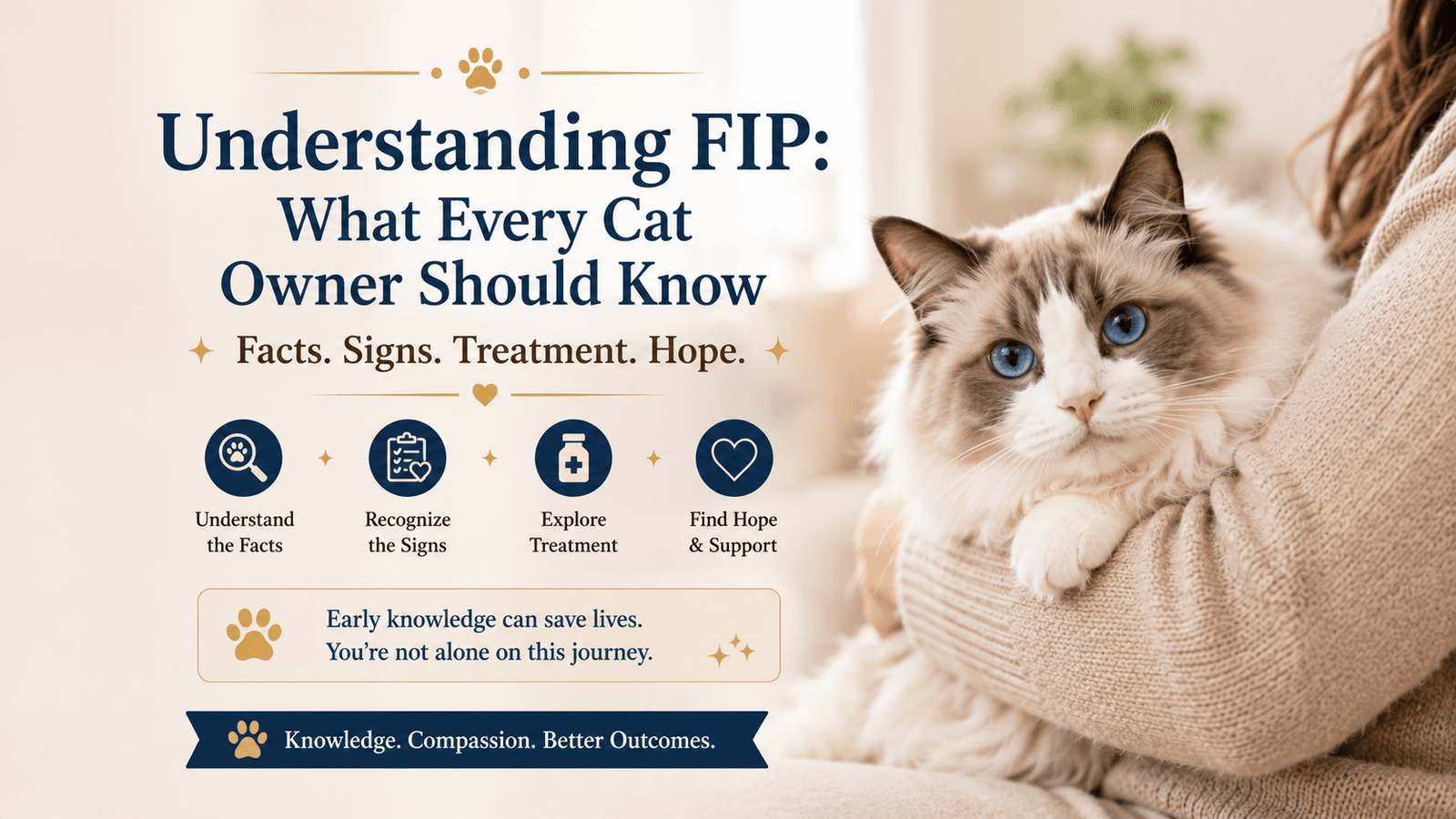
For decades, three letters struck fear into every cat breeder and owner: FIP. A diagnosis of Feline Infectious Peritonitis was, for all practical purposes, a death sentence. That is no longer true — and as a breeder, I believe every one of my families deserves to understand this disease, the warning signs, and the very real treatment options that exist today.
This post is on the longer side because the topic matters. Whether you’re a fellow breeder or a first-time kitten parent, my goal is to give you honest, clear information so that FIP feels less frightening and far more survivable than it used to be.
What FIP Actually Is
FIP is caused by certain strains of feline coronavirus — and that word “coronavirus” tends to scare people, so let’s break it down calmly.
The vast majority of cats carry a common, mostly harmless version of feline coronavirus called feline enteric coronavirus (FeCV). It lives in the gastrointestinal tract, spreads between cats through shared litter boxes, and usually causes nothing worse than a brief bout of mild diarrhea — if any symptoms at all. Most cats clear it without anyone ever noticing.
Here’s the key part: in roughly 10% of infected cats, the virus mutates inside that individual cat’s body. The mutated form begins infecting white blood cells and spreading throughout the body, triggering an intense inflammatory reaction in the tissues — often around the abdomen, kidneys, or brain. That mutated, disease-causing version is what we call FIP.
One reassuring point that’s widely misunderstood: FIP itself is not considered contagious from cat to cat. The harmless enteric coronavirus can spread, but the dangerous mutation happens within a single cat. So if one kitten develops FIP, it does not mean the rest of your household is destined to follow.
The Two Forms of FIP
FIP generally shows up in one of two forms, though some cats show a mix of both:
- Wet (effusive) form: Fluid accumulates in body cavities — most often the abdomen (causing a swollen, pot-bellied look) or the chest (causing labored breathing). This form usually progresses faster.
- Dry (non-effusive) form: No major fluid buildup, but inflammation affects internal organs and frequently the nervous system or eyes. Signs can include wobbliness, seizures, behavior changes, or cloudiness and color changes in the eyes.
Common warning signs across both forms include a persistent fever that doesn’t respond to antibiotics, lethargy, poor appetite, weight loss or failure to grow, and a kitten who simply isn’t thriving the way they should. None of these alone means FIP — but together, especially in a young cat, they’re worth taking seriously and fast.
Who Is Most at Risk
FIP is most common in young cats, typically under two years old, and shows up more often in multi-cat environments. Stress is a known trigger — which is why symptoms occasionally surface in the weeks after a kitten goes to a new home, a move to a new city, or another big life change. This is exactly why I keep my cattery low-stress, test carefully, and stay in close contact with families during those first weeks.
The Breakthrough: FIP Is Now Treatable
Until recently, there was no reliable cure. That changed with the arrival of antiviral drugs that directly attack the virus. The first major breakthrough was GS-441524, a nucleoside analog (and the active component of the human antiviral remdesivir) that researchers showed could put FIP into remission. For years it was only available through unregulated, unofficial channels and required painful daily injections — but it proved the disease could be beaten.
Since then, the landscape has matured dramatically. Today there are legitimate, accessible antiviral options — including convenient oral tablets — and survival rates above 85% are now routinely reported across all forms of FIP when treatment is started in time.
The Treatments Available Today
There are two main antiviral medications used to treat FIP, and it helps to understand both:
- GS-441524 — The longest-established option, in use since around 2019. It was originally given by injection under the skin, but today it’s widely available as easy-to-give oral tablets, which is what most owners use now. Many vets favor it — especially for severe or advanced cases — because of its long track record. Its historical downsides (daily injections that could cause skin sores, higher cost, and sourcing challenges) have eased considerably as legitimate oral options have become available.
- Molnupiravir — A newer option, originally developed as a human antiviral, now used off-label for cats both as a first-line treatment and as a “rescue” therapy when GS-441524 hasn’t worked or a cat has relapsed. It’s also given orally, and is especially valued for that rescue-therapy flexibility.
Importantly, the two are not a story of “old and weak” versus “new and strong.” A 2024 study published in Frontiers in Veterinary Science followed 118 cats treated with one drug or the other and found similar effectiveness and safety between them — remission was achieved in nearly every cat that completed treatment in both groups. In other words, when both can do the job, the deciding factors become how well it’s tolerated, how easily it’s dosed day to day, and how reliably you can get it.
Why We Treat With Molnupiravir
For our cattery, the choice comes down to a few honest, practical reasons — and I want to be transparent about them.
It’s easy to give — which matters more than it sounds. FIP treatment means daily medication for twelve weeks straight, so how willingly your cat takes it has a real effect on consistency, and consistency is everything. Both drugs now come in convenient oral forms, but the version we use through Noble Manes is a chicken-marshmallow flavored suspension that young kittens take willingly — which makes those twelve weeks far less stressful for everyone.
The outcomes hold up. As noted above, recent head-to-head data shows molnupiravir performing comparably to GS-441524. We’re not trading effectiveness for convenience.
It doubles as a rescue therapy. If a cat ever fails to respond to GS-441524 or relapses, molnupiravir is one of the proven fallback options — so starting here keeps our path forward flexible.
It’s accessible and supported. We work with Noble Manes Clinic & Laboratory, which stocks oral Molnupiravir, ships overnight, and walks owners through diagnosis and dosing with a real veterinary consult. You can read their plain-English overview of the medication on their What is Molnupiravir page. Having a knowledgeable partner a phone call away matters enormously when you’re in the middle of treating a sick kitten.
None of this means GS-441524 is a bad choice — for some cats, particularly severe or late-stage cases, a vet may still recommend it. The right answer is always the one you and your veterinarian reach together for your specific cat.
Risks and Side Effects to Know About
No effective antiviral is completely without side effects, and you deserve the full picture. With molnupiravir, reported effects include:
- Folded ears and broken whiskers (uncommon, and generally associated with higher doses)
- Digestive upset — diarrhea, nausea, or vomiting
- Skin reactions such as hives, itching, or redness
- Severe leukopenia (a drop in white blood cells) at doses above roughly 23 mg/kg twice daily — which is why dosing is carefully calculated and monitored
- Transient changes in liver values, which studies found typically resolved on their own
This is exactly why FIP treatment is never a do-it-yourself project. Bloodwork (including a CBC), weight checks, and veterinary oversight throughout the course are what keep treatment both safe and effective.
How Long Treatment Takes
The standard course is 84 days — about 12 weeks — of continuous daily medication, followed by a roughly 12-week observation period to confirm the cat stays in remission. A few things are worth understanding:
- Dosing is based on weight and is adjusted as treatment goes on — often increasing as a recovering cat happily regains the weight they’d lost.
- Monitoring is ongoing: weight, appetite, and temperature are tracked regularly, with bloodwork at checkpoints (commonly around weeks 4 and 8).
- A veterinarian may add an anti-inflammatory like prednisolone early on to help calm the inflammation while the antiviral goes to work.
- You cannot stop early. Even when a cat looks completely healthy after a few weeks, the full course is essential — stopping short is the most common cause of relapse.
Most cats who survive the critical first week or two of treatment go on to complete the course and live full, normal lives. That is an extraordinary thing to be able to say about a disease that was nearly always fatal a few short years ago.
Our Promise as Your Breeder
FIP is the kind of word no breeder wants to say out loud — but pretending it doesn’t exist helps no one. My commitment is the opposite: careful health practices, a low-stress cattery, honest conversations, and lifetime support. If you ever notice your kitten running a stubborn fever, losing weight, developing a swollen belly, or simply not thriving, reach out to your veterinarian right away — and reach out to me. With FIP, early action saves lives.
The era of FIP as an automatic death sentence is over. Knowing the signs and knowing that treatment exists is the most powerful thing any cat owner can carry.
This article is for educational purposes and reflects our experience as breeders. It is not a substitute for veterinary diagnosis or treatment. If you suspect FIP, please consult your veterinarian or an FIP-experienced clinic such as Noble Manes promptly.
Recent Blogs
09/26/2026
Who You Buy From Matters More Than You Think
09/23/2026
What Ragdoll Health Testing Actually Includes: A Complete Guide
09/21/2026
Why Cheap Ragdoll Kittens Are Actually Expensive: A Breeder’s Warning
09/12/2026
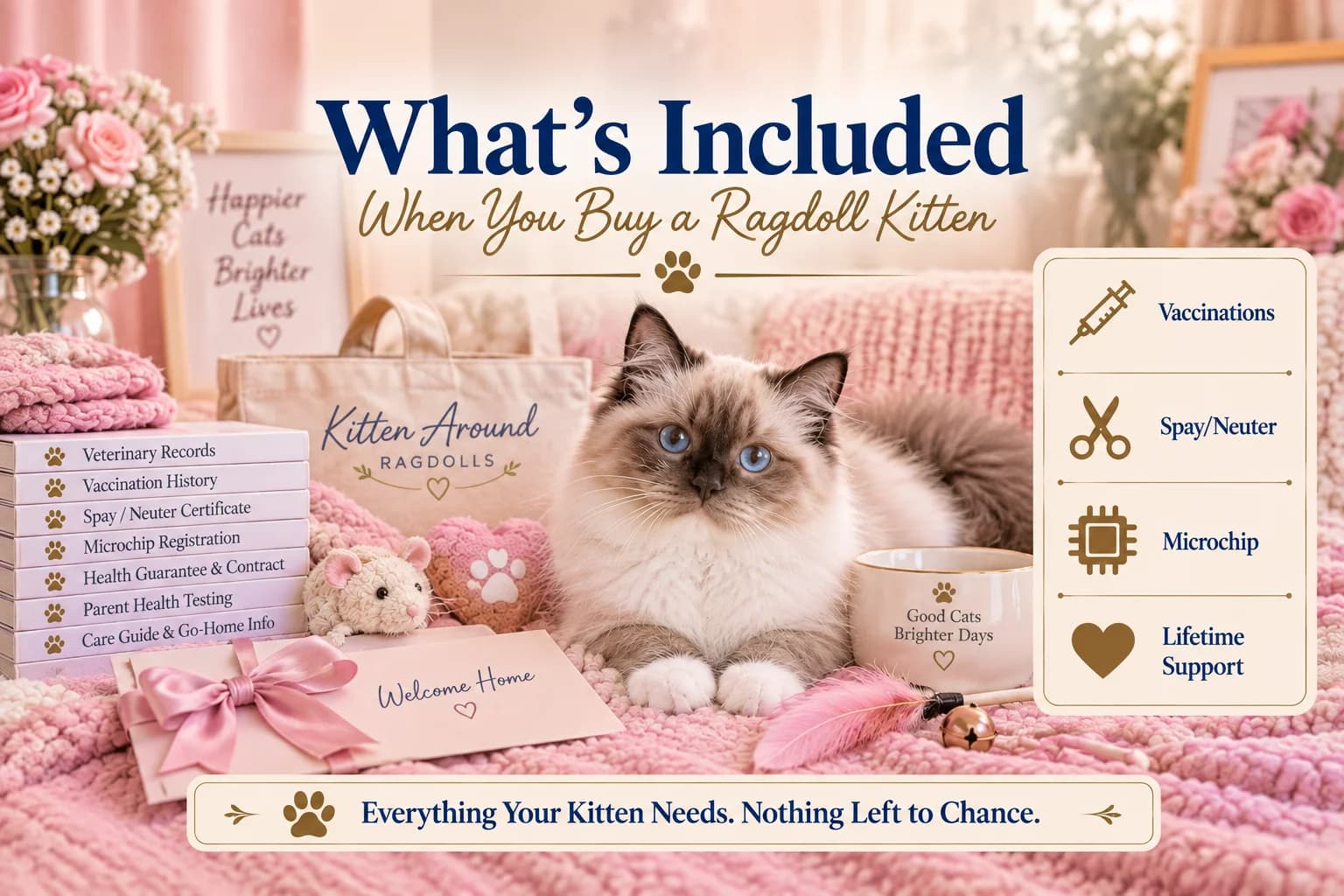
What’s Included When You Buy a Ragdoll Kitten From Us

09/09/2026
What Our Past Buyers Just Told Us About Their Cats — And What We Changed Because of It
09/05/2026
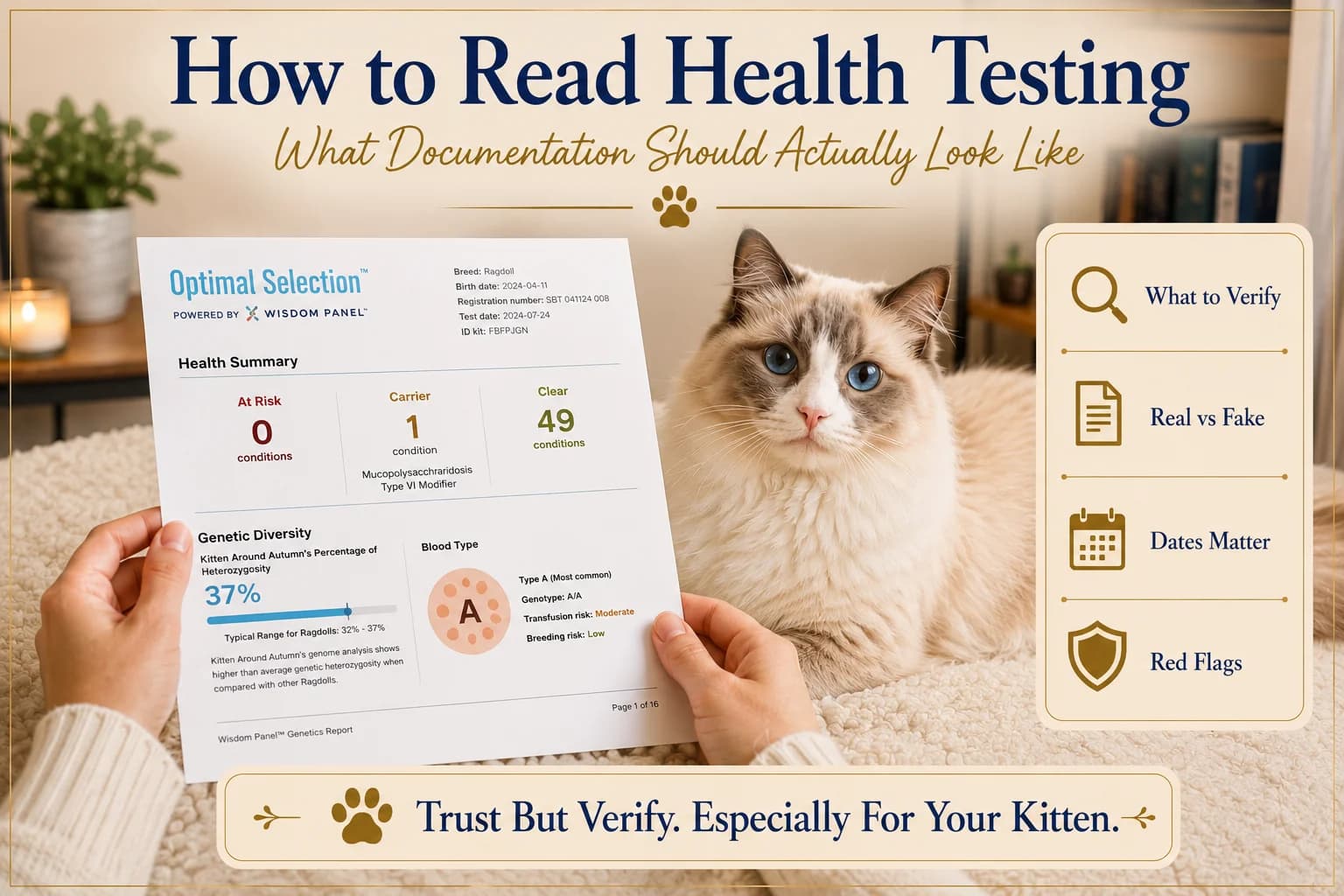
How to Read a Ragdoll Breeder’s Health Testing (What Documentation Should Actually Look Like)
Subscribe to our newsletter
Litter announcements, new posts, and the occasional discount — no spam.