Are Ragdoll Cats Hypoallergenic? What Allergy Sufferers Should Know
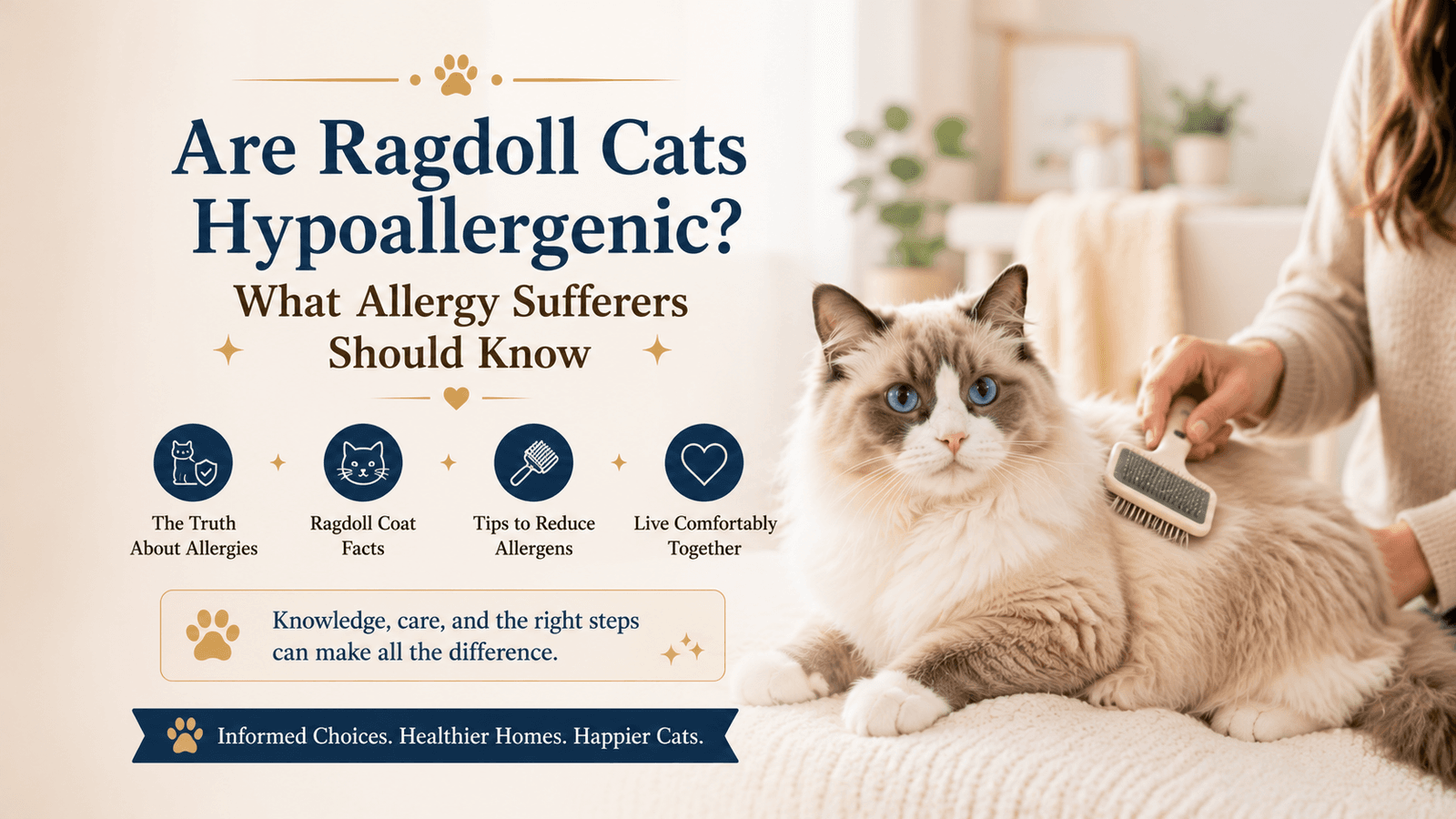
It’s one of the most common questions we hear from people who fall in love with the breed: are Ragdoll cats hypoallergenic? I want to give you the honest answer rather than the one that’s easiest to sell — because if you or someone in your home has allergies, you deserve the truth before you bring a cat into your life.
The Honest Answer: No, Not Really
Ragdolls are not hypoallergenic — and the truth is, no cat truly is. You’ll sometimes see breeds marketed that way, but there is no genuinely hypoallergenic cat. Some breeds may be a little more manageable for certain people, but every cat, Ragdolls included, produces the substance that triggers cat allergies.
I’d rather you know that going in than discover it the hard way after falling head over heels for a kitten.
What Actually Causes Cat Allergies
Here’s the part that surprises most people: cat allergies aren’t really about fur. The main culprit is a protein called Fel d 1, produced primarily in a cat’s saliva and skin glands. When a cat grooms, that protein coats the fur and dried skin flakes (dander), which then float into the air and settle around your home.
So when someone reacts to a cat, they’re usually reacting to Fel d 1 — not the hair itself. The hair is just the vehicle that carries it. This is exactly why even a “low-shedding” cat can still trigger symptoms: the allergen is on the dander and saliva, not the strand of fur.
The Ragdoll Coat: A Common Misconception
Ragdolls have a gorgeous, silky coat with very little undercoat, which means they tend to shed less and mat less than some other longhaired breeds. Because of this, people sometimes assume Ragdolls must be easier on allergies.
It’s a reasonable guess — but it doesn’t quite hold up. Less undercoat can mean a bit less loose, allergen-carrying fur drifting around, which might make a Ragdoll marginally more livable for some mildly allergic people. But Ragdolls still produce Fel d 1 just like any cat, and there’s no solid evidence they make less of it. If you have significant cat allergies, a Ragdoll is not a guaranteed safe bet.
If You’re Allergic but Determined: Practical Tips
Plenty of allergy sufferers live happily with cats by managing their exposure. If you’re set on a Ragdoll, here’s what genuinely helps:
- Run a HEPA air purifier in the rooms where you spend the most time, especially the bedroom. Capturing airborne dander makes a real difference. You can see the one we like on our Amazon storefront.
- Make the bedroom a cat-free zone. You spend a third of your life there — giving your lungs an allergen-lighter space to recover overnight is one of the most effective changes you can make.
- Groom and wipe your cat regularly. Frequent brushing (ideally by a non-allergic family member) and a quick wipe-down with a damp cloth or pet wipe reduces the dander load on the coat.
- Wash your hands after petting, and try not to touch your face until you do.
- Clean often. Vacuum with a HEPA filter, wash cat bedding regularly, and keep soft surfaces (which trap dander) to a minimum where you can.
- Talk to an allergist. Many people manage cat allergies well with the right medication or immunotherapy. A professional can tell you what’s realistic for your situation.
The Single Best Thing You Can Do First
Before committing to any cat, spend real time around the breed. Visit a breeder, a friend with cats, or a cat-friendly space, and see how your body actually responds over a few hours — not just a few minutes. Reactions vary enormously from person to person and even from cat to cat, so first-hand experience tells you far more than any label ever could.
This is something we genuinely welcome. We’d always rather you discover an allergy issue before a kitten comes home than after, when everyone’s hearts are already attached. A responsible match is a happy match.
The Bottom Line
Ragdolls are affectionate, beautiful, and a little less shed-prone than some breeds — but they are not hypoallergenic, and no cat is. If allergies are part of your picture, go in informed: understand that Fel d 1 is the real driver, take practical steps to manage exposure, loop in an allergist, and spend time with the breed before you decide. Plenty of allergy sufferers share their homes happily with Ragdolls — it just takes honesty and a good plan.
Have questions about living with a Ragdoll? We’re always happy to talk it through — reach out by email or text anytime.
As an Amazon Associate and affiliate partner, I earn from qualifying purchases. I only ever recommend the products I use and trust in my own cattery.
Recent Blogs
09/26/2026
Who You Buy From Matters More Than You Think
09/23/2026
What Ragdoll Health Testing Actually Includes: A Complete Guide
09/21/2026
Why Cheap Ragdoll Kittens Are Actually Expensive: A Breeder’s Warning
09/12/2026
What’s Included When You Buy a Ragdoll Kitten From Us

09/09/2026
What Our Past Buyers Just Told Us About Their Cats — And What We Changed Because of It
09/05/2026
How to Read a Ragdoll Breeder’s Health Testing (What Documentation Should Actually Look Like)
Subscribe to our newsletter
Litter announcements, new posts, and the occasional discount — no spam.