Bringing Your Ragdoll Kitten Home: A Stress-Free First Two Weeks

Congratulations — your new Ragdoll is finally coming home! The weeks of waiting are over, and now the real fun begins. The first two weeks set the tone for everything that follows, so I want to walk you through exactly what to expect, how to set up for success, and which little hiccups are completely normal versus the rare ones worth a phone call.
Every kitten that leaves my cattery goes home fully vetted, vaccinated, microchipped, and with a 30-day Trupanion trial already active. That means the hard part is handled — your job for the next two weeks is simply to help your kitten feel safe.
Before Your Kitten Comes Home: The Setup
A little prep before pickup day makes an enormous difference. Cats settle fastest when their world starts small and predictable, so the goal is to have one calm, kitten-proofed room ready to go.
Here’s what to have in place:
- A proper litter box. I only ever recommend an XXL stainless steel box — minimum 28″×20″ with walls 12–19″ tall. Stainless is non-porous, so it won’t trap bacteria or odor the way plastic does. These are the two I trust and use myself: the open-top XXL stainless box and the covered XXL stainless box. Please skip plastic boxes — they’re porous, hold bacteria, and are a common hidden cause of box avoidance down the road.
- The right litter. Your kitten is already trained on Cat Butler Pea-Based Clumping Litter, so starting with the same litter avoids any confusion. Use code kittenaroundragdolls20 for 20% off your first order. I never recommend clay litter — kittens ingest it while grooming, and it carries a real risk of intestinal blockage.
- Food and water. Ragdolls do best free-fed kibble for their entire lives, so set out a full bowl of dry food that stays available around the clock, plus fresh water. Keep your kitten on the exact food they’re already eating — a sudden diet change on top of a big move is the fastest way to upset a tummy.
- A safe room. Pick one quiet room — a bedroom or office works great — with the litter box, food, water, a cozy bed, and a couple of toys. This becomes home base for the first few days.
You can find everything I personally use and recommend on my Amazon storefront.
Day One: Keep It Small and Quiet
It’s tempting to give your new kitten the run of the house and introduce everyone at once — but resist! A whole house is overwhelming to a tiny kitten who just left the only home they’ve known.
Bring your kitten straight to the safe room, open the carrier, and let them come out on their own time. Show them where the litter box is, then mostly leave them be. Sit on the floor, talk softly, let them approach you. Some kittens are bold and exploring within minutes; others hide under the bed for a few hours. Both are completely normal.
Keep day one calm. Save the extended family meet-and-greet and the rest of the house for later in the week.
Feeding and the “New Home Tummy”
This is the number-one thing new owners message me about, so let me reassure you up front: mild digestive upset in the first few days is normal. A big move, a car ride, and a brand-new environment add up to stress, and stress shows up in the gut.
In the first few days you might see softer stool than usual, or your kitten might eat a little less while they settle, or there might be the occasional spit-up. None of that is cause for alarm on its own. Keep the food the same, keep fresh water available, keep the environment calm, and these usually resolve within a few days as your kitten relaxes.
Because Ragdolls are free-fed, there’s no feeding schedule to manage — just keep that kibble bowl full so your kitten can graze whenever they’re comfortable.
When should you reach out? Call your vet (and feel free to text me too) if you see repeated vomiting, watery diarrhea that lasts more than a day or two, refusal to eat for more than 24 hours, or a kitten who seems lethargic, hunched, or not their usual self. Those are the signs that move something from “settling in” to “let’s check it out.”
Litter Habits in the First Two Weeks
Most Ragdolls walk into their new home already litter-trained and don’t miss a beat — but a new environment can occasionally throw a kitten off, especially in a busy household.
A few things stack the deck in your favor:
- Keep the box in the safe room at first. Don’t make your kitten search a big house for the bathroom. Once they’re confidently using it, you can add boxes elsewhere.
- If you have other cats, follow the n+1 rule. That’s one box per cat, plus one extra, spread around the house. Resource competition is a sneaky cause of accidents even when each cat technically has access to a box.
- Watch out for soft, fluffy surfaces. Plush bath mats and shag rugs feel a lot like litter to a cat. If your kitten is drawn to a soft rug, roll it up for now while the box habit locks in.
If an accident does happen, the cleanup product matters more than people realize — you have to fully eliminate the scent or the cat will return to the spot. The three that actually work are Biokleen Bac-Out, OdoBan concentrate, and Rescue (Virox AHP). I’ve tested the popular ones and skip Nature’s Miracle, Rocco & Roxie (that tea-tree smell), and Scout’s Honor — they simply don’t break down the odor as completely. For a deeper dive, see my full guides on litter box setup and what to do when a cat goes outside the box.
Settling In and Bonding
By the end of the first week, most kittens are ready to start exploring beyond the safe room. Expand their territory gradually — one or two new rooms at a time — and let them set the pace.
Ragdolls are famously people-oriented, so bonding usually happens fast. Spend floor time together, use a wand toy to build confidence and play, and let your kitten seek out laps and shoulders on their own terms. Within two weeks, most of my families tell me their kitten is following them room to room, flopping over for belly rubs, and acting like they’ve always lived there.
If you have other pets, take introductions slowly — scent-swapping and supervised, gated meetings over several days beat a rushed face-to-face. I’ll be writing a full guide on multi-pet introductions soon.
You’re Never Doing This Alone
Every Kitten Around Ragdoll comes with lifetime breeder support — that’s not a tagline, it’s a promise. Whether it’s a 10pm “is this normal?” text or a question two years from now, I’m a message away. I’d genuinely rather you reach out over something small than sit and worry.
Welcome to the family — these first two weeks fly by, and before you know it you’ll have a floppy, affectionate Ragdolly shadow who can’t imagine life without you.
As an Amazon Associate and affiliate partner, I earn from qualifying purchases. I only ever recommend the products I use and trust in my own cattery.
Recent Blogs

09/23/2026
What Ragdoll Health Testing Actually Includes: A Complete Guide

09/21/2026
Why Cheap Ragdoll Kittens Are Actually Expensive: A Breeder’s Warning

09/12/2026
What’s Included When You Buy a Ragdoll Kitten From Us

09/09/2026
What Our Past Buyers Just Told Us About Their Cats — And What We Changed Because of It
09/05/2026
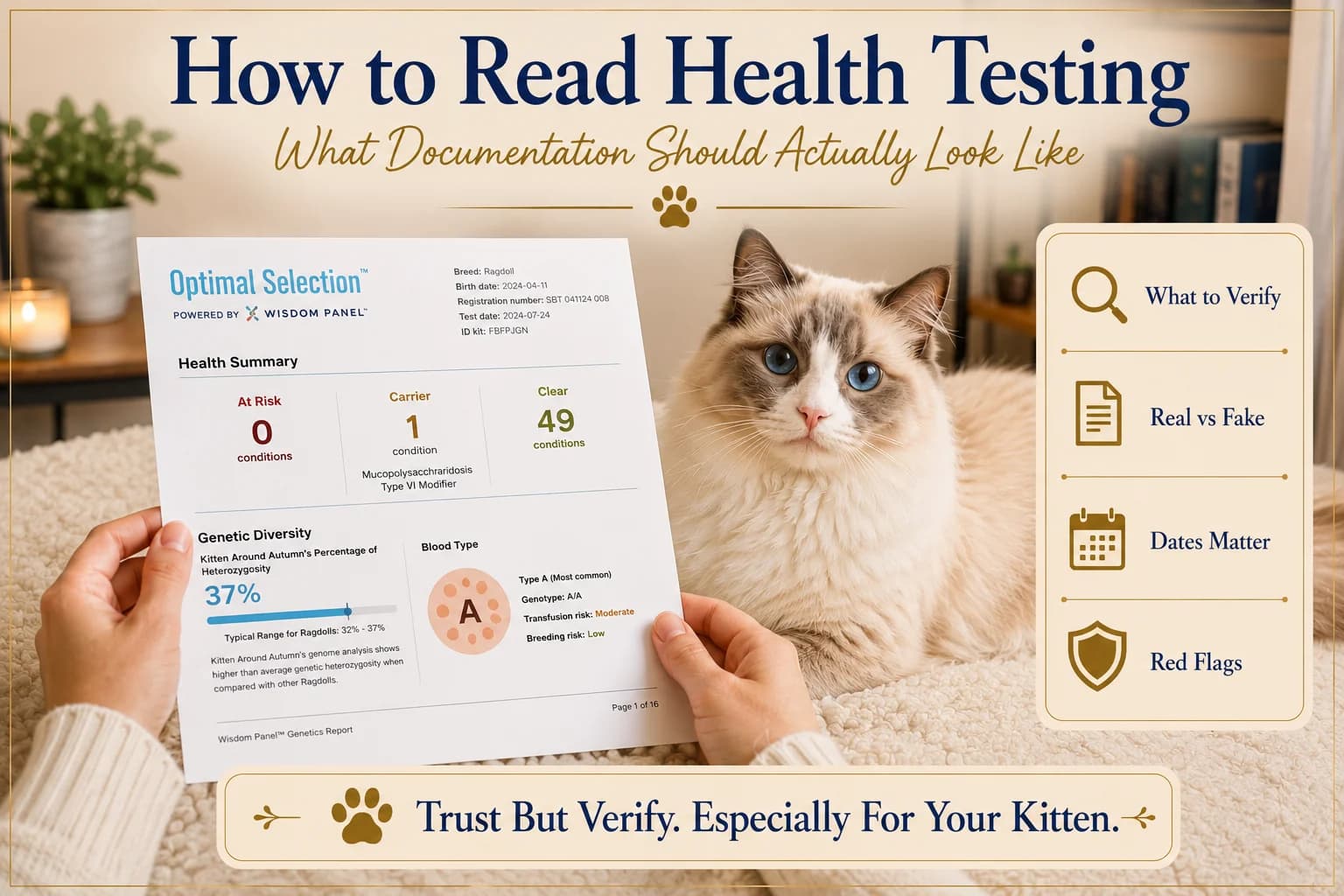
How to Read a Ragdoll Breeder’s Health Testing (What Documentation Should Actually Look Like)

09/02/2026
Secret Bear Found Her People: When a Retained Kitten Becomes Someone’s Forever Cat
Subscribe to our newsletter
Litter announcements, new posts, and the occasional discount — no spam.