Comprehensive Health Testing on Every Ragdoll Kitten: Our New Standard
Comprehensive Health Testing on Every Ragdoll Kitten: Our New Standard
When you bring home a kitten from Kitten Around Ragdolls, you’re getting more than just a beautiful cat. You’re getting our commitment to breed for health, temperament, and lifelong wellbeing.
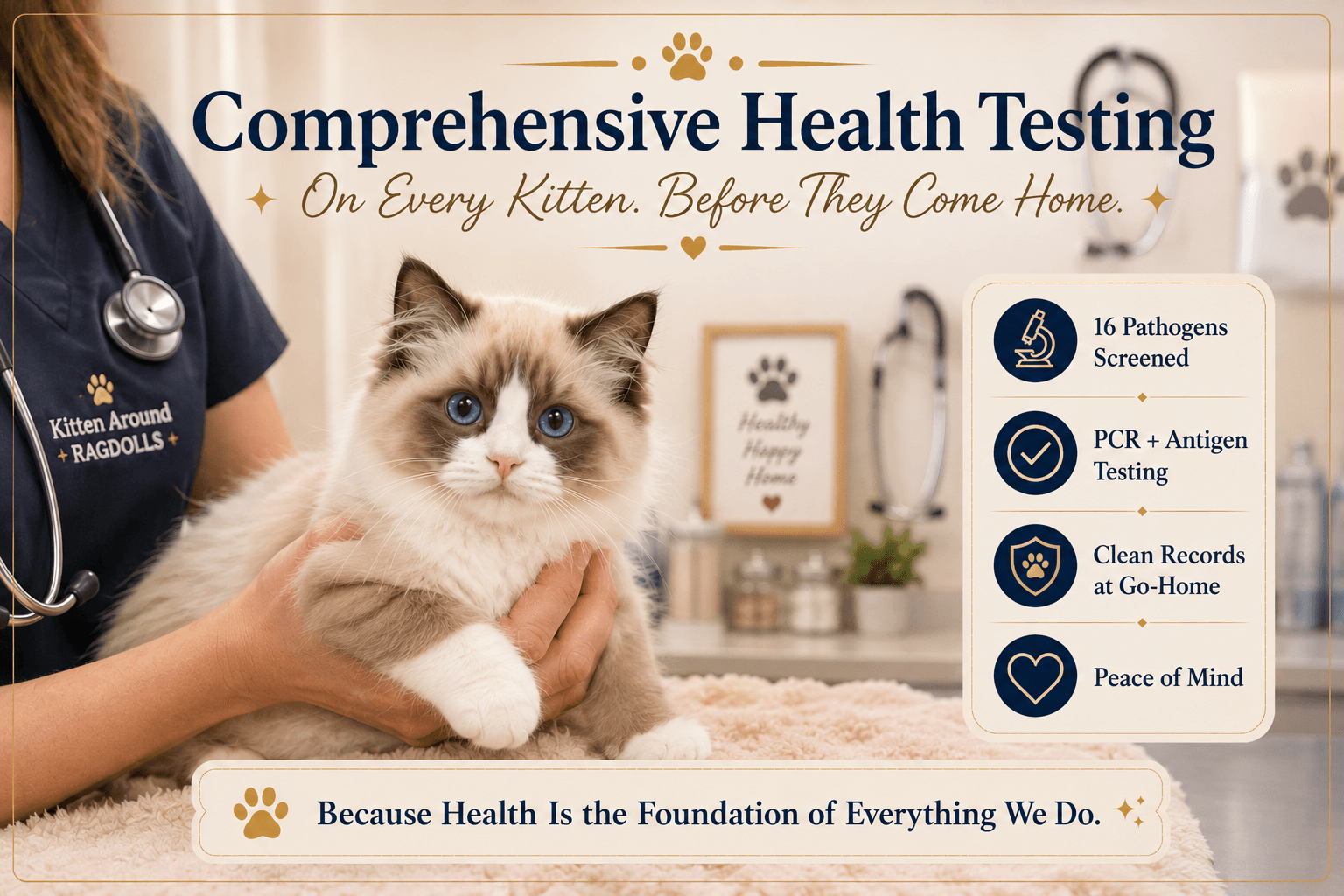
Today, I’m sharing an update to how we deliver on that commitment: we now send comprehensive fecal panels to IDEXX for every litter before kittens go home.
This isn’t required. TICA doesn’t mandate it. Most breeders don’t do it. But we’re raising the bar — because health is the foundation of everything we do.
What We’re Now Testing (And What It Means)
The panel we’re using is the IDEXX Diarrhea RealPCR Panel (Comprehensive) combined with the Fecal Dx Profile. In simple terms, this test screens for 16 different pathogens that could affect your kitten’s health, either now or down the road.
Some of what we’re testing for is very common in kittens (and easily addressed). Some is rare but serious. Some is transmissible to humans, which is why testing matters even more when kittens are going to homes with children, elderly family members, or immunocompromised individuals.
Let me walk you through what’s actually in the panel.
Common Intestinal Parasites
These are extremely common in kittens. Nearly any kitten can pick these up in the first few weeks of life, and ethical breeders routinely deworm to address them. Comprehensive testing confirms they’re cleared before your kitten comes home.
- Roundworms — the most common parasite in kittens
- Hookworms — can cause anemia in young kittens if untreated
- Whipworms — less common in cats but possible
- Flea tapeworm — transmitted through fleas, easy to treat once identified
- Fecal ova and parasites — a general microscopic screen for anything else
What this means for you: Your kitten arrives dewormed and confirmed parasite-free. No surprise “we need to bring them back to the vet next week” moments.
Bacteria That Can Cause Diarrhea
Some bacteria in a cat’s gut are perfectly normal. But certain bacteria and their toxins can cause significant health issues, and several of these are zoonotic — meaning they can be transmitted from cats to humans.
- Clostridium perfringens toxins (CPA and CPE) — bacteria that produce toxins linked to diarrhea. The panel quantifies toxin levels so we know if they’re meaningful, not just present.
- Campylobacter coli and Campylobacter jejuni — C. jejuni is zoonotic and one of the most common causes of foodborne illness in humans. Testing is important for households with children.
- Salmonella — zoonotic. Especially important to rule out for homes with young children, pregnant family members, or anyone immunocompromised.
What this means for you: You know before homecoming that your kitten isn’t carrying bacteria that could make your family sick.
Protozoa and Single-Cell Parasites
These are microscopic organisms that can cause diarrhea and are often hard to detect with basic testing. Two of these deserve special attention.
- Giardia — very common in multi-cat environments. Zoonotic. Causes soft stool and diarrhea. Absolutely treatable, but if a kitten goes home carrying it, you’ll be dealing with the consequences without knowing why.
- Cryptosporidium — zoonotic. Causes diarrhea. Notoriously difficult to eliminate once established, so catching it before go-home is important.
- Tritrichomonas blagburni — This is one of the most important tests in the entire panel. Tritrichomonas causes chronic, months-to-years-long diarrhea in cats. It’s difficult to diagnose without PCR testing (which is what this panel uses), and it’s difficult to treat once established. Catching this before your kitten comes home is a major upgrade over standard testing.
What this means for you: If your kitten develops diarrhea after go-home, it won’t be because of one of these three difficult-to-diagnose parasites. That’s a huge peace of mind.
Viral Screens
Two viral screens are included in the panel. Neither is something to panic about — they’re both part of standard fecal PCR testing.
Feline coronavirus (FeCoV)
Feline coronavirus is extremely common — most cats will be exposed to it at some point in their lives, and the vast majority never have any issue at all. In cats that do show symptoms, it usually looks like mild, transient soft stool that resolves on its own. Testing gives us useful information about our environment but is not a cause for concern.
A quick clarification, since it comes up: Feline coronavirus is NOT the same as SARS-CoV-2 (COVID-19). Feline coronaviruses are species-specific and do not infect humans. This test does not detect COVID-19.
Feline panleukopenia virus (FPV)
This is a highly contagious viral disease that vaccination protects against very effectively. All of our kittens are fully vaccinated before go-home, and this test confirms your kitten isn’t shedding the virus at the time they leave us.
Other Important Pathogens
- Toxoplasma gondii — zoonotic. Particularly important information for households with pregnant women or immunocompromised family members. Most cats shed the parasite only briefly during their initial infection and then are typically immune for life. Testing gives us — and you — clarity.
What Happens If a Test Comes Back Positive?
The whole point of testing is to know. If any pathogen is detected in a kitten or litter before go-home, our process is straightforward:
- We treat it appropriately, following our veterinary team’s guidance
- We retest to confirm the pathogen has been cleared
- We do not send the kitten home until we have clean confirmation
- We share the test results with you as part of your take-home health documentation
Some pathogens (like feline coronavirus) are extremely common in cattery environments and are difficult or impossible to eliminate entirely. In those cases, we work closely with our veterinarian to manage the situation, ensure your kitten is in the best possible health at go-home, and communicate any relevant information transparently to you.
The point isn’t to pretend our cattery is perfectly sterile. The point is to know — so we can address issues, communicate clearly, and give you the healthiest possible kitten based on real information rather than guesswork.
Why We’re Doing This
We’re doing it for three reasons:
1. Your peace of mind. When you take home a Kitten Around Ragdolls kitten, you should know that we’ve done everything reasonably possible to verify their health. Not “trust me” — actual documentation you can hold in your hand.
2. Their long-term health. Several of these pathogens — especially Tritrichomonas, untreated Giardia, and chronic parasitism — can cause long-term issues that are much easier to address in young kittens than in adults. Catching them early can genuinely change a cat’s life trajectory.
3. Our program’s integrity. By tracking pathogens across our litters over time, we identify patterns and can address them at the source. This makes every future litter healthier than the last. It’s how a breeding program actually improves — not just producing kittens, but learning from every generation.
What This Means For You as a Buyer
When you bring home a kitten from us going forward, you’ll receive:
- Comprehensive fecal panel results from your kitten’s litter
- Documentation of any treatment given and clearance retesting
- A kitten who has been screened for 16 different pathogens
- Peace of mind that some of the hardest-to-detect issues have been ruled out
This is on top of everything we already do:
- HCM (heart) screening on breeding parents
- PKD (kidney) screening on breeding parents
- Wisdom Panel Optimal Selection genetic screening
- Complete vaccination series
- Spay/neuter before go-home
- Microchipping registered to nanochipid.com
- Trupanion insurance activation
- Full veterinary check
- Lifetime breeder support
A Note on Honesty
I want to be clear about something: we are not going to pretend our cattery is perfectly sterile or that no kitten from us will ever have a health issue. That’s not realistic and it’s not honest. Cats are complex living beings and health is a lifelong journey with many chapters.
What we are committing to: we will know everything we reasonably can know about your kitten’s health before they come home. If we find something, we address it. If we can’t fully address it, we tell you what to watch for. We show you the results. We tell you the truth — always.
That’s the standard we’re setting. For us. For you. And for every kitten that comes through our program.
Questions?
If you have questions about our new testing protocol — whether you’re a current family, a prospective buyer, or another breeder considering the same investment — please reach out. I’m happy to walk you through any of this in more detail.
Health testing isn’t a competition. It’s a commitment. And I’m proud to be raising the bar for what our buyers can expect.
🐾 Looking for a Ragdoll Kitten?
Every kitten from us now comes with comprehensive fecal panel results, alongside all the other health testing we already do. That’s the level of care we believe every family deserves.
Looking to bring home a Ragdoll kitten from a breeder committed to health testing at the highest level? Check our available kittens or join our waitlist for upcoming litters. We’re a TICA-registered cattery in Sacramento, CA, breeding for health, temperament, and the traditional Ragdoll standard.
Recent Blogs
09/21/2026
Why Cheap Ragdoll Kittens Are Actually Expensive: A Breeder’s Warning

09/12/2026
What’s Included When You Buy a Ragdoll Kitten From Us

09/09/2026
What Our Past Buyers Just Told Us About Their Cats — And What We Changed Because of It
09/05/2026
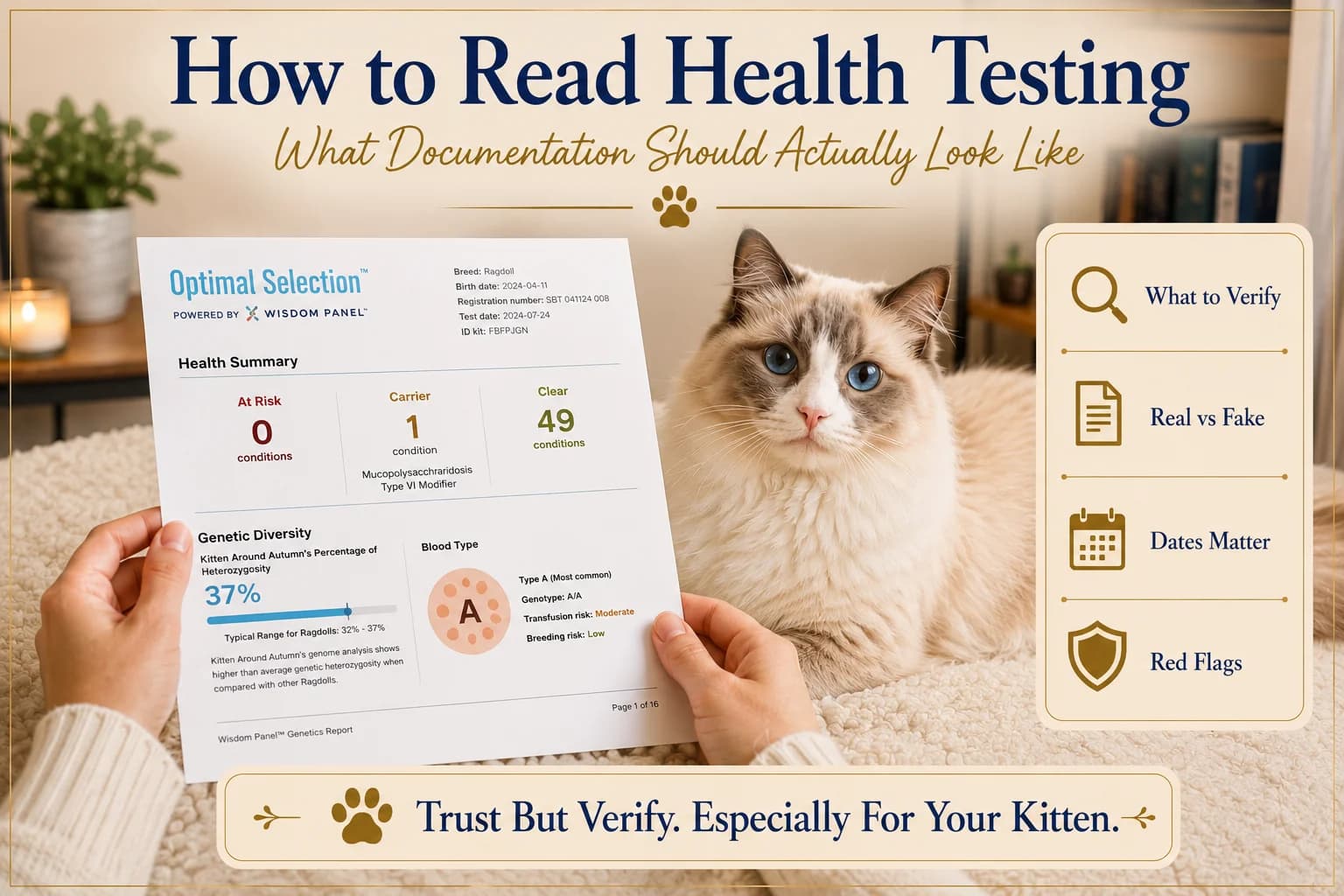
How to Read a Ragdoll Breeder’s Health Testing (What Documentation Should Actually Look Like)

09/02/2026
Secret Bear Found Her People: When a Retained Kitten Becomes Someone’s Forever Cat
08/29/2026
HCM Testing in Ragdolls: The DNA Test, the Echo, and What Everyone Gets Wrong
Subscribe to our newsletter
Litter announcements, new posts, and the occasional discount — no spam.