How I Became a Breeder — And What I Wish More Breeders Were Doing
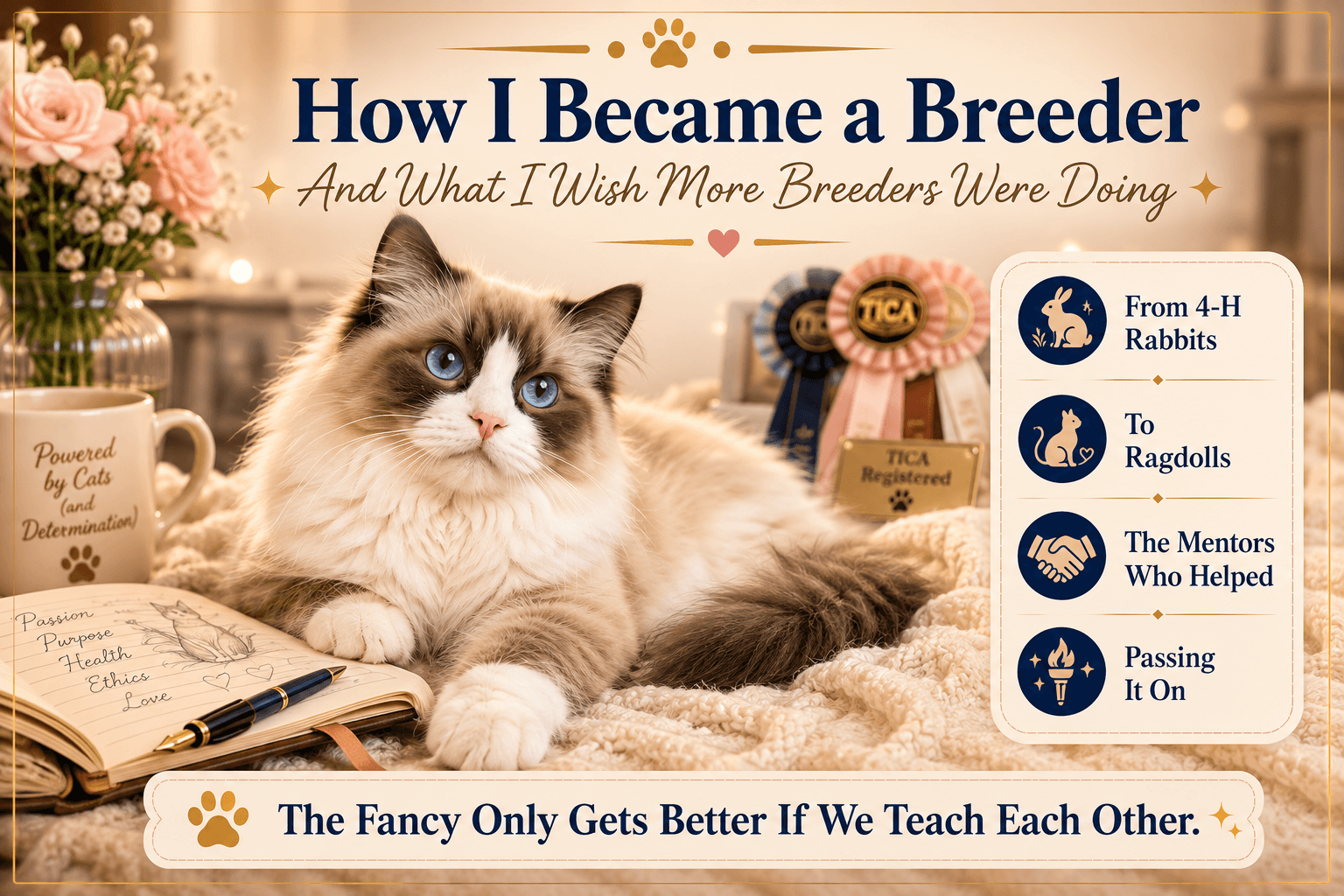
How I Became a Breeder — And What I Wish More Breeders Were Doing
People sometimes ask me how I ended up breeding Ragdolls. The honest answer is that I’ve been an animal person my entire life — and long before Ragdolls, there were rabbits.
4-H, Rabbits, and Learning How to Breed
Before I ever brought home a cat with breeding potential, I spent many years in 4-H and rabbit showing. I traveled all over California and Nevada for shows. I bred rabbits for years before I ever considered breeding cats.
Rabbit showing teaches you a lot. It teaches you pedigrees. It teaches you conformation. It teaches you the discipline of tracking breedings, watching pregnancies, raising litters, and evaluating each individual animal against the breed standard. It teaches you how to lose gracefully when your best entry doesn’t place, and how to win gracefully when they do.
It also teaches you what a good breeding community looks like — because 4-H, at its best, is genuinely designed to bring newer members up through mentorship. The whole point is that older members teach younger ones. That’s the entire model.
By the time I transitioned into cats, I already had years of experience with:
- Pedigree research and pairing decisions
- Prenatal and neonatal care
- Raising litters
- Show handling and evaluation
- Working with vets on breeding animals
- Managing multi-animal environments
The breeding fundamentals transferred directly. What didn’t transfer was the culture.
The 180 From Rabbits to Cats
Moving from rabbit shows to cat shows was a total 180. The core work of breeding is similar — genetics is genetics, health testing is health testing, raising a litter is raising a litter. But the community around it? Completely different.
Rabbit showing at the 4-H level is fundamentally collaborative. People want you to learn. People are happy to share what they know. There’s a shared understanding that the hobby only survives if new people keep entering it, so bringing them along is part of the responsibility of being experienced.
Cat shows are not always like that. I’ve met truly wonderful people in the cat fancy — mentors and colleagues who I now count as some of the most important people in my professional life. But I’ve also encountered the opposite. And it’s been striking how different the two experiences can be within the same building on the same weekend.
The Established Breeders Who Don’t Mentor
Here’s the hard part. And I’m going to be direct about it, because pretending it isn’t happening does nobody any favors.
Some established breeders openly refuse to help newer breeders coming up. Especially if the newer breeder is working in their same breed. They see them as competition — not as a friend, not as a potential colleague, not as someone who might one day carry on the work they started. Just as competition.
So they exclude them. They ignore them. They don’t return messages. They don’t return greetings at shows. They talk around them at social events. They actively work to make the newer breeder feel unwelcome.
And here’s what those breeders don’t seem to understand: if you do that, they’re just going to go away.
That’s really true. The newer breeder who wanted to learn from you, who admired your program, who might have carried your bloodlines and your knowledge into the next generation — they don’t stay in the fancy if nobody welcomes them. They leave. They find another breed, another hobby, another community that treats them like a human being.
And when they leave, your legacy leaves with them.
The Legacy Problem
Some of the most experienced Ragdoll breeders in the country are approaching retirement age. Some of them should already be retired. Some of them are smart about this — they’ve identified newer breeders they trust, they mentor them, they share pedigree information and genetic history and hard-won knowledge that isn’t written down anywhere.
Others don’t. And it’s genuinely sad, because they have so much information — historical context, cattery relationships, breed lineage, practical experience from decades of work — and they’re just unwilling to share it. Not with strangers, not with newer breeders, not with anyone outside their own family or a handful of people they’ve decided to trust over the years.
What happens to all that knowledge when they retire? It disappears. Full stop.
And that’s a real disservice to the breed and to the cat world. Genuine expertise that took a lifetime to build, gone in a single generation, because the person who held it didn’t want to share it.
What I’ve Been Fortunate to Receive
I say all of this from the perspective of someone who has been extraordinarily lucky. I have been mentored by truly wonderful individuals. I have made friends with people who share my ethics, my love of breeding, my love of this breed — and who are also wonderful, compassionate human beings.
Because of them, my program will continue on through me, through my children, through the friends I share my work with, and one day maybe through people I mentor myself.
Passing my love of something on is meaningful. It’s how you connect with other people. I’m a teacher by nature — I love educating people. I did 4-H for a really long time, largely because the teaching and mentoring aspect was as valuable to me as the showing itself.
The breeders who welcomed me into the cat fancy did something generous when they didn’t have to. I take that seriously. And I’m committed to doing the same for the newer breeders coming up after me.
What I Wish More Breeders Were Doing
If I could ask something of the more established breeders in the Ragdoll community — many of whom I deeply respect for their programs and their work — it would be this:
Welcome the new people. Even the ones you don’t know yet. Even the ones you’re not sure about. Even the ones who might one day compete against you at shows. The health of the fancy depends on it. Your legacy depends on it.
Share what you know. The knowledge in your head is more valuable than any pedigree or any award. When it dies with you, it’s gone forever. Write it down. Tell someone. Teach someone. Even one person is enough.
Assume good intent. The newer breeder who reaches out isn’t trying to steal from you or replace you. They’re trying to learn from someone they respect. That’s flattering, actually. Treat it that way.
Remember who welcomed you. Almost every established breeder was welcomed into this world by someone else at the start. Passing that forward isn’t optional. It’s what keeps the community alive.
What I Hope New Breeders Take From This
If you’re a newer breeder reading this, or someone considering entering the fancy: don’t let a cold reception from a few people convince you that the whole community is like that. It isn’t.
There are truly wonderful breeders out there who will welcome you, mentor you, celebrate your successes, and support you through your mistakes. Find them. Build relationships with them. Learn everything you can from them. And when it’s your turn — because it will be your turn eventually — pass it forward.
The cat fancy only survives if we keep bringing people up.
What This Means for Buyers
If you’re a prospective buyer reading this and wondering how it affects your kitten search — it matters more than you’d think.
Ask breeders you’re considering about their mentors. Ask them who mentored them and how. Ask them whether they mentor others. Ask them what they’ve learned from the breeders who came before them. Their answers will tell you a lot about who they are and what they’ll be like as your kitten’s breeder over the coming years.
The best breeders think generationally. They know their kittens are part of a longer story that started before them and continues after them. That mindset shows up in everything they do.
Thank You
To the breeders who welcomed me, mentored me, answered my questions, invited me into your homes, sold me your best cats, and treated me like a colleague from the start — thank you. Your generosity built the program I have today. It will outlive both of us.
The best way I know to honor that is to do the same for whoever comes after me. So that’s what I intend to keep doing.
🐾 Ready to Meet a Kitten Raised With Values?
Every kitten in our program is raised by a breeder who owes her career to the generosity of the mentors who came before her.
Looking for a Ragdoll kitten from a breeder committed to community, mentorship, and passing forward what she learned? Check our available kittens or join our waitlist for upcoming litters. We’re a TICA-registered cattery in Sacramento, CA, breeding for health, temperament, and the traditional Ragdoll standard.
Recent Blogs
09/26/2026
Who You Buy From Matters More Than You Think
09/23/2026
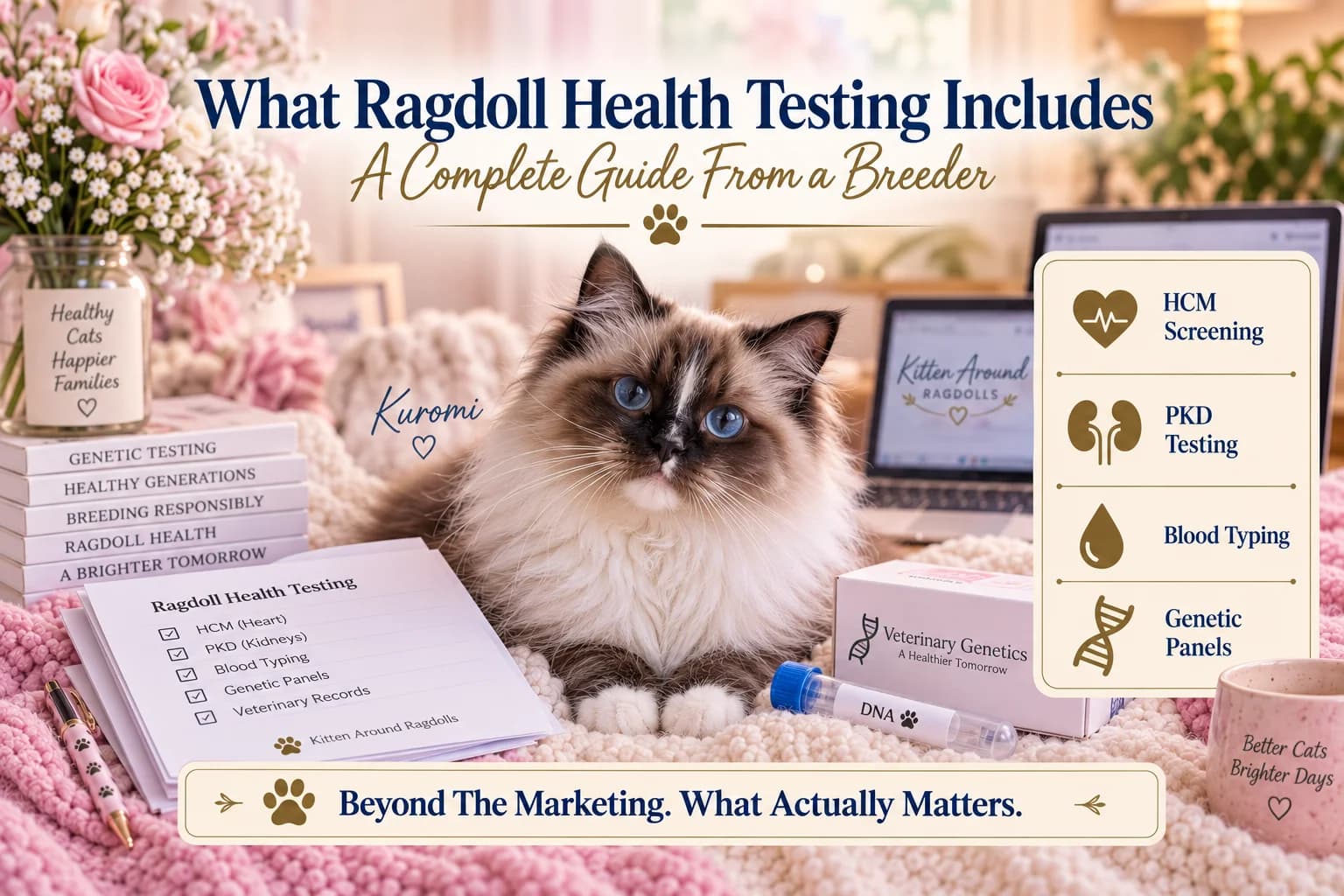
What Ragdoll Health Testing Actually Includes: A Complete Guide
09/21/2026
Why Cheap Ragdoll Kittens Are Actually Expensive: A Breeder’s Warning
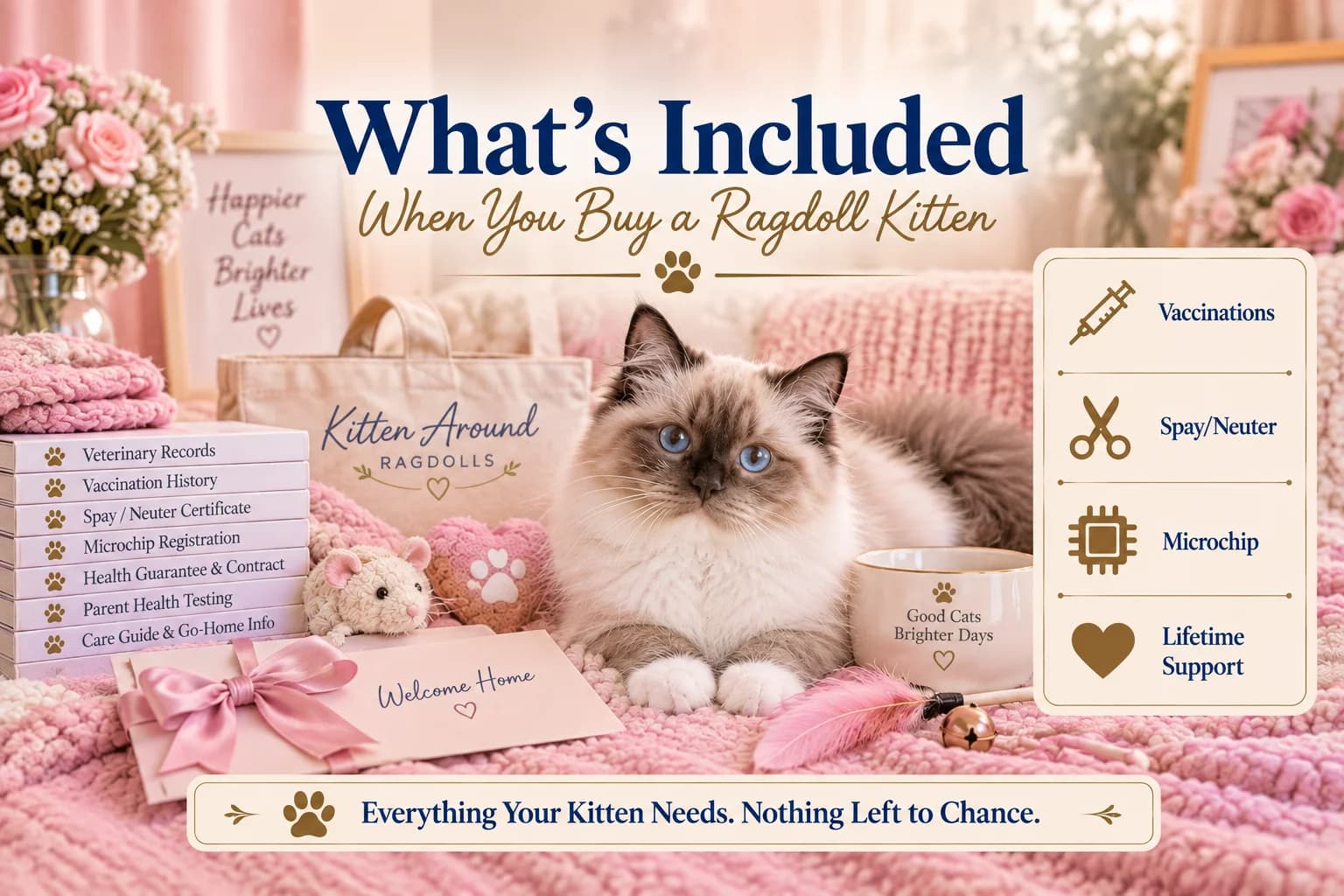
09/12/2026
What’s Included When You Buy a Ragdoll Kitten From Us

09/09/2026
What Our Past Buyers Just Told Us About Their Cats — And What We Changed Because of It
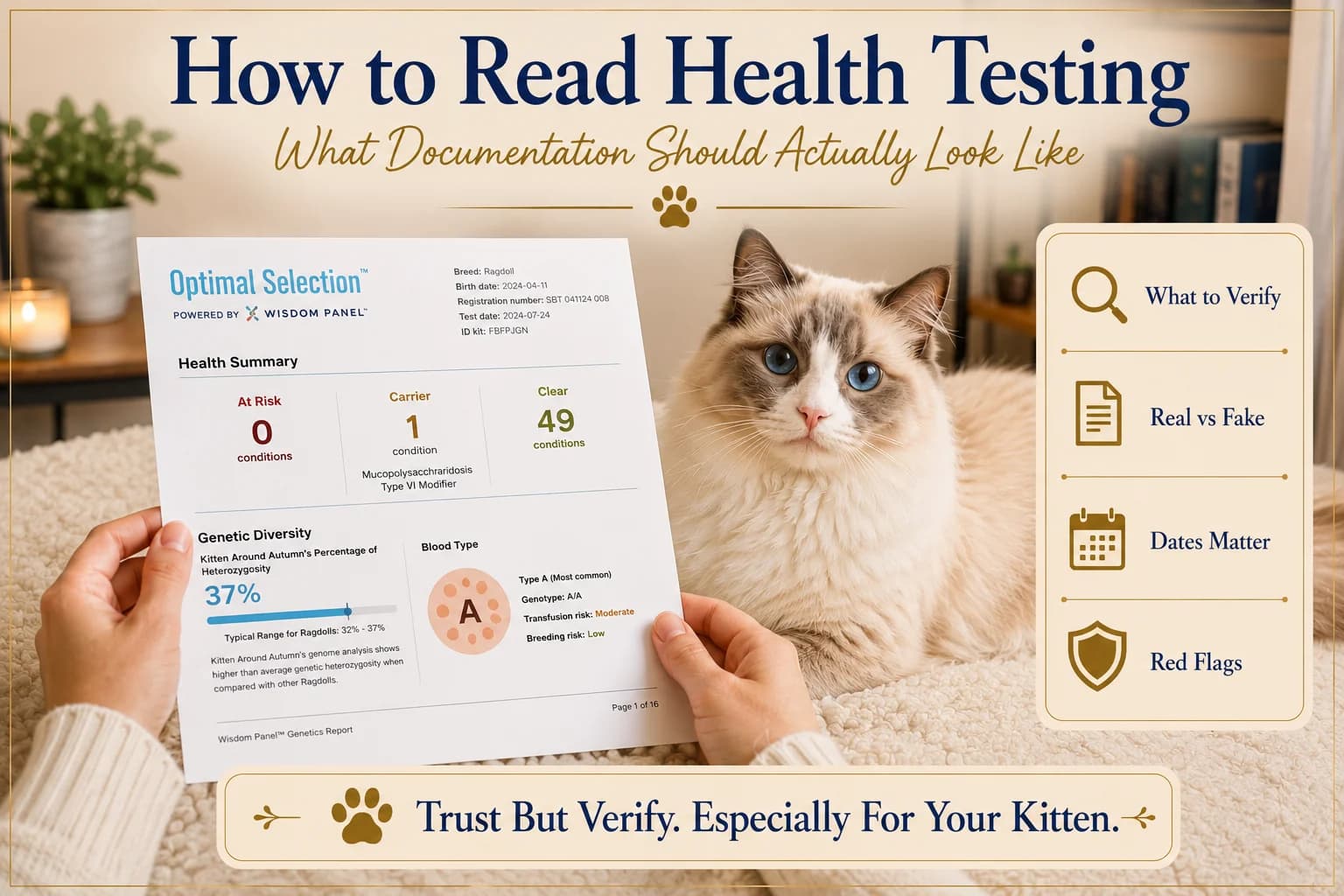
09/05/2026
How to Read a Ragdoll Breeder’s Health Testing (What Documentation Should Actually Look Like)
Subscribe to our newsletter
Litter announcements, new posts, and the occasional discount — no spam.