How We Ensure Every Ragdoll Kitten Is Healthy: Our Complete Cattery Protocol Focus
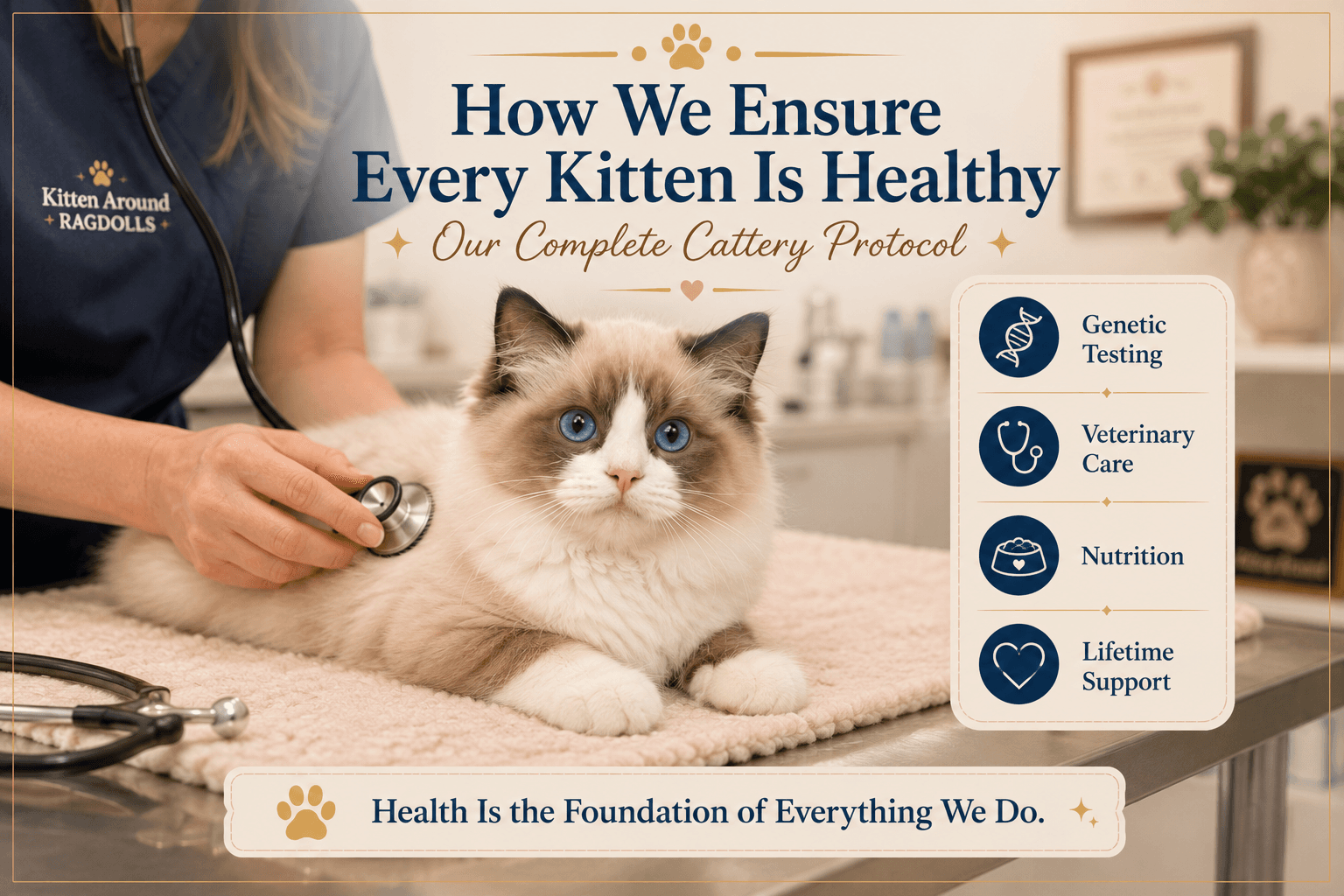
How We Ensure Every Ragdoll Kitten Is Healthy: Our Complete Cattery Protocol
When families are choosing between Ragdoll breeders, the single most important thing they can look at isn’t the website. It isn’t the photos. It isn’t even the prices.
It’s the health protocol — what the breeder actually does, step by step, to ensure every kitten leaves their cattery as healthy as possible.
This post is our answer to that question. Everything we do at Kitten Around Ragdolls, from before we even breed a pair of cats through the day your kitten comes home (and beyond). No fluff. No marketing. Just what happens.
It Starts Before Breeding: Genetic Health Testing on Every Cat
Every single cat in our breeding program undergoes comprehensive genetic testing before we ever consider producing a litter from them. Not the cheap “swab and hope” tests — the real deal.
We use the Wisdom Panel Optimal Selection feline test, which screens for over 50 known genetic conditions along with genetic diversity, blood type, and coat traits.
What This Test Actually Checks
The Optimal Selection panel covers everything a Ragdoll breeder needs to know, including:
- Hypertrophic Cardiomyopathy (HCM) — the most common cardiac disease in cats, and one that hits Ragdolls earlier than most breeds (average diagnosis at just 15 months). We screen for the R820W mutation in the MYBPC3 gene that’s specifically been linked to Ragdolls.
- Polycystic Kidney Disease (PKD) — a serious autosomal dominant condition. One copy is enough to affect the cat.
- Factor XII Deficiency (Variants 1 and 2) — a blood clotting factor variant.
- MDR1 Medication Sensitivity — a genetic variant that can cause severe reactions to common medications including certain antiparasitics, antibiotics, and anesthetics. Critical information for a lifetime of vet visits.
- Progressive Retinal Atrophy — inherited eye disease
- Pyruvate Kinase Deficiency — inherited blood disorder
- Gangliosidosis (GM1 and GM2) — progressive neurological diseases
- Mucopolysaccharidoses (multiple types) — storage disorders
- Blood type — critical for both transfusion safety and for pregnancy planning (Type B queens bred to Type A males can produce kittens who die from neonatal isoerythrolysis if not managed correctly)
- Genetic diversity — measured against the typical range for Ragdolls, so we understand how our breeding pairs will contribute to overall genetic health
- Plus 30+ additional inherited conditions
This isn’t a “run once and hope for the best” test. Every cat we bring into our breeding program is tested. Every cat we retain from our own litters is tested before we consider using them for breeding. It’s non-negotiable.
Why This Matters
Comprehensive genetic testing means:
- We know exactly what our cats can and can’t pass on to their kittens
- We can make informed pairing decisions that reduce the risk of genetic disease
- We know each cat’s blood type — critical for both breeding decisions and emergency medical care
- We can share test results with you so you know your kitten’s genetic background
- We can help your veterinarian understand any breed-specific considerations for your cat’s lifetime care
Want to see what a real Wisdom Panel report looks like? We’re happy to share one of our actual cats’ genetic reports with prospective buyers on request. It’s transparency in action.
Veterinary Care Throughout the Litter’s Life
Our veterinary team at Douglas Boulevard Veterinary Clinic in Roseville sees every kitten we produce. Here’s the schedule.
8-10 Week Wellness Check + First FVRCP Vaccine
Every kitten receives a complete veterinary examination between 8-10 weeks of age. This includes:
- Full physical exam
- Weight and growth check
- Heart and lung auscultation
- Eye and ear evaluation
- Deworming as appropriate
- First FVRCP (Feline Viral Rhinotracheitis, Calicivirus, and Panleukopenia) vaccine
The FVRCP vaccine protects against three of the most serious viral diseases in cats. If anything unusual is found during the exam, we address it before the kitten goes home — always.
11-12 Week Spay/Neuter + Second FVRCP Vaccine
At 11-12 weeks, kittens return to Douglas Boulevard Vet for their spay or neuter surgery, along with their second FVRCP booster. Every kitten goes home already altered — you don’t have to arrange it, budget for it, or manage the recovery.
A Note on Why We Don’t Do 3rd or 4th Boosters
Some breeders advertise “3 or 4 rounds of vaccines” before go-home as a sign of quality. Here’s the honest picture:
Our queens (mother cats) are fully vaccinated with annual FVRCP boosters as part of our health protocol. This means their kittens are born with strong maternal antibody protection that lasts several weeks into the kitten’s life. Because of this maternal antibody protection, additional vaccines in the earliest weeks often don’t “take” — the mother’s antibodies neutralize the vaccine before the kitten’s own immune system responds.
The two-vaccine schedule (8-10 weeks and 11-12 weeks) is what our veterinarian recommends based on the mother cats’ vaccination status and the timing of maternal antibody decline. Your new vet will continue the schedule with additional boosters as appropriate for your kitten’s ongoing life.
If you or your vet want additional boosters before go-home for any reason, we’re happy to accommodate that on request.
Nutrition: What We Feed and Why
Nutrition is the foundation of long-term health. What a kitten eats during their growth years shapes their coat, their digestion, their immune system, and their lifelong health trajectory.
Our Feeding Protocol
We feed our kittens (and adults) a combination of premium foods:
Dry food (free-fed 24/7): Wellness CORE Grain-Free Kitten — a high-protein, grain-free kibble specifically formulated for growing kittens. Ragdolls grow slowly (until age 4) and benefit from consistent access to quality nutrition. Kibble is always available.
Wet food (as meals): Wellness CORE Grain-Free Kitten pâté — the wet counterpart to their kibble. Higher moisture content supports urinary tract health.
Freeze-dried complete food: Fresh Is Best freeze-dried chicken is our kittens’ first solid food and continues as several meals per week (or one meal per day, depending on the household). This is minimally processed, single-protein, complete-and-balanced nutrition. Many families whose kittens have gone home from us report using Fresh Is Best as a topper, treat, or dedicated meal well into adulthood. Use code KITTENAROUND15 for 15% off.
Fresh water: Always available. We use ceramic bowls and clean them daily.
Why We Feed This Way
- High-quality protein supports the sustained slow growth that Ragdolls need through adolescence
- Grain-free formulas reduce carbohydrate load, which can help with digestion and long-term metabolic health
- Free-feeding works well for Ragdolls because they self-regulate — they don’t gorge like some breeds do
- Combining wet, dry, and freeze-dried gives variety, hydration, and multiple textures — important for cats who can become picky if only given one type
- Familiar food at go-home means less digestive upset when your kitten transitions to your household. We send home food samples so you can maintain continuity.
Litter and Environmental Health
What a kitten is exposed to in their litter box matters more than most people realize. Kittens groom themselves obsessively, which means whatever ends up on their paws ends up in their mouths.
We Use Cat Butler Pea-Based Clumping Litter Exclusively
Cat Butler pea husk litter is what we use throughout our cattery. Here’s why it matters:
- Non-toxic if ingested — because it’s made from pea husk, if a kitten accidentally swallows some during grooming (and they do), it won’t harm them. Traditional clay litters contain silica dust that can cause respiratory and digestive problems, and some clumping clay litters can expand dangerously in a kitten’s stomach.
- Dust-free — no silica dust means no respiratory irritation for kittens whose developing lungs are especially sensitive. This is critical for a breed prone to any respiratory sensitivity.
- Natural clumping — makes daily cleaning easy and keeps the box hygienic between full changes
- Biodegradable and flushable — better for households and better for the environment
- No perfumes or chemicals — no synthetic fragrances that can irritate kittens or cause allergic reactions
- Softer on paws — better for kittens learning to use the box and for adult cats with sensitive paw pads
We use XXL stainless steel litter boxes (28″×20″, 12-19″ walls) — never plastic. Plastic boxes absorb bacteria in the microscopic scratches from claws, and no amount of cleaning fully eliminates that. Stainless steel is non-porous, sanitizable, and lasts forever.
Cat Butler offers our families 20% off with code kittenaroundragdolls20 — so you can continue the same litter your kitten is already used to.
Microchipping Before Go-Home
Every kitten leaves us microchipped, with the chip registered through nanochipid.com. Nano chips are half the size of traditional microchips (about the size of a grain of rice), which means:
- Less invasive placement
- Less discomfort during implantation
- Same universal scanning compatibility
Your kitten is registered under your name and contact info from day one — we transfer registration to you before go-home. Peace of mind if they ever slip out an open door.
Insurance Activation Support
Every one of our kittens goes home eligible for Trupanion pet insurance with a 30-day free trial. We provide you with the activation code and instructions.
Pet insurance activated within the first 30 days of ownership means your kitten’s coverage begins immediately — before any conditions can be considered pre-existing. This one small step can save families thousands of dollars over the life of the cat.
Codes:
BR1KA6821 (most states)
BR2KA6821 (New York)
Call 833.701.7993 to activate.
Written Contract and Health Guarantee
Every kitten goes home with a comprehensive written adoption contract that includes:
- Genetic health guarantee
- Return-to-breeder clause (if you ever cannot keep your kitten, they come back to us — no questions asked, no matter how many years later)
- Clear terms around your rights and ours
- Documentation of everything included with your kitten
The contract is real. It’s enforceable. It exists to protect both our kittens and our buyers.
Lifetime Breeder Support
Here’s the part nobody puts in their marketing materials, but it matters more than any of the above:
We support our families for the life of the cat.
When you have questions about your Ragdoll six months, six years, or sixteen years after go-home, we’re here. Questions about food. Behavior. Health concerns. Grooming. Introducing them to a new pet. Age-related changes. Anything.
Our families text us photos. They call us when they’re worried. They send us updates on their kittens’ birthdays. We treat every Kitten Around Ragdolls cat as part of our extended family, forever.
That’s not a slogan. That’s how we operate.
What’s Coming Next
Everything above is the foundation of what we already do — and it’s a lot. But we’re not stopping there. In a few weeks, we’ll be announcing an additional layer of testing that goes even further: a comprehensive fecal PCR panel that screens for 16 different pathogens on every litter before go-home.
Stay tuned. And in the meantime, if any of this raises questions — or if you’re evaluating breeders and want to compare protocols — we’re always happy to talk.
The Bottom Line
Every ethical breeder should be able to explain, in detail, what they do to ensure their kittens are healthy. If you’re evaluating a breeder and they can’t or won’t answer these questions — genetic testing, veterinary care, vaccination schedule, feeding protocol, environmental practices, insurance eligibility, contract terms — that’s a red flag.
If you’re evaluating us and want more detail on anything above, please reach out. We’d love to answer your questions.
Because at the end of the day, your kitten’s health is the whole point.
🐾 Ready to Meet Your Kitten?
Every kitten from us comes with comprehensive genetic testing on the parents, full vet care, premium nutrition, altered surgery, microchipping, insurance eligibility, and lifetime breeder support.
Disclosure: This post contains affiliate links to our Amazon storefront and Fresh Is Best. As an Amazon Associate and Fresh Is Best affiliate, we earn from qualifying purchases at no extra cost to you. We only recommend products we personally use and trust with our own cats and kittens.
Looking to bring home a Ragdoll kitten from a breeder committed to health at every level? Check our available kittens or join our waitlist for upcoming litters. We’re a TICA-registered cattery in Sacramento, CA, breeding for health, temperament, and the traditional Ragdoll standard.
Recent Blogs
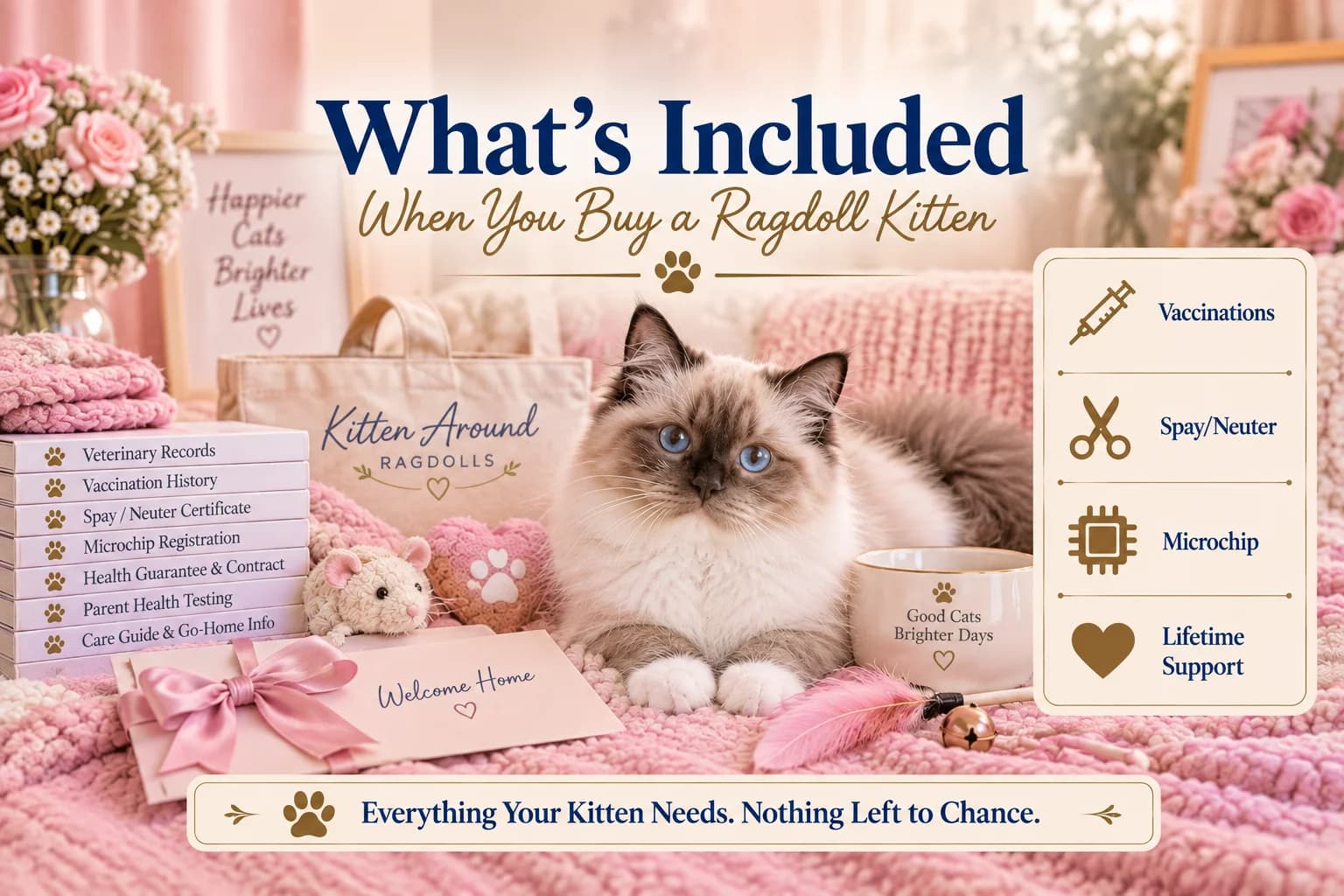
09/12/2026
What’s Included When You Buy a Ragdoll Kitten From Us

09/09/2026
What Our Past Buyers Just Told Us About Their Cats — And What We Changed Because of It
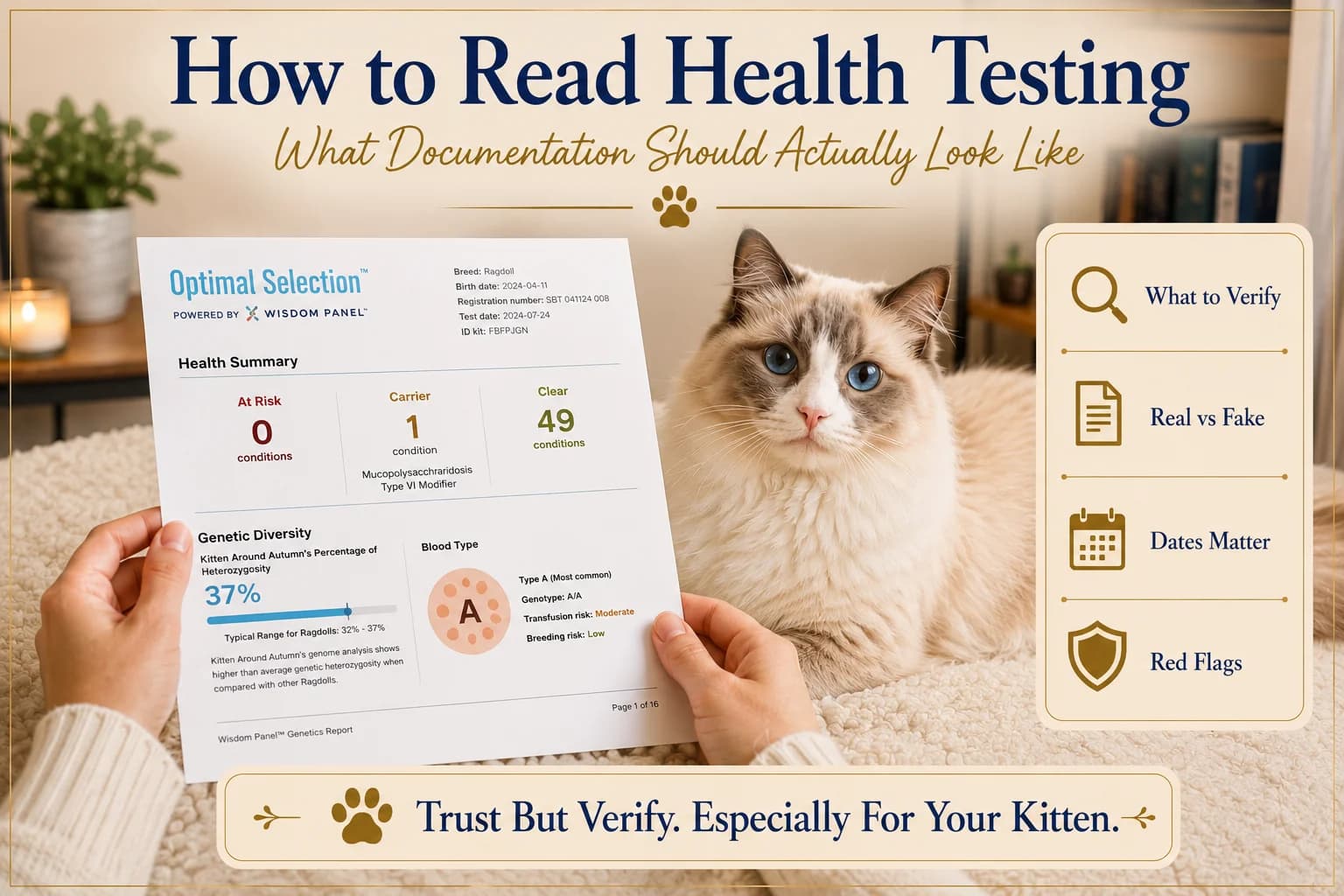
09/05/2026
How to Read a Ragdoll Breeder’s Health Testing (What Documentation Should Actually Look Like)
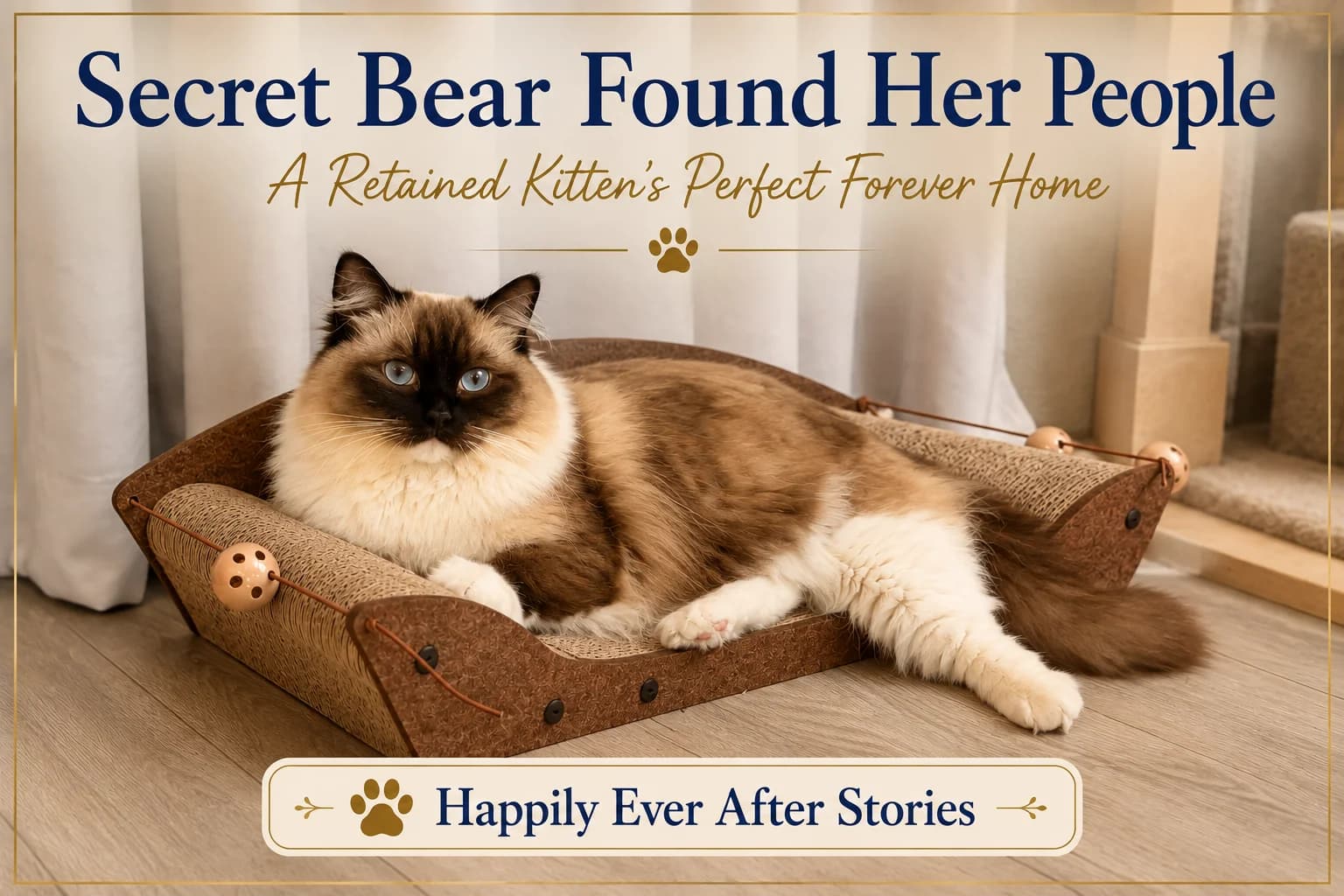
09/02/2026
Secret Bear Found Her People: When a Retained Kitten Becomes Someone’s Forever Cat
08/29/2026
HCM Testing in Ragdolls: The DNA Test, the Echo, and What Everyone Gets Wrong
08/26/2026
Ragdoll Flight Nanny: How Out-of-State Adoption Actually Works
Subscribe to our newsletter
Litter announcements, new posts, and the occasional discount — no spam.