Is Your Ragdoll’s Belly (or Ears, or Nose) Trying to Tell You Something? Recognizing Food Allergies Early
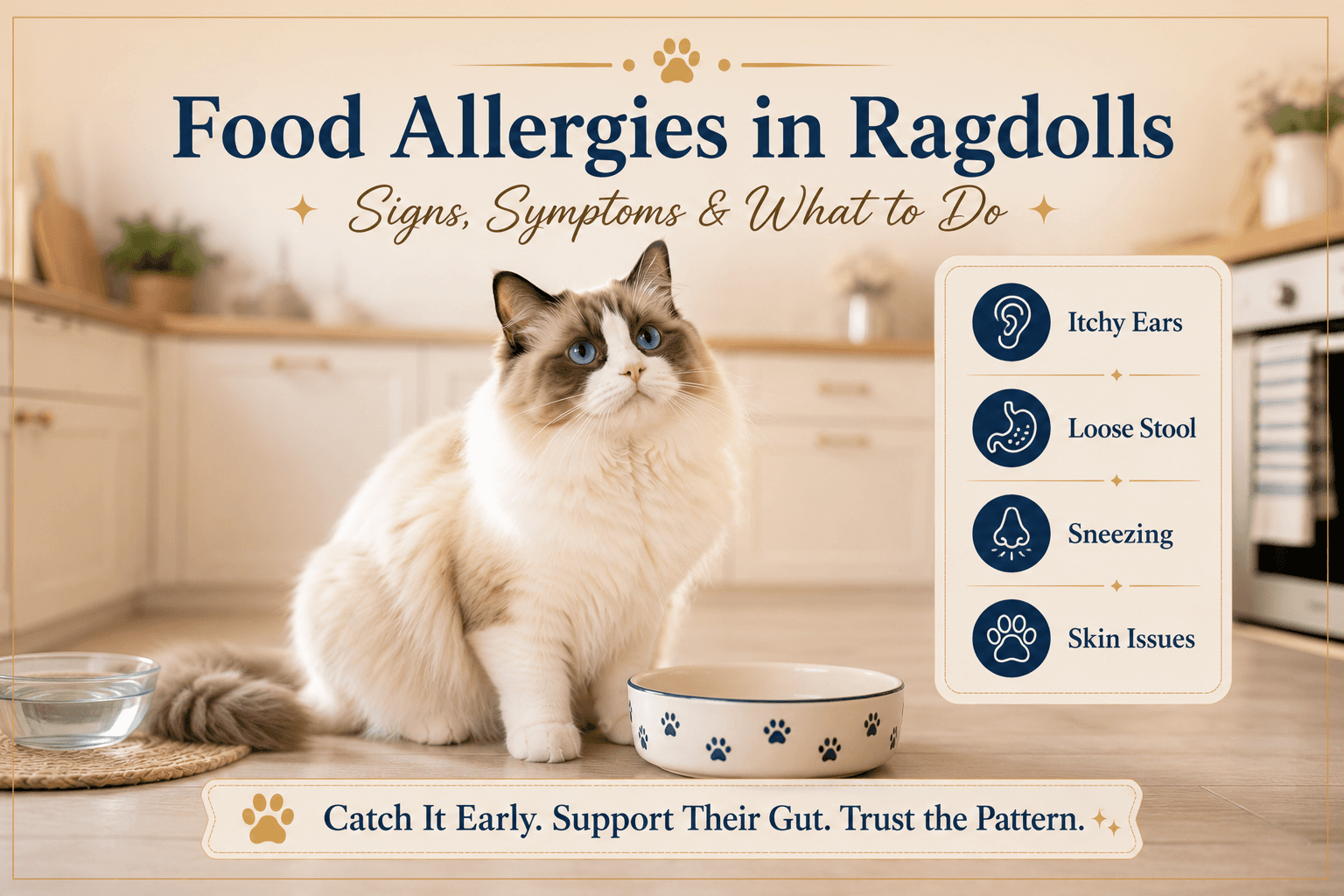
Is Your Ragdoll’s Belly (or Ears, or Nose) Trying to Tell You Something? Recognizing Food Allergies Early
Here’s a pattern we’ve been seeing lately — and hearing about from other Ragdoll breeders we trust.
A family brings home a beautiful Ragdoll kitten. Everything goes great for the first several months. Then something starts. A little itchy ear that clears up but comes back. A bout of diarrhea that the vet treats as a one-time GI issue. Some sneezing here and there. A little skin irritation. Nothing dramatic — each symptom on its own looks minor, easy to write off, easy to treat and forget.
But the pattern keeps repeating. The prescription food from the vet clears things up, and everything looks great — until you transition back to regular food, and the symptoms return. The itchy ear comes back. The diarrhea comes back. And now you’re wondering what’s going on.
If this sounds like your household right now, take a breath. You’re not a bad cat parent. You’re an observant one. And what you might be seeing is a food allergy.
In this post, we’ll walk through what we’ve been seeing, what to watch for, and exactly how to work through it with your vet.
The Trend We’re Noticing
Food allergies aren’t something Ragdolls have historically been known for. In veterinary literature, the breeds most often noted for a genetic predisposition to food allergies are those in the Siamese family — Siamese, Balinese, Oriental Shorthairs, and other Siamese-derived breeds. Other breeds like Bengals, Sphynx, and the Rex varieties have also been discussed for various food and skin sensitivities. Ragdolls, with their laid-back temperaments and generally solid digestion, weren’t a breed we associated with allergy issues.
That’s changing. Over the past couple of years, we’ve heard from multiple families in our own program — and from other trusted Ragdoll breeders across the country — that they’re seeing food allergy symptoms show up in young Ragdolls more often. It’s not an epidemic. It’s not something to panic about. But it’s a pattern that’s real, and it’s worth talking about openly so families can catch it early.
Why is this happening? Honestly, nobody knows for sure. Purebreds of all breeds develop allergies as their immune systems mature — that’s just biology. Food supply changes over time. Environmental factors evolve. Multiple factors are probably contributing.
What matters most: this isn’t caused by anything you did. Food allergies are genetic and immunological. They aren’t the result of feeding your cat the “wrong” food or somehow failing them. They’re just something that shows up in some individual cats, and once you identify what’s going on, they’re very manageable.
The Symptoms to Watch For
Food allergies in cats rarely announce themselves clearly. They tend to show up as a collection of minor issues that seem unrelated — until you look at them together.
Itchy Ears (Even When the Ears Look Fine)
This is the most commonly missed symptom because vets often can’t see anything wrong when they examine the ears. There’s no infection, no wax buildup, no visible irritation — but the cat keeps scratching. If your Ragdoll is scratching at their ears regularly and the vet says the ears look clear, that’s actually a classic food allergy sign.
Cyclical Diarrhea or Loose Stool
The pattern to notice: your cat’s stool is normal on prescription food, then softens or turns into diarrhea when you transition back to regular food. Or it comes and goes with no obvious dietary change on your end. Cyclical GI symptoms are one of the strongest food allergy signals.
Sneezing Without an Obvious Cause
Cats with food allergies can develop upper respiratory symptoms — sneezing, mild eye discharge, occasional congestion — that aren’t explained by an infection or environmental allergen. If your Ragdoll is sneezing off and on without other signs of illness, food could be the culprit.
Skin Issues or Overgrooming
Rashes, thinning fur, hot spots, or excessive licking of certain areas can all be dermatological expressions of food allergy. Cats often overgroom their belly or inner legs when they’re itchy. Sometimes the fur will be visibly thinner in these areas from all the licking.
Gas or Vomiting Related to Meals
Occasional vomiting or gas around mealtime — especially if it’s tied to specific foods — can also point to a food allergy. Not every cat that vomits has an allergy (many cats vomit for lots of reasons), but pattern-based vomiting is worth investigating.
The Coming-and-Going Pattern
This is the giveaway that ties everything together: symptoms that resolve on a prescription or bland diet, then return when regular food comes back. That cyclical pattern almost always means food is playing a role.
📋 Quick Symptom Checklist
If you’re seeing three or more of these in your Ragdoll, food allergies are worth investigating with your vet:
- Frequent ear scratching, even when ears look clean
- Diarrhea or loose stool that comes and goes
- Symptoms that clear on prescription food and return on regular food
- Sneezing without an obvious respiratory cause
- Skin rashes, thinning fur, or overgrooming
- Gas or vomiting around mealtime
- Any of the above appearing between 6 months and 2 years of age
Why Food Allergies Get Missed
The reason food allergies are so often missed — sometimes for months — is that each symptom on its own can look like something else.
- Itchy ears? “Must be mites or an ear infection.” Treatment doesn’t help long-term, but the vet moves on.
- Diarrhea? “Probably ate something bad. Try a bland diet for a week.” Symptoms resolve, then return with regular food.
- Sneezing? “Might be environmental allergies. Let’s monitor.” Nobody connects it to food.
- Skin issues? “Could be flea allergy. Let’s check for parasites.” All clear, but the itching continues.
Individually, these look like unrelated minor issues. Only when you look at the whole pattern — three or four low-grade symptoms cycling on and off over months — does food allergy come into focus.
This is why your observation matters so much. You see your cat every day. You notice when something is off. Your job when you’re at the vet is to help them see the pattern, not just treat each individual symptom.
The Conversation to Have With Your Vet
If you’re recognizing these signs, the most useful thing you can do at your next vet visit is to explicitly ask about food allergies. Some vets will jump straight there. Others will keep chasing individual symptoms unless you specifically raise it.
Some things to bring up:
- “I’ve noticed a pattern of symptoms — could this be a food allergy?” — the direct approach
- “Can we do an elimination diet trial?” — the gold standard for confirming food allergies
- “Can we try a hydrolyzed protein diet as a diagnostic?” — the most common diagnostic protocol
- “What novel proteins would you recommend once we’ve confirmed?” — planning the next step
You’re not being pushy — you’re advocating for your cat. Good vets welcome informed clients. If a vet dismisses these questions without a good reason, consider getting a second opinion.
How Vets Confirm It’s Food-Related
The only reliable way to confirm a food allergy in a cat is an elimination diet. Blood tests and skin tests for food allergies in cats are notoriously unreliable — they miss real allergies and flag false positives. The gold standard is behavioral: put the cat on a diet designed to eliminate potential allergens, see if symptoms resolve, then reintroduce foods systematically to identify the trigger.
Hydrolyzed Protein Diets as a Diagnostic Tool
The most common starting point is a prescription hydrolyzed protein diet like Royal Canin HP or Hill’s z/d. In these foods, the proteins have been broken down into pieces so small that the cat’s immune system can’t recognize them as allergens.
If your cat’s symptoms clear up on a hydrolyzed diet within 6-8 weeks, that strongly confirms a food allergy. If symptoms persist, it points to something else.
Important note: we don’t love hydrolyzed diets as a long-term solution. They’re heavily processed, they use ingredients we wouldn’t ordinarily recommend, and they’re expensive. But as a diagnostic tool, they have a legitimate short-term purpose. Use them to confirm the diagnosis, then transition to a novel protein diet for the long term.
The Usual Suspects
Once a food allergy is confirmed, the next question is: allergic to what?
The most common food allergens in cats:
- Chicken — the #1 culprit by a wide margin. Ironic, because chicken is also the most common protein in commercial cat food.
- Beef — a distant second, but common enough to test for
- Fish — often develops after long-term feeding of tuna or salmon-based foods
- Dairy — most adult cats are lactose intolerant, but true allergy is separate
- Grains — less common in cats than dogs, but possible (especially with poor-quality grain-heavy foods)
Chicken is the biggest one to remember. If your Ragdoll has been eating chicken-based food and is showing allergy symptoms, chicken is the first suspect.
The Novel Protein Solution
Once food allergy is confirmed, the long-term answer is usually a novel protein diet.
“Novel protein” means a protein source your cat has never been exposed to before. If they’ve been eating chicken their whole life, they can’t be allergic to something they’ve never eaten. Novel proteins let their immune system reset and their symptoms resolve without the ingredient causing the trouble.
Common Novel Proteins
- Rabbit — the most widely available novel protein, well-tolerated by most cats
- Venison — excellent option, cats generally love the taste
- Kangaroo — genuinely novel for most cats (few products use it), highly recommended if you can find it
- Duck — novel for many cats but crosses with chicken allergies (see below)
- Quail — same crossover risk with chicken allergies
The Chicken Cross-Reactivity Warning
This is critical: if your cat is allergic to chicken, avoid ALL birds. That includes turkey, duck, quail, pheasant, and any other poultry. The proteins are similar enough that many chicken-allergic cats will react to other birds too. Stick with mammalian proteins (rabbit, venison, kangaroo, lamb) or seafood (if not fish-allergic).
The Isolation Protocol
When switching to novel proteins, do it methodically:
- Pick ONE novel protein at a time
- Feed only that protein for 6-8 weeks
- Track symptoms carefully during that window
- If symptoms stay resolved, you’ve found a safe protein
- If symptoms return, that protein is out — try the next one
Feeding multiple novel proteins at once defeats the purpose because you can’t tell which one caused a reaction. Patience pays off here.
Our Recommendation: Fresh Is Best
Fresh Is Best freeze-dried lamb (Some links are affiliate links, and we only recommend what we actually feed.) is a complete food we serve rehydrated. We use the lamb recipe from Fresh Is Best. Our Open Farm lamb kibble also contains ocean whitefish meal. Use code KITTENAROUND15 for 15% off. We serve it rehydrated as our wet/canned-food replacement and our kittens’ first starter food.
🎉 Get 15% Off Fresh Is Best
Try Fresh Is Best freeze-dried lamb with our reader discount: code KITTENAROUND15 for 15% off.
Use code: KITTENAROUND15
Gut Support Matters Too
Food allergies don’t happen in a vacuum. The gut lining, the microbiome, and the immune system all interact with what your cat is eating. Supporting the gut during and after the transition can dramatically speed up recovery and reduce ongoing symptoms.
Probiotics
A high-quality probiotic during the transition period and beyond helps re-establish healthy gut bacteria after months of inflammation. We specifically recommend Proviable — it’s what most veterinary internal medicine specialists reach for, and it’s been well-tolerated by every cat we’ve used it with. Find Proviable on our Amazon storefront.
Vitamin B12 for Malabsorption
Cats with chronic GI inflammation from food allergies sometimes develop B12 deficiency because the intestinal damage impairs absorption. If your vet finds low B12 levels on bloodwork, a 12-week course of B12 injections can make a huge difference in energy, appetite, and coat quality while the gut heals. Ask your vet if bloodwork is warranted.
Fresh Water, Consistency, and Reduced Stress
All the other elements of good cat care become extra important when you’re managing an allergy. Fresh water always available. Consistent feeding schedule. Low household stress. Anything you can do to keep their environment stable while their gut heals will help.
What NOT to Do
- Don’t blame yourself. Food allergies are genetic and immunological. You didn’t cause this by choosing the wrong food.
- Don’t just “switch brands” without knowing the protein. Almost all cat foods use chicken as a primary or secondary ingredient. Switching from one chicken-based food to another isn’t going to help. Read ingredients carefully.
- Don’t stay on hydrolyzed diets long-term if you can transition. They’re diagnostic tools, not lifelong solutions for most cats. Novel protein diets are healthier and more sustainable.
- Don’t ignore the pattern. Each individual symptom might feel manageable, but repeated cycles of inflammation cause long-term damage. Catching it early saves your cat months (or years) of low-grade suffering.
- Don’t do multiple novel proteins at once. You’ll lose the ability to identify which one works and which one doesn’t. Patience pays off.
- Don’t feed treats that break the diet. One chicken treat can restart the inflammation cycle. During elimination trials, EVERYTHING your cat eats has to fit the protocol — including treats, table scraps, and flavored medications.
When to Contact Your Breeder
If you’re seeing these symptoms in a kitten you got from us — or from any responsible breeder — please tell us. We want to know.
Here’s why: food allergy patterns in a breeding program can point to genetic factors we should be tracking. When multiple kittens from related lines develop similar issues, it’s information that helps us make better breeding decisions going forward. It also helps us support other families going through the same thing, share what’s worked, and refine the diet recommendations we give when kittens go home.
You aren’t complaining or bothering us when you share this information. You’re helping us do better work.
If you got your Ragdoll from a different breeder, tell them too. And if their response is defensive, dismissive, or blaming — that tells you something about the breeder more than it does about your cat.
The Long Game
Here’s the reassuring truth about cat food allergies: once you identify what your cat is reacting to and get them on the right diet, most cats do beautifully. Symptoms resolve. Coats look shinier. Energy returns. Digestion normalizes. Life goes back to normal — just with a slightly more curated menu.
Some cats live their whole lives on novel protein diets without issue. Some cats’ immune systems settle down after a few years of avoiding the trigger and they can gradually reintroduce foods (though this should be done carefully with vet guidance). Either way, your cat is going to be okay.
The hardest part is the diagnostic phase — the weeks and months when you’re trying to figure out what’s going on. Once you know, you know. And you can move forward with confidence.
You Can Do This
If any of what we’ve described in this post sounds familiar, take heart. You’ve noticed something. You’re paying attention. That’s the most important step.
Talk to your vet about elimination trials. Advocate for your cat. Trust the pattern you’re seeing. Consider a hydrolyzed diet as a diagnostic, then transition to novel proteins for the long term. Support the gut. Give it time.
Your Ragdoll can thrive. Many of our families whose kittens developed food allergies now have gorgeous, healthy adult cats living their best lives on carefully curated diets. It’s a manageable condition, not a life sentence.
And if you have questions along the way, reach out. We’re here to help our families figure this out. Lifetime breeder support isn’t just a slogan — it’s what we mean by it.
🛒 Shop Our Allergy-Friendly Recommendations
Novel proteins, probiotics, and the tools we recommend for Ragdolls with food sensitivities.
Disclosure: This post contains affiliate links to our Amazon storefront and Fresh Is Best. As an Amazon Associate and Fresh Is Best affiliate, we earn from qualifying purchases at no extra cost to you. We only recommend products we personally use and trust with our own cats and kittens.
Medical Disclaimer: This article is for informational purposes only and is not a substitute for veterinary care. If you suspect your cat has a food allergy or any other health condition, please consult with a licensed veterinarian.
Looking to bring home a Ragdoll kitten from a breeder who supports you for life? Check our available kittens or join our waitlist for upcoming litters. We’re a TICA-registered cattery in Sacramento, CA, breeding for health, temperament, and the traditional Ragdoll standard.
Recent Blogs
10/21/2026
Ragdoll vs. Birman: Similar Blue Eyes, Two Different Breeds

10/17/2026
Male vs. Female Ragdoll Cats: Choose the Individual, Not the Stereotype

10/14/2026
Can Ragdoll Cats Be Left Alone? Planning for Workdays and Real Life
10/12/2026
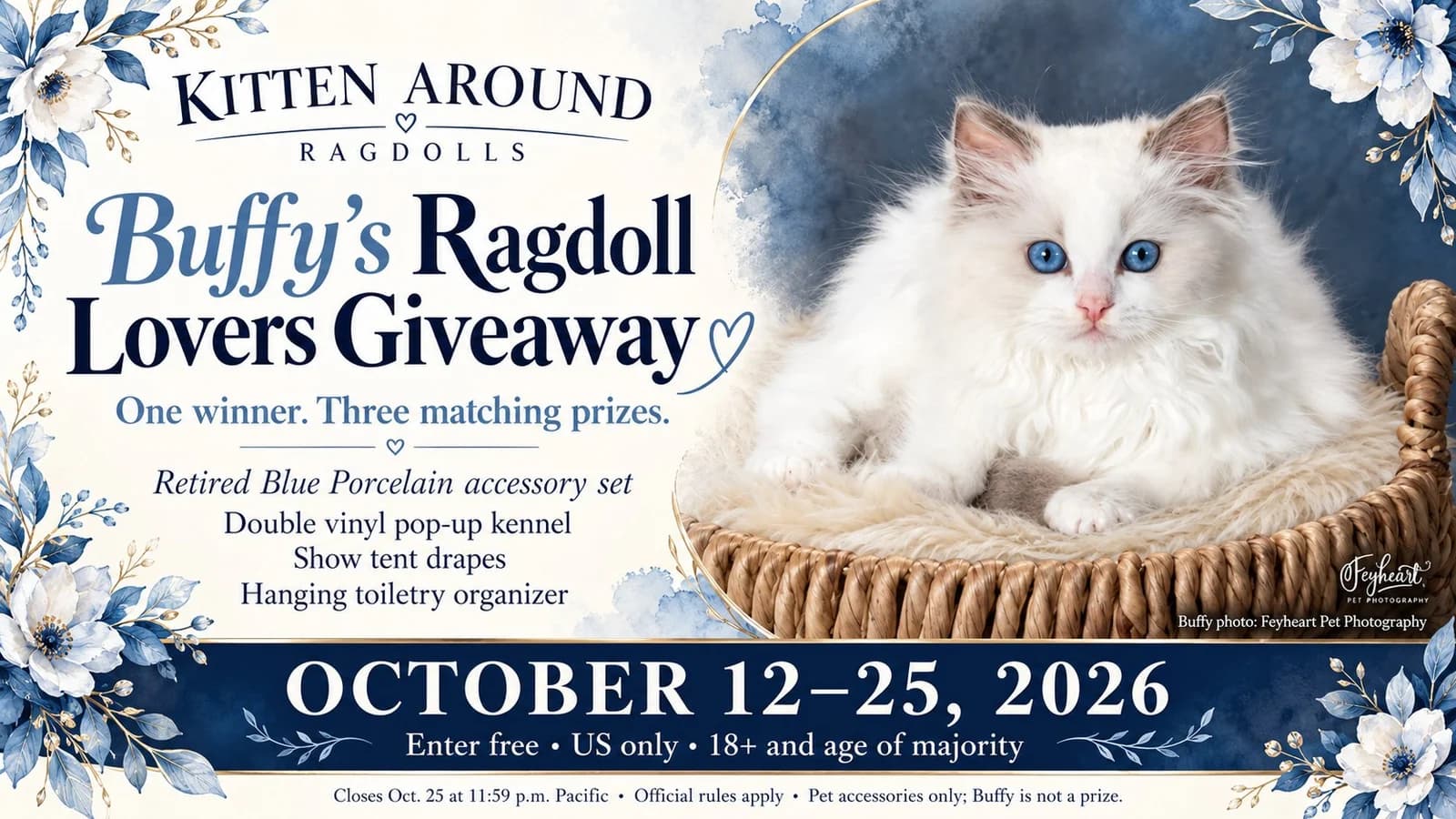
Buffy’s Ragdoll Lovers Giveaway: Win the Matching Blue Porcelain Set
10/10/2026
Do Ragdoll Cats Shed? A Grooming Routine That Fits Real Life
10/07/2026
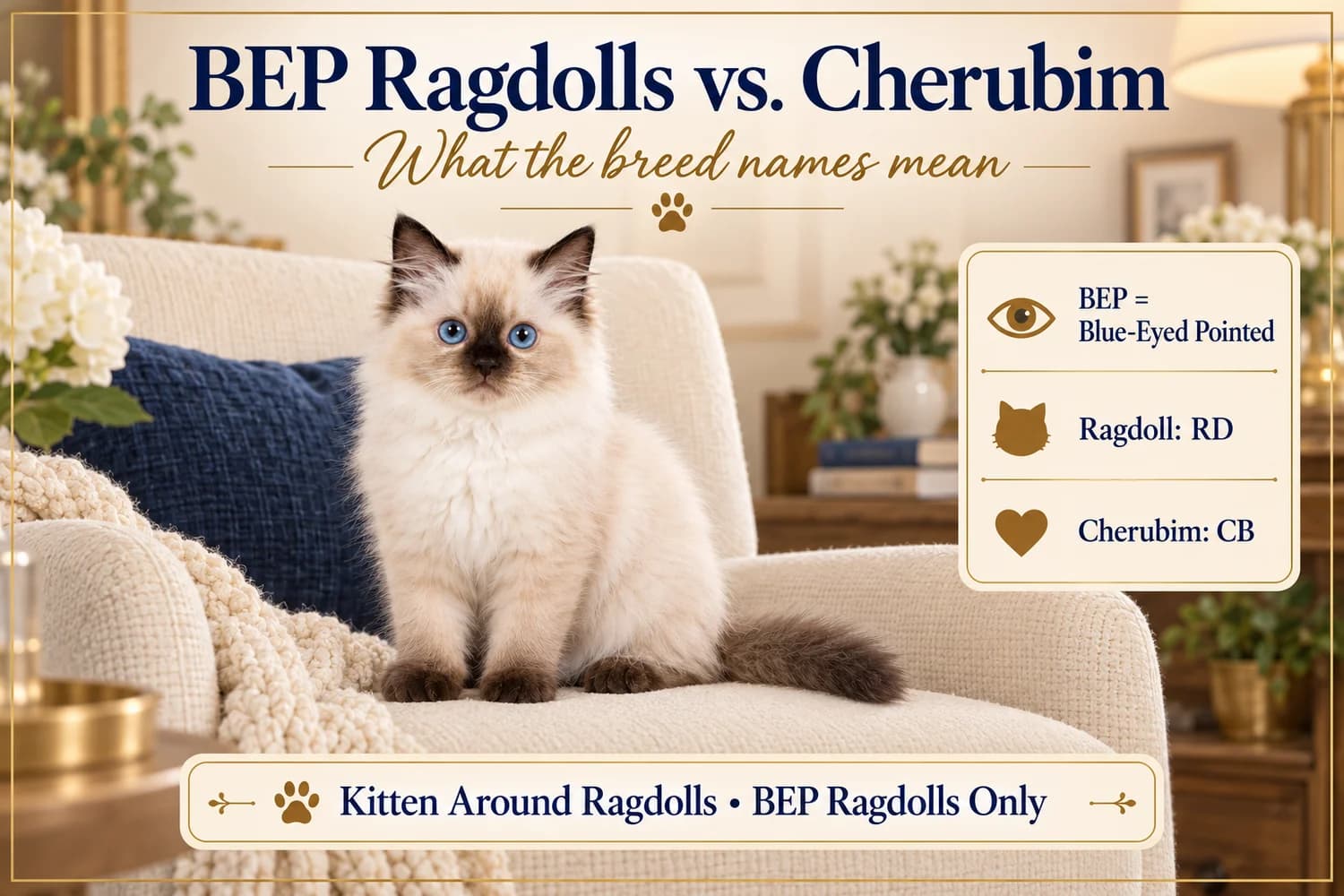
BEP Ragdolls vs. Cherubim: What the Names Mean Before You Buy
Subscribe to our newsletter
Kitten availability, cattery updates, and new blog posts — sent when we have news to share.