Carrier Training a Ragdoll Cat: Make the Carrier Part of Home
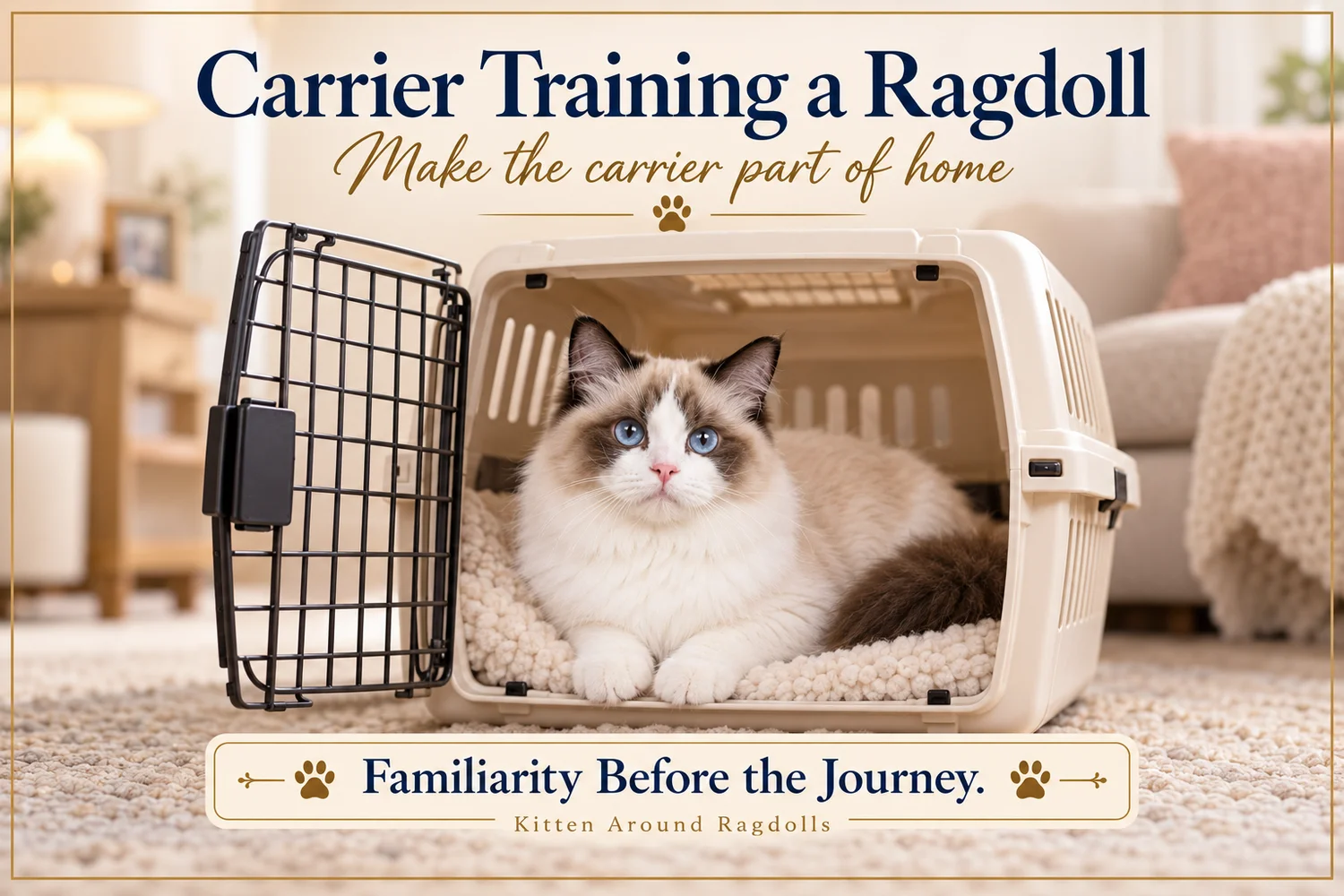
Carrier Training a Ragdoll Cat: Make the Carrier Part of Home
A carrier should not appear only when something stressful is about to happen. If it lives in a cupboard until the morning of a veterinary appointment, your cat has very little reason to regard it as ordinary furniture.
Carrier training begins at home, well before you need to leave. You are building familiarity in small steps so that entering, resting, and being transported in the carrier become more predictable experiences.
Choose a Carrier for the Cat, Not Just the Photograph
Look for sturdy construction, ventilation, secure closures, and enough usable room for your cat to stand, turn, and lie comfortably. Consider the adult size of a growing Ragdoll and the manufacturer’s weight limit.
Cat Friendly Homes recommends designs with easy entry and access, including a removable top that can help during veterinary examinations. A carrier that looks attractive but is difficult to open, clean, or carry steadily may make the job harder.
Airline travel adds separate requirements. Confirm those with the carrier and travel provider for the actual trip rather than assuming that a product labeled “airline approved” is accepted everywhere.
Start With a Comfortable Place to Rest
Leave the carrier in a quiet part of the room your cat uses. Secure the door open, add appropriate familiar bedding, and let the cat investigate without being pushed inside.
Notice the first small steps: looking toward it, approaching, sniffing, or stepping in. Reward behavior your cat offers willingly. You do not need to close the door the first time the cat enters.
If the cat avoids it, make the task easier. Depending on the design, removing the top temporarily may help create a less enclosed starting place. Check that every component is secure and suitable for the way you are using it.
Build One Change at a Time
A useful training sequence separates experiences that people often combine into one rushed event:
- Entering: The cat chooses to step inside while the carrier stays open.
- Resting: The cat remains comfortable inside without being immediately moved.
- Door movement: Brief, gentle changes are introduced at a level the cat tolerates.
- Brief closure: The door closes for a short interval, then opens before distress develops.
- Lifting: Once comfortable with closure, the cat experiences a small, steady lift and return.
- Movement: Short indoor movement comes before a full journey.
This is a flexible progression, not a six-day challenge. The feline veterinary caregiver handout emphasizes spending enough time at each stage for the cat to become comfortable. If the cat struggles, return to an easier step.
Practice the Human Part Too
Learn how the closures work and how to lift the carrier without tipping it. Support it from underneath rather than relying only on a handle, especially with a larger cat.
Plan the route through your home. Can you open the door without setting the carrier on an unstable surface? Is there a clear path to the car? If lifting is difficult, arrange assistance or a suitable transport setup before an urgent appointment makes everything harder.
For households with several cats, have an appropriate carrier for each cat. Even companions who share a bed at home may need their own secure space during stressful travel.
Prepare for the Car Safely
Follow the carrier manufacturer’s transport instructions. Cat Friendly Homes notes that the Center for Pet Safety recommends seat-belt attachment only for carriers designed and crash-tested for that use; other carriers are generally placed on the rear passenger floor.
Keep the carrier closed during transport. A cat loose in a moving vehicle can interfere with driving or escape when a door opens. If you partially cover the carrier for visual privacy, maintain adequate ventilation and a comfortable temperature.
Start practice trips only when your cat is ready. A short calm experience is more useful than a long ride that overwhelms the progress you made indoors.
Training Does Not Replace Veterinary Help
Some cats remain very distressed by travel even with thoughtful preparation. Tell your veterinarian before the next appointment and discuss an individual plan. Do not give sedatives or other medication without veterinary instructions.
If the cat needs urgent care, do not postpone the visit to complete a training program. Contact the clinic for practical guidance on getting there safely. Training is preparation for ordinary life; it is not a requirement your cat must pass before receiving care.
Make the Carrier Useful Between Trips
Keep it clean, accessible, and ready. Replace soiled bedding, check the fastenings, and keep the location familiar. During an emergency, you should not have to search a garage for missing hardware.
For new families, our first 48 hours guide explains how the arrival fits into settling at home. If your kitten is traveling from us with a nanny, our flight nanny guide covers that separate journey.
A familiar carrier is a small part of your home that can make many future appointments easier to manage. Give it time to become familiar while there is no deadline at the door.
Sources
- Cat Friendly Homes: Choosing a carrier
- Feline veterinary caregiver handout: Getting your cat to the practice
- Cat Friendly Homes: Getting your cat to the veterinarian
Related Reading
- First 48 Hours Home With Your Ragdoll Kitten: What to Expect and How to Help Them Settle
- Ragdoll Flight Nanny: How Out-of-State Adoption Actually Works
Find the Right Ragdoll Companion
Kitten Around Ragdolls raises blue-eyed pointed Ragdolls in Sacramento, California, for companion homes only. Tell us about your household and what you are looking for.
An application does not reserve a kitten or guarantee approval. Please read our current terms.
We are a TICA-registered Ragdoll cattery in the Greater Sacramento Area, serving families in Northern California and beyond. View our available kittens or join our waitlist for updates.
Recent Blogs

11/04/2026
Do Ragdoll Cats Scratch Furniture? Give the Behavior a Better Place to Go

11/02/2026
Bringing a Ragdoll Kitten Home to Oregon: A Pickup and Paperwork Checklist

10/31/2026
Are Ragdolls Good Apartment Cats? Build a Home That Works for a Cat
10/30/2026
Ragdoll Kittens for Washington Families: What to Check Before You Book a Trip

10/28/2026
Are Ragdoll Cats Good With Dogs? A Careful Introduction Matters
Subscribe to our newsletter
Kitten availability, cattery updates, and new blog posts — sent when we have news to share.