Ragdoll Cat Lifespan: What the Research Says and How to Plan for the Years Ahead
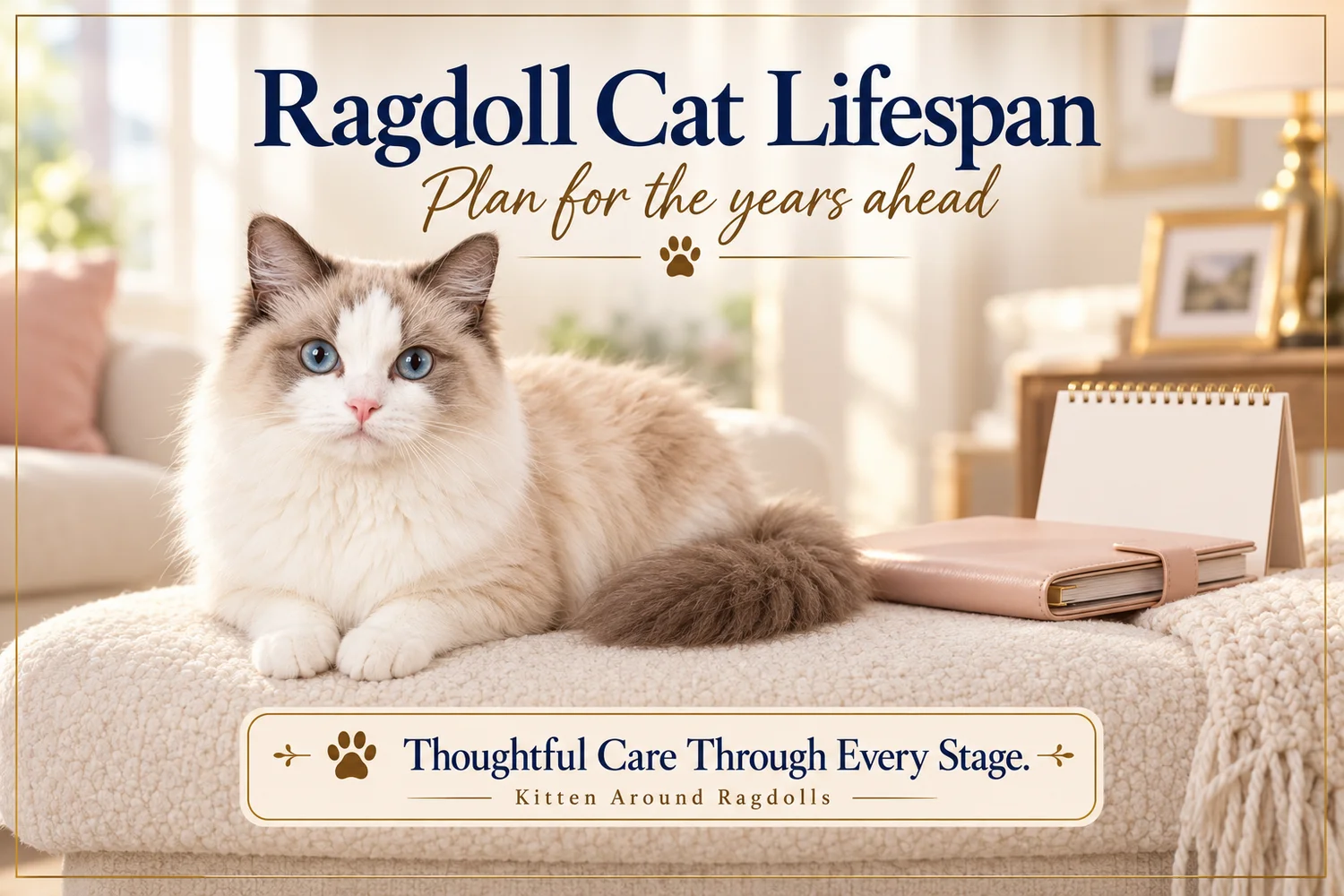
Ragdoll Cat Lifespan: What the Research Says and How to Plan for the Years Ahead
When you ask how long Ragdoll cats live, you are usually asking something more personal: how many years might I have with this cat, and how do I prepare to care for it well?
No breed average can answer that for an individual kitten. It can, however, remind you that choosing a companion is a commitment that extends through changes in your home, work, finances, and the cat’s needs.
What the Research Actually Measured
A Royal Veterinary College study published in 2025 examined Ragdolls under primary veterinary care in the United Kingdom during 2019. It reported a median age at death of 12.85 years among the Ragdoll deaths analyzed.
That is a finding from a particular study population and time period. It is not a predicted expiration date for a kitten, a guarantee for a breeding program, or a maximum age. Some cats die younger; others live considerably longer. It also should not be casually relabeled as the lifespan every Ragdoll can expect.
The study highlighted everyday welfare issues, including dental disease and excess weight, as well as the importance of care as cats grow older. Those practical findings are more useful to an owner than chasing the most reassuring number on the internet.
Why Online Lifespan Numbers Differ
One page may quote a broad breed-guide range. Another may summarize cats that died during a study. A third may describe the oldest cat the writer has personally known. Those are different kinds of evidence.
Before comparing figures, ask what is being measured, where the cats lived, and how the information was collected. An owner’s beloved twenty-year-old cat is a wonderful individual story, but it does not establish a population average.
For family planning, it is sensible to prepare for a long commitment and an uncertain amount of future care. Choosing a single lifespan number cannot remove that uncertainty.
Health Testing Answers Specific Questions
At Kitten Around Ragdolls, we describe our breeding cats as DNA-tested. A genetic test checks for particular known variants. It does not establish that a cat will never develop heart disease or any other illness, and it is not the same examination as an echocardiogram.
Our HCM testing guide explains that distinction in more detail. When comparing programs, ask for actual reports and discuss their meaning and limitations with your veterinarian.
A written health guarantee also has its own terms. Read it before committing, and do not mistake it for a promise of a particular lifespan or a replacement for continuing veterinary care.
Build a Care Record You Can Use
Keep the adoption documents, veterinary history, vaccination record, microchip information, and current medication instructions together. Add appointment summaries and note changes that you want to discuss at the next visit.
A simple log is enough. You might record a change in appetite, a new reluctance to jump, or a litter-box habit that has shifted. The value is in describing what changed and when, without trying to diagnose it yourself.
If care is shared between people, agree on who keeps the record current. Important details can disappear when everyone assumes someone else mentioned them.
Care Needs Change as a Cat Ages
Cornell’s Feline Health Center emphasizes that aging itself is not a disease. Changes in activity, grooming, eating, or elimination should not automatically be dismissed as “just getting old.” Discuss them with your veterinarian.
Ask about the examination schedule appropriate to your cat’s age and health, dental care, body condition, and any testing the veterinarian recommends. The right plan may change over time.
At home, think about comfortable access. A favorite bed may need an easier route. A litter box may need a more accessible entrance. The cat who once bounded to a high perch may appreciate a lower option without losing access to family life.
Plan Financially Beyond the Kitten Stage
The adoption fee is the beginning of the financial commitment. Budget for routine veterinary care, supplies, grooming help when needed, pet sitting, and unexpected care. If you consider insurance, read the actual policy terms, exclusions, waiting periods, and renewal costs rather than assuming every future problem is covered.
Our companion kittens are $4,500, with the $1,000 non-refundable, non-transferable deposit applied toward that total. The remaining $3,500 is due before pickup. That pricing does not tell you what lifetime care will cost, because future needs vary.
You can prepare with a savings plan, suitable insurance, or another realistic arrangement. What matters is understanding the resources available when your cat needs help.
Think About the Human Years Too
Consider moves, travel, changing work schedules, and who would care for the cat if you were temporarily unable to do so. Keep a trusted person’s contact details and make sure they know where the carrier and care records are.
These are ordinary acts of preparation, not a prediction that something will go wrong. A long relationship becomes easier to support when its practical responsibilities have a place in the household.
A lifespan estimate is useful context. The more important commitment is to remain attentive to the individual cat throughout whatever years you share.
Sources
- Royal Veterinary College: Ragdoll health and mortality study, 2025
- O’Neill and colleagues: Original Ragdoll study
- Cornell Feline Health Center: The special needs of the senior cat
- Kitten Around Ragdolls: Current testing description
Related Reading
- HCM Testing in Ragdolls: The DNA Test, the Echo, and What Everyone Gets Wrong
- How to Read a Ragdoll Breeder’s Health Testing (What Documentation Should Actually Look Like)
- What Our Past Buyers Just Told Us About Their Cats — And What We Changed Because of It
Find the Right Ragdoll Companion
Kitten Around Ragdolls raises blue-eyed pointed Ragdolls in Sacramento, California, for companion homes only. Tell us about your household and what you are looking for.
An application does not reserve a kitten or guarantee approval. Please read our current terms.
We are a TICA-registered Ragdoll cattery in the Greater Sacramento Area, serving families in Northern California and beyond. View our available kittens or join our waitlist for updates.
Recent Blogs

11/07/2026
Persian Cat vs. Ragdoll: Which Companion Fits Your Home?
11/07/2026
Carrier Training a Ragdoll Cat: Make the Carrier Part of Home

11/04/2026
Do Ragdoll Cats Scratch Furniture? Give the Behavior a Better Place to Go
11/02/2026
Bringing a Ragdoll Kitten Home to Oregon: A Pickup and Paperwork Checklist

10/31/2026
Are Ragdolls Good Apartment Cats? Build a Home That Works for a Cat
Subscribe to our newsletter
Kitten availability, cattery updates, and new blog posts — sent when we have news to share.