Why Ragdolls Are So Good for Neurodiverse Families — And Why Ours Welcomes Everyone
Why Ragdolls Are So Good for Neurodiverse Families — And Why Ours Welcomes Everyone
I want to start this post with something I don’t hide, and usually always lead with: I’m autistic.
So are most of the people in my family. So are many of the families who’ve bought kittens from us. My day job is in the field of neurodevelopmental disabilities. My lived experience with neurodiversity is more meaningful to me than any credential I have — which is why I don’t spend much time talking about the credentials.
This post is about why Ragdolls, in my experience and in the research, make particularly extraordinary companions for neurodiverse people. And why our cattery welcomes every family — of every background, every ability, every configuration — without exception.
Why This Isn’t a Small Point
When you’re an autistic person choosing a pet, you’re not making a small decision. You’re choosing another being whose needs will interact with your own for the next 15 years. The wrong choice can be genuinely difficult. The right choice can be transformative.
For a lot of neurodiverse people — especially those with sensory sensitivities, social exhaustion after masking all day, difficulty with unpredictable stimuli, or heightened emotional attunement — the pet that would work brilliantly for a typical household can be the wrong fit entirely. And the pet that would seem “too calm” or “too subtle” for a typical household can be exactly what a neurodiverse person needs.
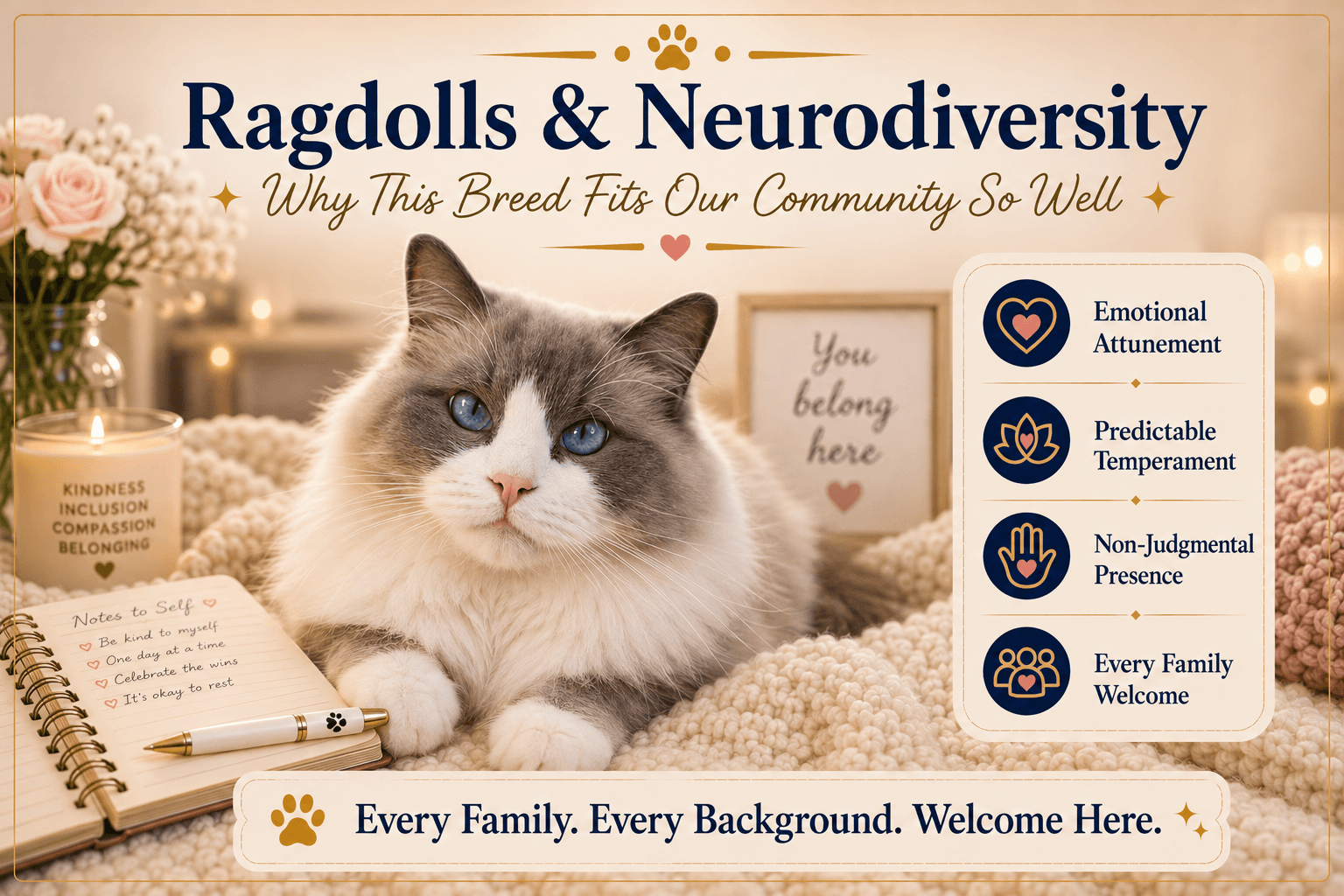
Ragdolls, in my experience and in what the research suggests, sit in a rare zone: high-affection, low-demand, sensory-manageable, predictable, and emotionally attuned. That’s an unusual combination in any species.
What the Research Actually Says
The good news is that there’s real, peer-reviewed research on cats and neurodiverse families — specifically on cats and children with autism. It’s a small field, but it’s growing, and what it shows is encouraging.
Dr. Gretchen Carlisle at the University of Missouri College of Veterinary Medicine has led some of the most cited studies on this topic. Her research at the Research Center for Human-Animal Interaction has consistently shown that cat companionship offers meaningful benefits for autistic children.
Her studies have found that after adopting a cat, autistic children experienced significant increases in empathy, significant decreases in problem behaviors including bullying and hyperactivity/inattention, and less separation anxiety. These findings were funded in part by the Human Animal Bond Research Institute (HABRI) and have been published in peer-reviewed venues including Frontiers in Veterinary Science.
Additional research suggests that interaction with cats may:
- Lower cortisol levels (a stress hormone) in autistic individuals
- Support the release of oxytocin, linked to bonding and emotional connection
- Provide sensory stimulation and a calming influence
- Offer non-judgmental social interaction that feels safer than human interaction for some
- Support development of social skills through the cat-human relationship
One important note from the research: cats may be preferable to dogs for some autistic individuals specifically because their behavior is more predictable, less demanding of constant engagement, and doesn’t require the same level of active handling. This isn’t a criticism of dogs — service dogs remain wonderful for many autistic people, particularly children who need physical safety support. It’s just that different animals meet different needs.
Why Ragdolls Specifically
Within the world of cats, Ragdolls have several traits that make them especially well-suited to neurodiverse households:
Predictable, Consistent Temperament
Ragdolls were selectively bred over generations to have extraordinarily docile, human-oriented temperaments. This means their behavior is more predictable than typical cats — less startling, less reactive, less prone to sudden mood shifts. For an autistic person who finds unpredictability exhausting, this is significant.
Low Sensory Demand
Ragdolls tend to have soft voices, gentle purrs, and quiet play styles. They don’t demand attention through vocalization. They don’t create chaotic sensory environments. For someone who’s sensory-overloaded at the end of the day, a Ragdoll’s presence is soothing rather than draining.
Willing Physical Contact
The famous Ragdoll “flop” (see our post on whether Ragdolls really go limp) means these cats accept being held, cradled, and touched in ways many cats resist. For someone whose emotional regulation benefits from deep-pressure input or comforting physical contact, a Ragdoll offers something rare.
Attunement Without Intrusion
Ragdolls tend to notice when their people are struggling. They come sit nearby. They stay present. They don’t force interaction, but they don’t leave either. Many neurodiverse people describe this as exactly the kind of presence they need when they’re overwhelmed — companionship without pressure.
Non-Judgmental
This is true of all cats, but bears saying: your Ragdoll doesn’t care if you’re masking or not. Doesn’t care if you’re stimming. Doesn’t care if you had a hard day and can’t talk. Doesn’t care if your routine looks different than everyone else’s. They just want to be near you.
What This Means in Practice
We’ve had many kittens go home to neurodiverse families over the years. Autistic children. Autistic adults. Families with multiple neurodiverse members. Families with children who have ADHD, sensory processing differences, anxiety, or other conditions that make traditional pet choices complicated.
What we’ve observed, consistently, is that Ragdolls seem to naturally settle into these households well. The temperament that makes them wonderful family cats in general makes them exceptional companions in neurodiverse households specifically.
Some of the feedback we’ve received from these families:
- Their child sleeps better with their Ragdoll nearby
- Their child talks to and confides in their cat in ways they can’t with humans
- Their autistic adult feels understood by their cat when human communication feels difficult
- The whole household is calmer with the cat’s steady presence
- The cat has become a bridge to social interaction with visitors or classmates
These aren’t research studies. They’re stories from real families. But the pattern is consistent enough that we’ve come to genuinely believe Ragdolls are meaningful companions for neurodiverse people specifically.
Why We Welcome Every Family
Our cattery welcomes every family without exception — regardless of neurotype, cultural background, family configuration, religious background, physical ability, or anything else. We do not discriminate. We never will.
This isn’t just policy language. It’s a genuine value. Our belief is that a Ragdoll’s love doesn’t discriminate, and neither do we. Every family that can provide a loving, safe home is welcome here.
What this looks like in practice:
- We’re happy to discuss what a Ragdoll might mean for your specific household
- We accommodate communication preferences (email versus phone, extra time to process, whatever works)
- We match kittens to homes based on real fit — including any needs that would make a specific temperament especially helpful or unhelpful
- We’re open about being an autistic-led business, which we know matters to some families
- We don’t ask invasive questions about neurotype, health status, or family composition beyond what’s needed to make a good match
Something I Want to Say to Autistic Readers
If you’re autistic and reading this: I congratulate you on being autistic. Genuinely.
I don’t think being autistic is something to be ashamed of. I think it’s a way of being in the world that comes with genuine gifts alongside genuine challenges — the same as any way of being in the world. I share my identity openly because I want other people to feel inspired to do the same, and also to know they don’t have to. That’s a personal choice, and every autistic person gets to make it on their own terms.
Whether you tell people or not, whether you seek accommodations or don’t, whether you’re diagnosed or self-identifying — you’re welcome here.
What This Means for You
If you’re a neurodiverse person considering a Ragdoll — or a family with neurodiverse members exploring whether the breed might be a good fit — I’d love to talk with you. There’s no pressure and no obligation. Just an honest conversation about what your household is like, what you’re looking for, and whether a Ragdoll might be right for you.
If we’re the right breeder for you, wonderful. If we’re not, I’ll do my best to point you to a breeder who is. Either way, you’re welcome to reach out. I know lots of incredible breeders across the world.
Related Reading
- Do Ragdolls Actually Go Limp? A Breeder’s Honest Answer
- Are Ragdolls Good Emotional Support Cats?
- Our Complete Ragdoll Buyer’s Guide
🐾 Every Family Is Welcome Here.
If you or someone in your family is neurodiverse and considering a Ragdoll — let’s talk. No pressure, no obligation, just a real conversation about whether this could be a good fit.
Research References
- Carlisle, G. K., Johnson, R. A., Wang, Z., Bibbo, J., Cheak-Zamora, N., & Lyons, L. A. (2020). Exploratory Study of Cat Adoption in Families of Children with Autism: Impact on Children’s Social Skills and Anxiety. Journal of Pediatric Nursing. Read the study.
- Carlisle, G. K., Johnson, R. A., Koch, C., Lyons, L. A., Wang, Z., Bibbo, J., & Cheak-Zamora, N. (2018). Affectionate Interactions of Cats with Children Having Autism Spectrum Disorder. Frontiers in Veterinary Science. Read the study.
- Human Animal Bond Research Institute (HABRI). New Research Shows Cats Help Children with Autism. Read the announcement.
- Pet Partners. AAI Research: Cats and Children with Autism. Read the summary.
Looking for a Ragdoll kitten from a breeder who understands your family? Check our available kittens or join our waitlist for upcoming litters. We’re a TICA-registered cattery in Sacramento, CA, breeding for health, temperament, and the traditional Ragdoll standard. Every family is welcome here.
Recent Blogs
09/26/2026
Who You Buy From Matters More Than You Think
09/23/2026
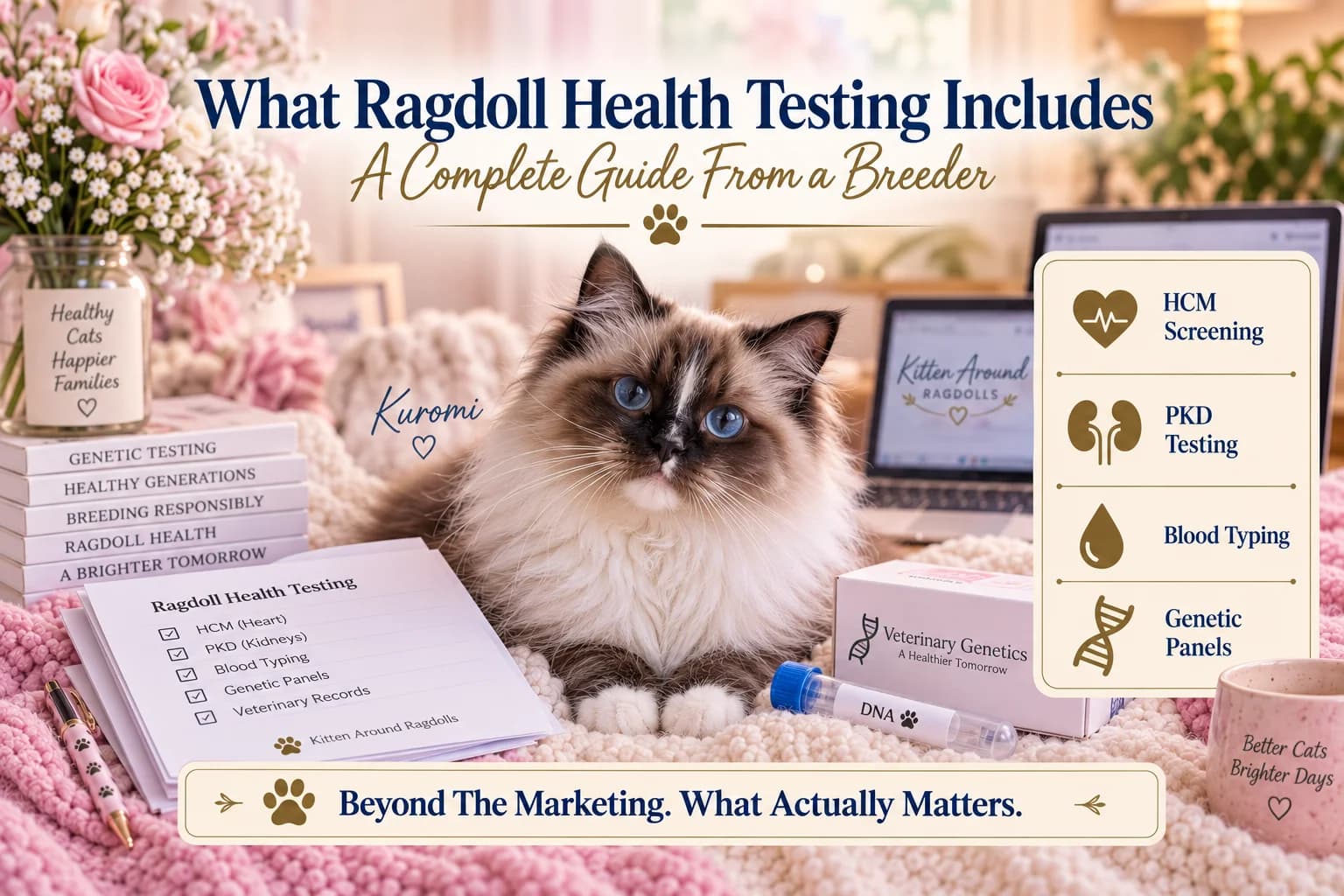
What Ragdoll Health Testing Actually Includes: A Complete Guide
09/21/2026
Why Cheap Ragdoll Kittens Are Actually Expensive: A Breeder’s Warning
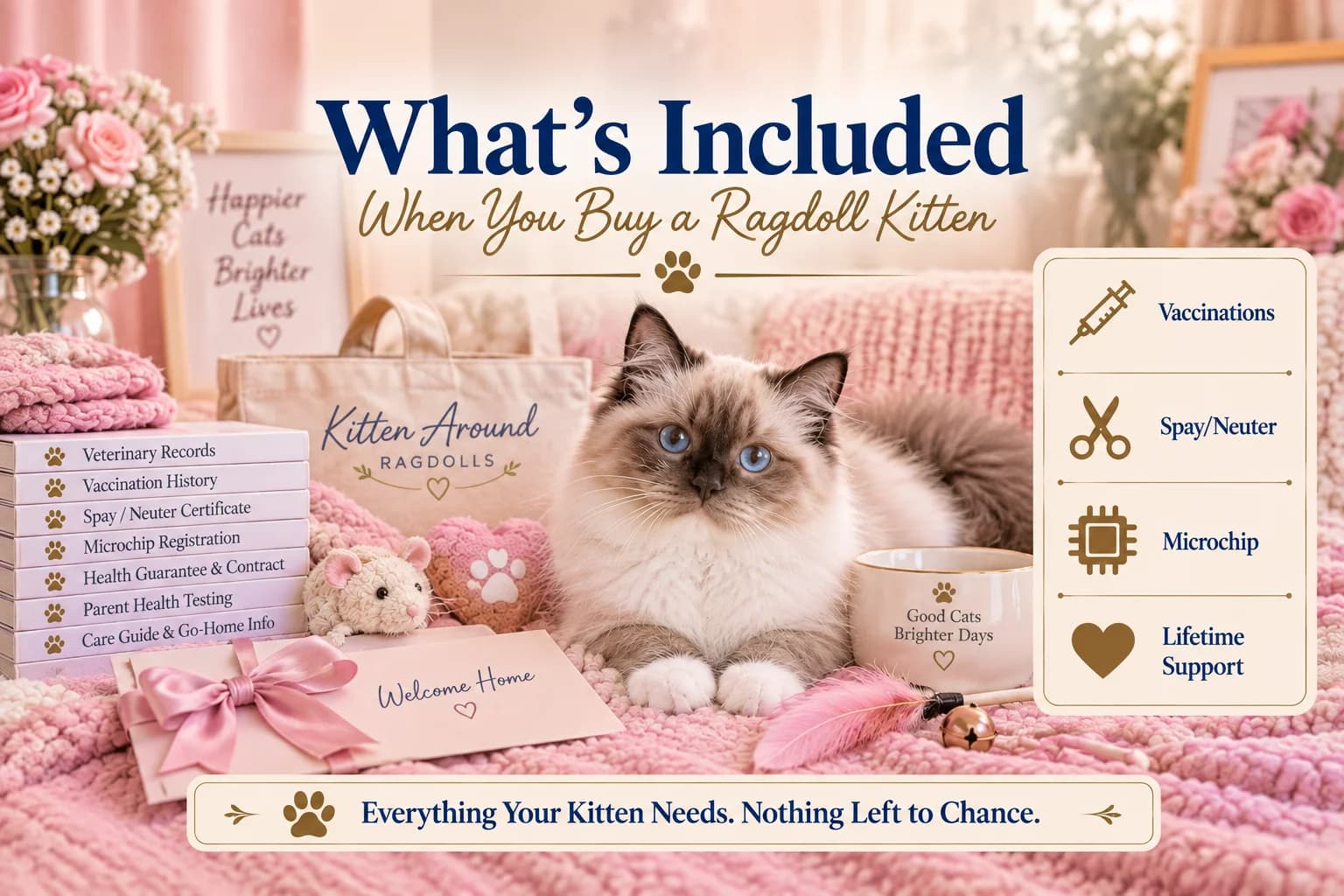
09/12/2026
What’s Included When You Buy a Ragdoll Kitten From Us

09/09/2026
What Our Past Buyers Just Told Us About Their Cats — And What We Changed Because of It
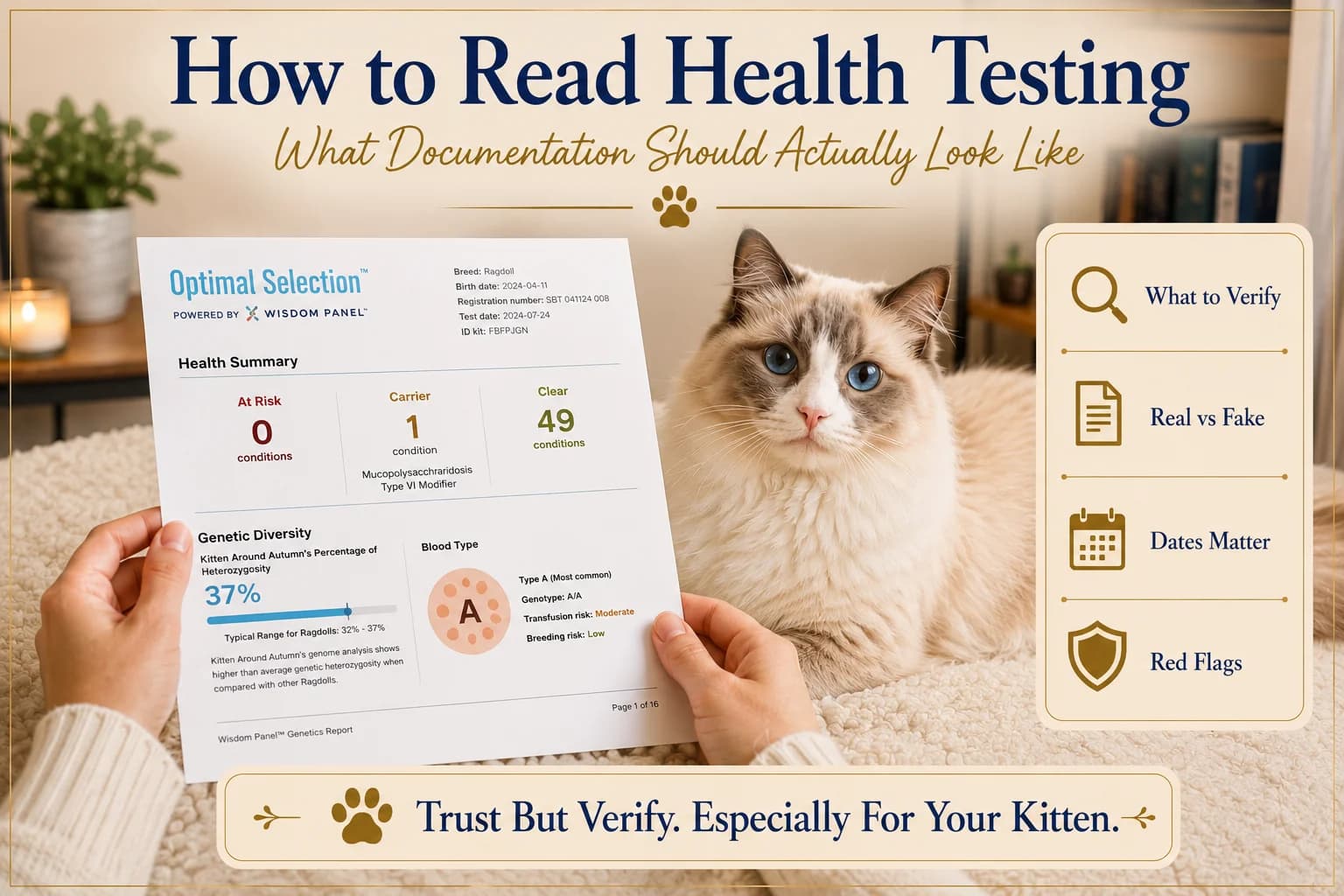
09/05/2026
How to Read a Ragdoll Breeder’s Health Testing (What Documentation Should Actually Look Like)
Subscribe to our newsletter
Litter announcements, new posts, and the occasional discount — no spam.